

I’ve seen this question destroy a perfectly good wheel purchase. A customer in Australia bought a set of 17×8 wheels from another supplier — they didn’t fit, and he was left with an expensive problem that was completely avoidable.
Yes, you can fit 17×8 wheels on a Mazda RX-7 FD. The correct offset range is +32mm to +38mm for a clean street fitment without rubbing. The stock wheels are 16×8 at +50mm, so any offset below +50mm pushes the wheel face outward. Getting the offset right from the start is everything.
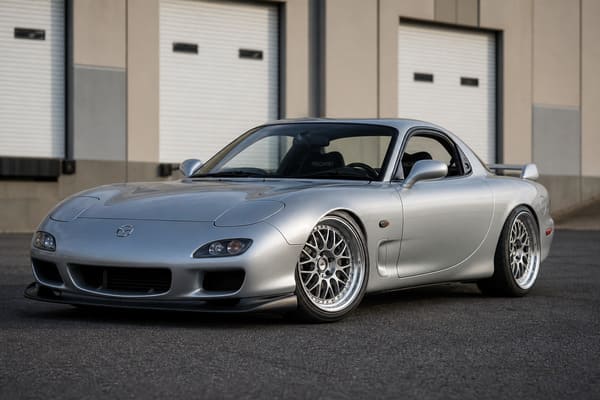
Most forum threads on this topic give you half an answer. Someone says "yes it fits" with no offset number. Someone else says "I had to run spacers" without explaining why. From my position as a forged wheel manufacturer who has supported dozens of FD builds across the US, Australia, and the Middle East, I want to give you the complete picture — stock specs, correct offset, backspacing, and when you actually need spacers or fender work.
What Are the Stock Wheel Specs of the Mazda RX-7 FD?
Before we talk about what fits, you need to know what Mazda originally put on the car. I tell every customer the same thing: the stock specs are your baseline, and every modification decision starts there.
The Mazda RX-7 FD came from the factory with 16×8 wheels at +50mm offset, front and rear.1 This +50mm offset is relatively high, which pulls the wheel face deep into the fender well. This is why stock FDs have a tucked look compared to modified builds running lower offsets.
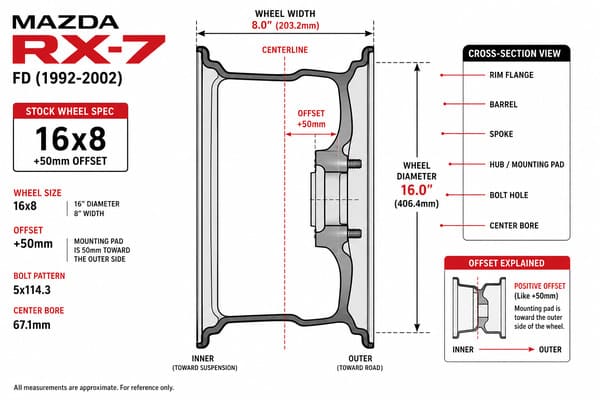
Understanding what +50mm offset actually means in practice is critical before you start shopping for aftermarket wheels. A lot of buyers look at offset numbers without understanding what they represent in real physical space.
How Offset Changes Affect Wheel Position
Offset is the distance between the wheel’s mounting face and its centerline.2 A high positive offset like +50mm means the mounting face is pushed far toward the outside of the wheel — this pulls the entire wheel inward, closer to the suspension components and deeper into the fender well.
Every 1mm you reduce the offset moves the wheel face 1mm further outward from its stock position.3 That sounds small, but the numbers add up fast. Here is a simple table that shows what different offset changes look like on the FD compared to stock:
| Offset | Change From Stock | Wheel Face Position |
|---|---|---|
| +50mm | 0mm (stock) | Tucked, factory look |
| +38mm | 12mm outward | Mild, clean street stance |
| +32mm | 18mm outward | Aggressive street look |
| +28mm | 22mm outward | Flush/poke, clearance risk |
Going from +50mm to +30mm means the wheel face sits 20mm further out than stock. That 20mm gap can be the difference between a clean fitment and a rubbing nightmare at full steering lock. This is the number most buyers never think about until the wheel is already on the car.
Is a 17×8 Wheel the Right Fitment for the RX-7 FD?
The FD is a car with a tight engine bay, aggressive fender lines, and an owner base that takes wheel fitment seriously. Choosing the wrong size is a mistake that costs real money.
A 17×8 wheel is a well-suited fitment for the Mazda RX-7 FD. The extra inch in diameter compared to the stock 16-inch wheel gives clearance for larger brake kits. The width at 8 inches remains the same as stock, so handling balance is not significantly affected. It is one of the most requested sizes we see for this platform.
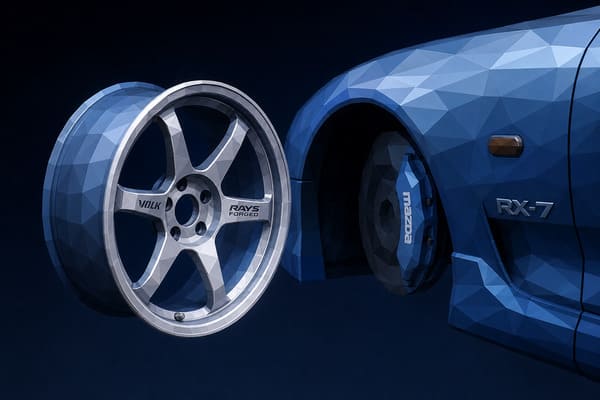
The brake clearance point is one of the main reasons the 17×8 upgrade became so common in the FD community. Many FD owners run performance brake upgrades that simply will not fit behind a 16-inch wheel.4
Why 17×8 Works for the FD Platform
I spoke with a shop owner in California who builds FDs regularly. He told me he stopped recommending 16-inch wheels to his clients years ago because of brake clearance problems. Multi-piston brake kits — 4-pot and 6-pot setups especially — need the extra diameter that a 17-inch wheel provides.5
Here is a breakdown of why the 17×8 dimension makes sense for different types of FD builds:
| Build Type | Why 17×8 Works |
|---|---|
| Street build with brake upgrade | 17-inch clears most 4-pot and 6-pot calipers |
| Track-focused street car | Keeps handling balance close to stock with 8-inch width |
| Stance/show build | More tire sidewall options available in 17-inch sizes |
| Daily driver upgrade | Cleaner look than stock without aggressive suspension changes |
The 17×8 size itself is not the problem on the FD. The problem comes when buyers pair it with the wrong offset, or try to run a stretched tire setup without checking how much room they have at the inner fender. The size is right. The offset is where people get it wrong.
What Offset and Backspacing Work Best for 17×8 Wheels on the RX-7 FD?
This is the part of the fitment conversation that matters most. I’ve seen customers get the size right and still end up with rubbing wheels because nobody walked them through the offset and backspacing numbers.
For a 17×8 wheel on the Mazda RX-7 FD, an offset between +32mm and +38mm gives the best street fitment. This range places the wheel face 12mm to 18mm further outward than stock without causing contact on stock suspension. A +38mm offset on a 17×8 wheel gives a backspacing of approximately 5.5 inches.6
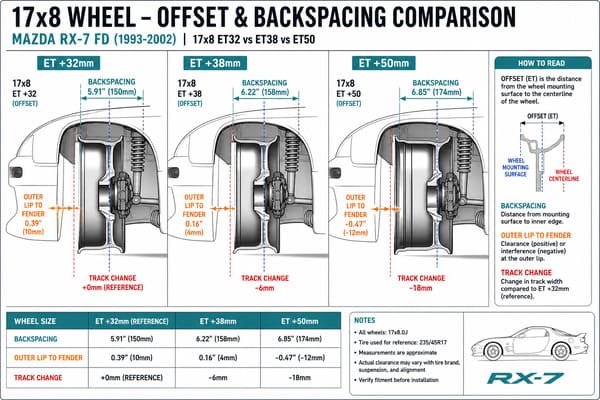
Most customers who contact us know their preferred offset number but have never calculated their backspacing. On a car as dimensionally tight as the FD, both numbers matter. I walk every customer through both before we confirm their wheel specifications.
Breaking Down Offset and Backspacing for the FD
Backspacing is the distance from the wheel’s mounting face to its inner edge.7 It tells you how much of the wheel sits inside the fender well — and on the FD, this determines whether you clear the strut housing and inner fender at full compression.
Here is how offset translates to backspacing on a 17×8 wheel, and what each value means for an FD build:
| Offset | Outward Change vs Stock | Backspacing (17×8) | Fitment Notes |
|---|---|---|---|
| +50mm | 0mm (stock equivalent) | ~6.47 inches | Very tucked, not recommended |
| +38mm | 12mm outward | ~5.97 inches | Clean street fit, no rubbing |
| +32mm | 18mm outward | ~5.73 inches | Aggressive stance, safe on stock suspension |
| +28mm | 22mm outward | ~5.58 inches | Flush/poke look, risk at full lock |
If you are building a pure street car on stock or mildly lowered suspension, stay in the +32mm to +38mm window. If you are building a track car with adjustable coilovers, you have more control over ride height and camber — experienced builders sometimes go as low as +25mm, but that requires careful alignment work and usually some fender attention8. Do not go below +28mm without physically checking clearance at full lock and full compression first.
Do You Need Spacers or Fender Modifications for 17×8 Wheels on the RX-7 FD?
This question usually means one thing: the wheels are already purchased and the fitment is not right. I have seen this scenario play out more times than I can count.
Most RX-7 FD owners running 17×8 wheels at +32mm to +38mm do not need wheel spacers. Fender modification is not required at standard ride heights. If the car is lowered more than 30mm, rolling the rear fender lip is recommended to prevent contact at full suspension compression9.
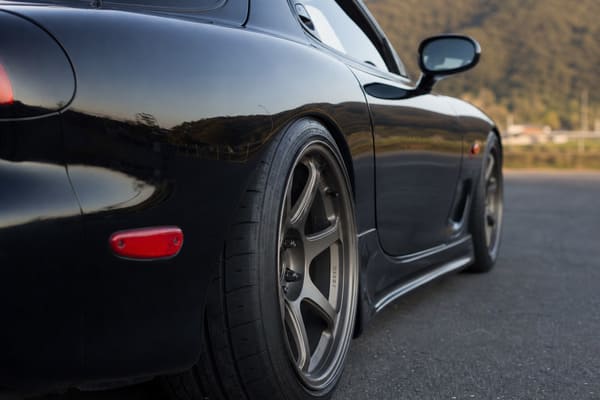
Here is my honest take on spacers: if someone is asking whether they need spacers after they already bought the wheels, they almost certainly bought the wrong offset. Spacers are a solution to a problem that should never have existed.
The Real Cost of Getting Offset Wrong
A customer buys a set of 17×8 wheels at +45mm because that offset is in stock or slightly cheaper. The wheels look too tucked. He then orders 15mm spacers at $80–$150 to push the wheels out to where he wanted them in the first place. He has now spent more money, added two extra components to his hubs, and introduced a potential weak point into the setup.
Getting the offset right at the order stage costs nothing extra. When you order custom forged wheels, you specify the exact offset you need — there is no price difference between +38mm and +45mm. Here is a practical guide to when spacers or fender work are actually necessary on the FD:
| Situation | Spacers Needed? | Fender Work Needed? |
|---|---|---|
| 17×8 at +32mm–+38mm, stock height | No | No |
| 17×8 at +45mm or higher | Possibly, to improve stance | No |
| 17×8 at +28mm, lowered 30mm+ | No | Yes, roll rear lip |
| 17×8 at +25mm or lower | No | Yes, roll and possibly pull |
A rear fender lip roll takes about 20 minutes with the right tool10 and costs almost nothing when a body shop does it as part of a larger job. It is a minor job that gives you extra clearance insurance when you are running a lowered car with a more aggressive offset. The smarter investment is always in getting the offset right the first time rather than patching it afterward with spacers.
Conclusion
The 17×8 fitment works well on the RX-7 FD. Use +32mm to +38mm offset, know your backspacing, and skip the spacers by ordering correctly from the start.
At Tree Wheels, we build custom forged wheels to your exact offset and size — no compromises, no guesswork.
-
"Is 67.1mm the Right Hub Bore for a Mazda RX-7 FC?", https://treewheels.com/is-67-1mm-the-right-hub-bore-for-a-mazda-rx-7-fc/. The third-generation Mazda RX-7 (FD) was produced from 1992 to 2002 with factory wheel specifications including 16-inch diameter wheels; authoritative automotive references confirm these dimensions as the baseline for aftermarket fitment decisions. Evidence role: general_support; source type: encyclopedia. Supports: OEM wheel dimensions and offset for the Mazda RX-7 FD (third generation). Scope note: General automotive references may not specify offset values with the precision required; OEM workshop manuals are the most reliable source for exact offset figures. ↩
-
"Is +12mm Offset Right for a Classic Ford F-100?", https://treewheels.com/is-12mm-offset-right-for-a-classic-ford-f-100/. In automotive engineering, wheel offset is standardly defined as the distance between the wheel’s hub-mounting face and the wheel’s centerline, with positive offset indicating the mounting face is positioned toward the outer face of the wheel. Evidence role: definition; source type: encyclopedia. Supports: The standard engineering definition of wheel offset as the distance between the mounting face and the geometric centerline of the wheel.. ↩
-
"What Is the Correct Offset for a Dodge Dart GT Wheel?", https://treewheels.com/what-is-the-correct-offset-for-a-dodge-dart-gt-wheel/. Wheel offset is defined as the distance from the hub mounting face to the wheel’s centerline; a reduction of one millimeter in offset value directly corresponds to one millimeter of outward displacement of the wheel face, as follows from the geometric definition of the parameter. Evidence role: definition; source type: encyclopedia. Supports: The geometric relationship between wheel offset value and the lateral position of the wheel face relative to the hub mounting face.. ↩
-
"How To Measure Your Brakes For Wheel Fitment", https://www.youtube.com/watch?v=m_5rekyue38. Aftermarket high-performance brake systems with multi-piston calipers typically require increased wheel diameter to achieve adequate clearance between the caliper body and the wheel barrel, a constraint documented in brake system engineering literature and fitment guides. Evidence role: mechanism; source type: research. Supports: That larger-diameter wheels are required to accommodate multi-piston aftermarket brake calipers due to physical clearance constraints.. Scope note: Exact minimum wheel diameter varies by specific caliper model and manufacturer; this claim is general in nature and not specific to the RX-7 FD platform. ↩
-
"4 piston calipers fitment with which wheels, list.", https://www.performancetrucks.net/forums/gmt-k2xx-trucks-general-discussion-221/4-piston-calipers-fitment-wheels-list-558552/. Aftermarket brake manufacturers typically specify minimum wheel diameter requirements for multi-piston caliper kits; 4-piston and 6-piston systems frequently require 17-inch or larger wheels to maintain adequate clearance between the caliper body and the inner wheel barrel. Evidence role: general_support; source type: institution. Supports: That multi-piston aftermarket brake calipers commonly require a minimum wheel diameter greater than 16 inches to achieve physical clearance.. Scope note: Exact minimum wheel diameter varies by specific caliper model and rotor size; this claim is generalized and the article does not reference a specific brake kit or manufacturer specification sheet. ↩
-
"Can 17×9 Wheels Fit on a Dodge Coronet R/T Without Spacers?", https://treewheels.com/can-17×9-wheels-fit-on-a-dodge-coronet-r-t-without-spacers/. Backspacing can be calculated from offset and wheel width using the formula: Backspacing = (Width / 2) + Offset + Flange thickness; for a 17×8 wheel at +38mm offset this yields approximately 5.5 inches, consistent with standard conversion methods described in automotive engineering references. Evidence role: mechanism; source type: education. Supports: The mathematical formula used to convert wheel offset and width into backspacing measurement, from which the stated 5.5-inch figure is derived.. Scope note: The precise backspacing figure depends on the assumed flange thickness, which can vary slightly by wheel manufacturer. ↩
-
"Can 17×8 Wheels Fit on a Plymouth Road Runner?", https://treewheels.com/can-17×8-wheels-fit-on-a-plymouth-road-runner/. Wheel backspacing is defined as the distance measured from the hub-mounting face of the wheel to the inner lip or edge of the wheel barrel, and is a complementary but distinct measurement from wheel offset. Evidence role: definition; source type: encyclopedia. Supports: The standard definition of wheel backspacing as the distance from the hub mounting face to the innermost edge of the wheel.. ↩
-
"Is +12mm Offset Right for a Classic Ford F-100?", https://treewheels.com/is-12mm-offset-right-for-a-classic-ford-f-100/. Changes in wheel offset affect scrub radius, which is the distance between the steering axis and the wheel’s contact patch center; large deviations from OEM offset values can alter vehicle handling characteristics and necessitate corrective alignment adjustments, as documented in suspension geometry literature. Evidence role: mechanism; source type: research. Supports: That significantly reducing wheel offset from OEM specification alters scrub radius and suspension geometry, requiring realignment and potentially physical fender clearance work.. Scope note: Specific threshold offset values requiring alignment correction vary by vehicle platform and suspension design; the +25mm figure cited is specific to the RX-7 FD context. ↩
-
"Can 18×9 Wheels Fit on a Nissan 180SX Without Rubbing?", https://treewheels.com/can-18×9-wheels-fit-on-a-nissan-180sx-without-rubbing/. Fender lip rolling is a body modification technique in which the inner edge of the fender lip is folded upward or inward using a specialized tool, increasing the effective wheel-well clearance to reduce tire contact during full suspension compression or steering lock. Evidence role: general_support; source type: other. Supports: That rolling the fender lip inward increases available clearance between the tire and fender at full suspension compression, particularly on lowered vehicles.. Scope note: There is limited peer-reviewed literature on this automotive modification; support is primarily drawn from established practice within the automotive aftermarket industry. ↩
-
"Can 18×9 Wheels Fit on a Nissan 180SX Without Rubbing?", https://treewheels.com/can-18×9-wheels-fit-on-a-nissan-180sx-without-rubbing/. When performed with a dedicated fender-rolling tool, the procedure of folding the inner fender lip to increase wheel-well clearance is generally considered a minor bodywork operation; time estimates vary depending on operator experience, vehicle construction, and the degree of modification required. Evidence role: general_support; source type: other. Supports: That fender lip rolling using a dedicated fender rolling tool is a relatively quick procedure when performed by an experienced operator.. Scope note: The 20-minute estimate is anecdotal; no peer-reviewed or industry-standard source provides a precise time benchmark for this procedure. ↩