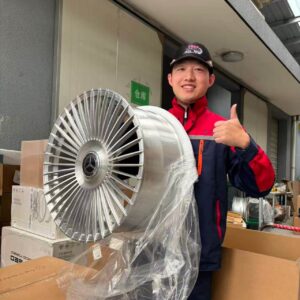

Last year, a customer from Australia came to us with a problem. He had an Army Green Land Cruiser 200 Series and wanted a set of wheels. He sent us a reference photo of polished silver wheels — in his mind, silver goes with everything. We told him directly: that combination would make his truck look like a construction site vehicle, not a modified car. He was surprised, but he listened. He went with matte bronze instead. When the wheels arrived and he mounted them, he sent back photos. The result was exactly what he had hoped for. His words: "This is the feeling I wanted. I was completely wrong before."
Green is one of the most common colors we see on Land Cruisers1, but it is also one of the most misunderstood when it comes to wheel finishes. The right finish depends on your shade of green, your use case, and your budget. Matte black, bronze, and gunmetal are the most reliable starting points for green Land Cruisers across all conditions.
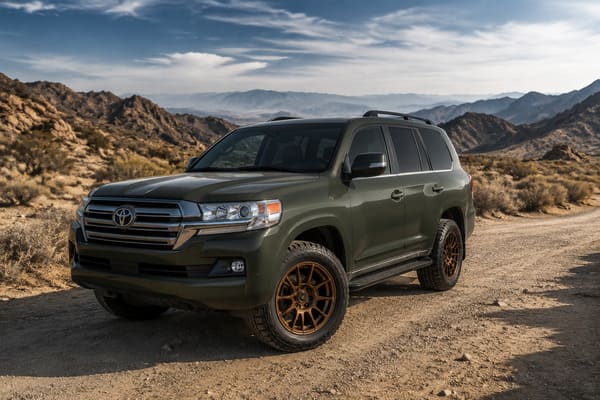
Most wheel buyers choose by gut feeling. But gut feeling is often wrong when it comes to green. Green paint has warm and cool tones. Each tone needs a completely different pairing logic. Choose the right finish, and the whole truck moves up a level. Choose the wrong one, and even the most expensive wheel will look out of place. In the sections below, we will break this down by finish type, surface treatment durability, gloss level, and color pairing — so you can make a decision based on logic, not guessing.
What Wheel Finishes Actually Look Good on Green?
We pulled a simple count from our customer inquiry records. Of all the Land Cruiser orders we received for green-bodied vehicles, over 60% of customers listed gloss silver or mirror polish as their first choice. But fewer than 10% actually placed that order. After we showed them rendered images, the other 90% switched to matte black, bronze, or gunmetal.
The reason is straightforward. Green is already a bold color — it draws attention on its own. When the wheels are also bright and reflective, the two elements compete with each other. The result looks busy. The correct approach is to use a darker, lower-key wheel to support the green body, letting the green remain the focal point.
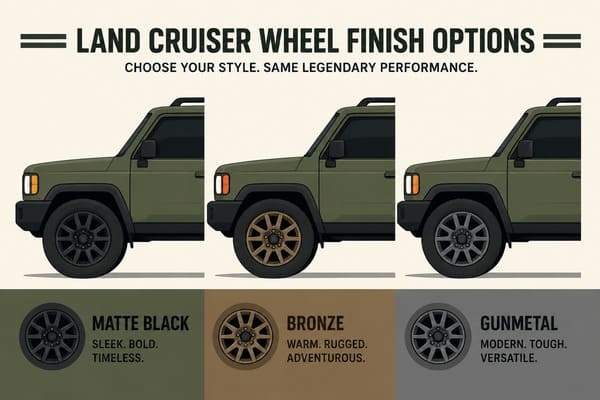
Green is not a neutral color like white or black. It carries personality2. That means the wheel finish needs to play a supporting role, not compete for attention. Here is how we break it down for our customers:
Finish Options Ranked by Suitability for Green Land Cruisers
| Finish | Suitability | Best Green Tones |
|---|---|---|
| Matte Black | ★★★★★ | All greens, especially army green and dark green |
| Bronze / Gunmetal | ★★★★☆ | Warm greens: olive, khaki green |
| Dark Brushed + Machined Window | ★★★★☆ | Customers who want visual depth without going loud |
| Gloss Silver / Mirror Polish | ★☆☆☆☆ | Not recommended for any green tone |
Matte black is the safest option across the board. It works with almost every shade of green because it does not introduce a competing tone — it simply grounds the vehicle3. Bronze and gunmetal add a layer of character that works especially well with warm-toned greens like olive and army green. They bring an outdoor, expedition-ready look that suits a Land Cruiser both visually and functionally. Dark brushed finishes with machined accent windows are a good choice for customers who want more detail without crossing into flashy territory. The window areas catch light in a controlled way, adding dimension without pulling attention away from the body color. Gloss silver and mirror polish are the ones we consistently steer customers away from. On a green truck, these finishes flatten the overall look and remove the sense of intention from the build. The truck ends up looking unfinished rather than customized.
Which Finish Types Work Best for Off-Road Wheels?
A Land Cruiser is not a street-only vehicle. We had a customer from Dubai whose Land Cruiser goes into the desert every month. The wheels take continuous impact from high heat, sand, and gravel. Before he found us, he had purchased a set of standard liquid-painted wheels from another supplier. In under three months, the paint was bubbling and peeling. His first words to us: "I don’t care about looks. I want something that lasts."
For off-road use, the finish process matters as much as the design. Powder coating is currently the most durable option for off-road wheels, offering strong resistance to scratches, heat, and corrosion4. PVD coating offers a similar level of durability with a more refined visual result but at a higher cost.
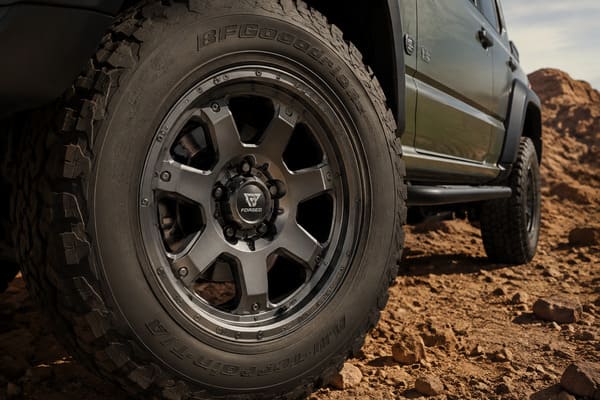
We told that Dubai customer the same thing we tell everyone: durability and good looks are not opposites. The key is choosing the right process. He went with gunmetal powder coat. After more than a year of desert use, he reported almost no visible damage to the wheel surface. Here is how the main finish processes compare for off-road conditions:
Off-Road Finish Durability Comparison
| Finish Process | Durability | Cost Level | Best Use Case |
|---|---|---|---|
| Powder Coat | ★★★★★ | Low–Medium | Heavy off-road, desert, gravel |
| PVD Coating | ★★★★☆ | High | Off-road with strong appearance requirements |
| Multi-Layer Paint + Clear | ★★★☆☆ | Medium | City driving and light off-road only |
| Anodized | ★★★★☆ | Medium | Durability-focused builds with limited color needs |
Powder coating works by fusing a dry powder to the wheel surface under high heat. The result is a coating that bonds more deeply than liquid paint5. It does not chip or peel the way paint does under impact. For a vehicle that regularly faces rocks, sand, and temperature extremes, powder coat is the clear first choice. PVD, or Physical Vapor Deposition, deposits a very thin metallic layer onto the wheel surface in a vacuum environment6. The result is a finish that looks extremely refined — gunmetal PVD, for example, has a depth and clarity that powder coat cannot fully replicate. The trade-off is cost. PVD typically runs 30–40% higher than powder coat7. For customers who want serious durability but also care deeply about how the wheel looks, PVD is a strong option. Multi-layer liquid paint with a high-strength clear coat is the process most commonly found on lower-cost wheels. It looks good in controlled environments. But under real off-road stress, it is the first to show damage. We only recommend this for customers who drive mostly in cities. Anodizing bonds a protective oxide layer directly into the aluminum surface8. It is genuinely durable. The limitation is color. Anodizing works best in a narrow range of tones — it cannot achieve bronze or gunmetal the way powder coat or PVD can.
Should You Choose Gloss, Matte, or Satin for a Green Land Cruiser?
This is the question we get almost every week. We have a simple internal framework we use to answer it. It takes two steps, and it works for almost every green Land Cruiser we have seen.
Step one: identify whether your green is warm-toned or cool-toned. Warm greens, such as army green, olive, and khaki, pair best with matte or satin finishes. Cool greens, such as deep forest green and midnight green, pair best with gloss black or dark gloss gray. Step two: consider your primary use case.
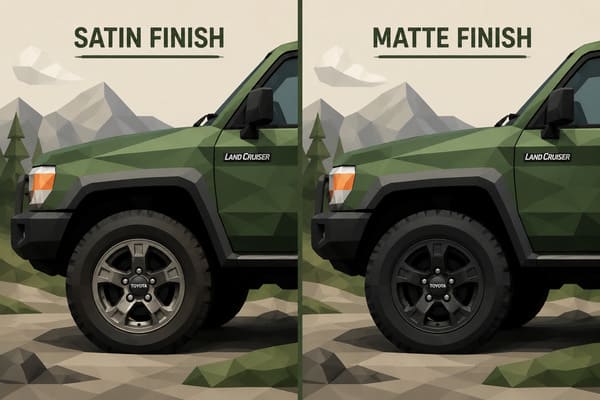
Most customers skip step one entirely and go straight to picking a finish they think looks good in isolation. That is where the mistake happens. The finish does not exist in isolation — it always lives next to the body color. Here is how we lay it out for customers:
Gloss Level Guide by Green Tone and Use Case
| Green Tone | Recommended Finish | Reason |
|---|---|---|
| Army Green / Olive Green | Matte or Satin | Keeps the rugged, natural character |
| Deep Forest Green | Gloss Black / Dark Gloss Gray | Adds depth and visual contrast |
| Bright Green / Fluorescent Green | Matte Black / Satin Bronze | Balances an already aggressive body color |
| Classic Vintage Green | Satin or Semi-Gloss | Matches the period aesthetic without looking out of place |
My personal recommendation for most Land Cruiser owners is satin. It sits between matte and gloss — not as flat as matte, not as sharp as gloss. For a vehicle like the Land Cruiser, which handles both off-road trails and city driving, satin is the most balanced choice. It is visually interesting without being demanding. And it is easier to maintain than high-gloss finishes, which show water spots and fine scratches more clearly9. Matte is the right call if you want a purely utilitarian, no-compromise look — especially for army green or dark olive builds. Gloss works well when the body color is dark and deep, because it adds a sense of intensity without competing. The key is that none of these finishes is universally correct. The right answer depends on the specific green you are working with.
What Colors Pair Well With Green on Forged Wheels?
We had a customer from Canada with a deep forest green Land Cruiser 300 Series. He initially wanted solid matte black. We produced rendered images for him. His response: "It looks too flat. Something is missing." We suggested a two-tone option — matte black outer face with a bronze inner barrel. He saw the image and said immediately: "That is exactly what I was looking for."
Color pairing on forged wheels goes beyond choosing a single finish. The best pairings for green Land Cruisers use contrast and tonal harmony at the same time. Bronze and copper tones work with warm greens. Gunmetal and dark gray work with cool greens. Two-tone combinations offer the most visual depth and are the approach that receives the most positive feedback from our customers.
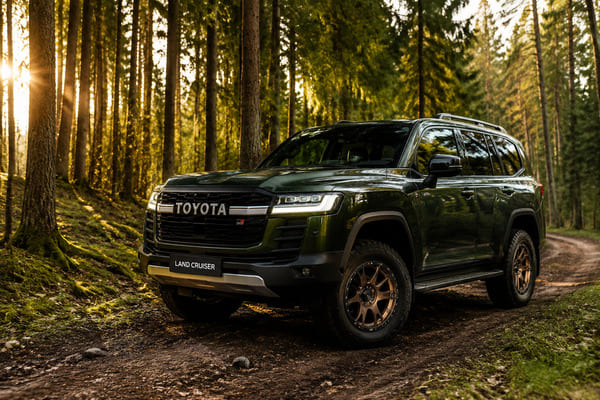
This is one of the areas where forged wheels have a clear advantage over cast wheels. Forged wheels can receive multi-color, multi-process surface treatments on different areas of the same wheel. Cast wheels have structural and surface limitations that make this difficult to execute well10. Here is how we approach color pairing recommendations for green vehicles:
Wheel Color Pairing Guide for Green Land Cruisers
| Wheel Color | Best Green Match | Overall Effect |
|---|---|---|
| Bronze / Copper Brown | Olive, Army Green | Earthy, cohesive, expedition-ready |
| Gunmetal / Dark Gray | Forest Green, Midnight Green | Clean, modern, powerful |
| Matte Black (with brushed or machined detail) | All greens | Universal, but benefits from added texture |
| Two-Tone (dark face + contrasting barrel) | All greens | Maximum visual depth, shows forging craftsmanship |
Bronze and copper-brown tones work so well with warm greens because they share the same tonal family. Both carry yellow and brown undertones11. When you put them together, the result feels intentional and grounded — like the colors belong together rather than just coexisting. Gunmetal and dark gray carry cool, metallic undertones. These pair naturally with cooler shades of green like deep forest green or midnight green. The combination reads as precise and modern without being aggressive. Matte black works with everything, but we often encourage customers to add a detail — a brushed surface, a machined high-light edge — to prevent the build from feeling too one-dimensional. Two-tone combinations are where forged wheel customization shows its real value. The outer face and inner barrel can carry completely different finishes or colors. This creates a wheel that has visual depth at every angle. Green is actually one of the best body colors for high-end customization. It is distinctive without being extreme. It can support a wider range of pairing options than white or black. When the pairing is right, a single set of wheels can completely change the character of the entire vehicle.
Conclusion
Choosing the right wheel finish for a green Land Cruiser comes down to three things: your shade of green, your use case, and how much visual depth you want. Get these right and the result speaks for itself.
At Tree Wheels, we produce fully customized forged wheels with expert finish guidance — built for your exact build.
-
"Toyota Land Cruiser", https://en.wikipedia.org/wiki/Toyota_Land_Cruiser. Automotive color popularity surveys published by organizations such as BASF and Axalta track annual color preference trends by vehicle segment; while green has historically represented a modest share of overall vehicle sales, its prevalence in the SUV and off-road segment may differ from the broader market. Evidence role: statistic; source type: research. Supports: That green is a significant or popular color choice among Toyota Land Cruiser buyers. Scope note: No publicly available source specifically ranks green as a top color for the Land Cruiser nameplate; the claim appears to reflect the article author’s customer base rather than industry-wide data ↩
-
"Comparative analysis of color emotional perception in art and non …", https://pmc.ncbi.nlm.nih.gov/articles/PMC12211919/. Research in environmental and applied color psychology indicates that chromatic colors elicit more pronounced affective responses than achromatic neutrals; green in particular has been associated with naturalness and vitality in multiple cross-cultural perception studies, supporting its characterization as a high-salience, non-neutral color in design contexts. Evidence role: general_support; source type: research. Supports: That chromatic colors such as green evoke stronger associations and emotional responses than achromatic neutrals such as white and black. Scope note: Color associations are culturally variable and context-sensitive; findings from controlled studies may not translate directly to automotive design preferences ↩
-
"What Are the Best Wheel Colors for a White Tesla Model Y?", https://treewheels.com/what-are-the-best-wheel-colors-for-a-white-tesla-model-y/. In applied color design, achromatic values — including black and dark grays — are widely used as grounding elements alongside chromatic hues precisely because they introduce no competing hue angle; design literature from Munsell and later applied color systems describes this property as making dark neutrals broadly compatible across hue ranges. Evidence role: general_support; source type: education. Supports: That dark achromatic tones such as black serve as visually neutral complements to chromatic colors in applied design contexts. Scope note: Universal compatibility claims are generalizations; specific vehicle scale, lighting conditions, and finish texture mean that individual results may vary from theoretical predictions ↩
-
"How Are Two-Tone and Multi-Color Finishes Created on Forged …", https://treewheels.com/how-are-two-tone-and-multi-color-finishes-created-on-forged-wheels/. Studies on thermosetting powder coatings applied to aluminum alloys indicate superior adhesion and scratch resistance compared to liquid paint systems, attributable to the cross-linked polymer matrix formed during curing; however, comparative rankings against PVD and anodizing depend significantly on the specific test conditions and substrate preparation. Evidence role: general_support; source type: research. Supports: That powder coating forms a harder, more impact- and corrosion-resistant surface than conventional liquid paint on metal substrates. Scope note: Performance comparisons are highly condition-dependent; laboratory results may not directly translate to all off-road environments ↩
-
"Epoxy-based thermosetting powder coatings: Surface appearance …", https://www.academia.edu/26153827/Epoxy_based_thermosetting_powder_coatings_Surface_appearance_scratch_adhesion_and_wear_resistance. Thermosetting powder coatings cure via cross-linking reactions initiated at elevated temperatures, forming a continuous polymer network over the substrate; this process differs from solvent-borne liquid paints, which form films through solvent evaporation, and generally yields higher film hardness and impact resistance as measured by standardized tests such as ASTM D2794. Evidence role: mechanism; source type: research. Supports: That thermosetting powder coatings achieve strong substrate adhesion through cross-linking during heat curing, differing mechanistically from liquid paint film formation. Scope note: The claim of bonding ‘more deeply’ is a simplification; adhesion strength depends on surface preparation, primer use, and alloy type, not coating type alone ↩
-
"Physical vapor deposition", https://en.wikipedia.org/wiki/Physical_vapor_deposition. Physical vapor deposition (PVD) encompasses a family of vacuum deposition techniques in which a solid or liquid source material is vaporized and condensed onto a substrate, forming a thin, adherent film; the process is widely used in decorative and functional coatings for automotive components. Evidence role: definition; source type: encyclopedia. Supports: That PVD is a vacuum-based process that deposits thin metallic films onto substrate surfaces. Scope note: General PVD process descriptions may not capture the specific parameters used in automotive wheel finishing, which vary by manufacturer ↩
-
"How Has Wheel Design Evolved Over the Past Decade?", https://treewheels.com/how-has-wheel-design-evolved-over-the-past-decade/. Industry analyses of surface finishing processes note that PVD systems require high capital investment in vacuum chamber equipment and longer cycle times, contributing to higher per-part costs relative to powder coating; however, exact percentage differentials vary by batch size, geometry, and regional labor costs. Evidence role: statistic; source type: research. Supports: That PVD finishing processes carry a meaningfully higher per-unit cost than powder coating in automotive component manufacturing. Scope note: The 30–40% figure cited in the article is not corroborated by publicly available pricing studies and should be treated as a general market estimate ↩
-
"Anodizing", https://en.wikipedia.org/wiki/Anodizing. Anodizing is an electrolytic passivation process that grows an aluminum oxide layer integral to the substrate surface; unlike paint or plating, the oxide layer is not applied externally but develops through controlled electrochemical oxidation of the aluminum itself. Evidence role: mechanism; source type: encyclopedia. Supports: That anodizing converts the outer layer of aluminum into aluminum oxide integrated with the base metal rather than deposited as a separate coating. Scope note: Depth and hardness of the anodic layer vary with alloy composition and process parameters, which affects durability claims ↩
-
"Scratch visibility of polymers measured using optical imaging", https://ui.adsabs.harvard.edu/abs/2003PESci..43..749R/abstract. The visibility of surface defects on coated materials is governed by specular reflectance; high-gloss surfaces with low roughness values reflect light uniformly, making discontinuities such as water mineral deposits and micro-scratches more perceptible to the human eye compared to matte surfaces, which scatter light diffusely and obscure minor surface irregularities. Evidence role: mechanism; source type: research. Supports: That high-gloss surfaces make contaminants and micro-abrasions more visually apparent than matte or satin surfaces due to light reflection properties. Scope note: While the optical principle is well-established, specific comparative data for automotive wheel coatings in field conditions has not been independently verified here ↩
-
"Can You Tell The Difference Between Cast And Forged Wheels?", https://treewheels.com/can-you-tell-the-difference-between-cast-and-forged-wheels/. Forging aligns the aluminum grain structure and reduces porosity compared to casting, resulting in a denser surface that accepts multi-step machining and coating processes with greater dimensional precision; cast wheels, by contrast, may exhibit micro-porosity that complicates adhesion in layered finishing operations. Evidence role: mechanism; source type: research. Supports: That forged aluminum wheels differ from cast wheels in grain structure and surface porosity in ways that affect finishing outcomes. Scope note: The specific claim about multi-color finishing suitability is not directly addressed in metallurgical literature and requires inference from general forging versus casting surface property data ↩
-
"The Psychology of Color in Graphic Design | RMCAD", https://www.rmcad.edu/blog/the-psychology-of-color-in-graphic-design/. Color theory frameworks, including those formalized by Itten and Albers, identify analogous color schemes — groups of colors adjacent on the color wheel sharing common hue components — as producing visually cohesive combinations; earthy browns and olive greens both contain yellow-dominant undertones, placing them within an analogous range. Evidence role: general_support; source type: education. Supports: That colors sharing similar undertones on the color wheel tend to produce harmonious combinations, as described in color theory. Scope note: Color harmony is partly subjective and context-dependent; formal color theory applies to pigments and light under controlled conditions, not necessarily to automotive paint and metallic finishes in outdoor lighting ↩