
I’ve been working in the forged wheel industry1 for over 20 years, and white car owners are some of the most indecisive customers I deal with — in the best way possible. Last year alone, we processed over 60 custom wheel orders for white Tesla Model Y owners.
The best wheel colors for a white Tesla Model Y2 are gloss black, dark gunmetal, bronze, gold, and brushed silver. Each one creates a different visual effect. Black gives the highest contrast. Bronze and gold add warmth. Brushed silver keeps it clean and timeless. The right choice depends on the look you want to communicate.
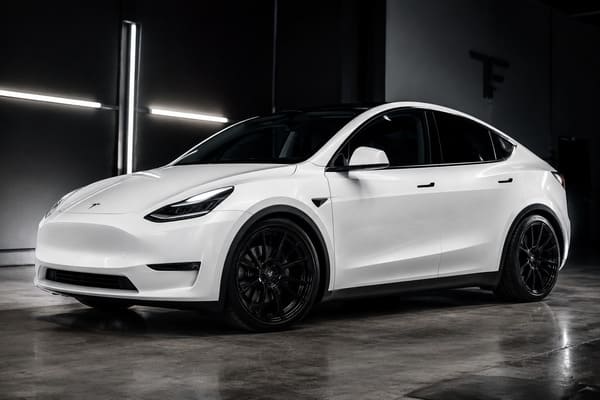
White is a blank canvas.3 That’s exactly why the wheel color matters so much. Get it right, and the car looks intentional and sharp. Get it wrong, and it looks like someone just grabbed whatever was in stock. In the sections below, I’ll walk through each major color option, what it does for the car, and who it’s actually right for.
What Wheel Colors Actually Look Good on a White Tesla Model Y?
Almost every white Model Y owner I’ve worked with asks the same question before placing their order: "What color should I go with?" It’s the most common question I hear — and it’s a good one.
The wheel colors that look best on a white Tesla Model Y fall into three groups: high contrast (gloss black, dark gunmetal), warm tones (bronze, gold, champagne), and clean finishes (brushed silver, satin white). Each group creates a completely different visual identity for the car.
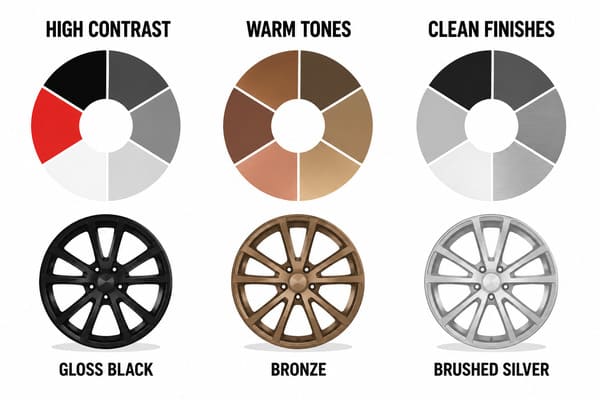
I always ask customers one question first: "When someone sees your car parked, what do you want them to think?" That answer usually points directly to the right color. Based on our order data from the past 12 months, about 45% of white Model Y customers choose something from the high-contrast group. Around 35% go with a warm tone like bronze or gold. The remaining 20% keep it clean with silver or brushed finishes.
Why the Three-Group Framework Matters
Breaking wheel colors into three groups is not just a sales tool. It reflects how color actually works on a white car. White is neutral. It doesn’t push in any direction on its own. That means the wheel color carries most of the visual weight.
| Color Group | Examples | Visual Effect | Best For |
|---|---|---|---|
| High Contrast | Gloss Black, Dark Gunmetal | Bold, aggressive, photogenic | Drivers who want presence and edge |
| Warm Tones | Bronze, Gold, Champagne | Lifestyle-oriented, premium feel | Drivers who want warmth and character |
| Clean Finishes | Brushed Silver, Satin White | Subtle, timeless, refined | Drivers who want a factory-plus look |
The Model Y has sharp, geometric body lines.4 White makes those lines look clean, but it also makes the car feel a little cold and flat without the right wheels.5 A wheel color from any of these three groups can fix that — but each one tells a completely different story. None of these choices are wrong. They just speak to different drivers.
Does Gloss Black Work on a White Tesla Model Y?
I had a customer last year — a shop owner in Los Angeles — who ordered 20 sets of gloss black forged wheels specifically for his white Model Y customer base. He told me his clients kept asking for that blacked-out look because they’d seen it all over Instagram. He sold through all 20 sets in under three months.
Yes, gloss black works extremely well on a white Tesla Model Y. It creates the highest contrast of any wheel color, matches the Model Y’s clean body lines, and photographs very well. It is the most popular wheel color choice for white cars globally.6
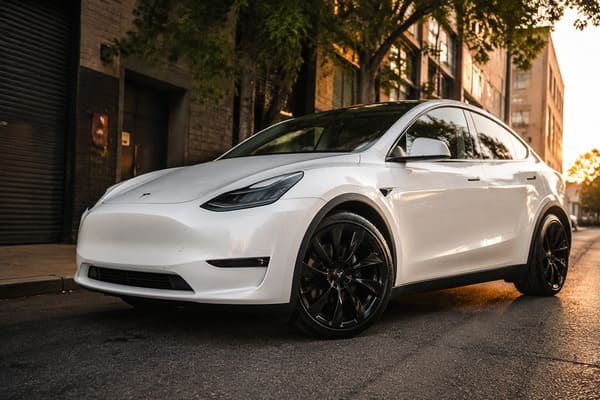
That’s the power of gloss black on a white car — it’s bold, it’s photogenic, and it suits the Model Y’s design language perfectly. But there’s one honest thing I always tell shop owners and individual buyers before they commit.
Gloss Black vs. Satin Black: Which One Should You Actually Choose?
Gloss black is a high-maintenance finish. Brake dust shows up on it after just one or two drives.7 If a customer isn’t washing their wheels every week, the finish loses its impact fast. That’s not a small thing — it’s the kind of detail that turns a satisfied customer into a disappointed one six months after the sale.
| Finish | Visual Impact | Maintenance Level | Best For |
|---|---|---|---|
| Gloss Black | Maximum contrast, mirror-like shine | High — shows dust and water spots quickly | Customers who wash their car weekly |
| Satin Black | 90% of the same visual impact, slightly softer | Low — far more forgiving in daily use | Customers who want the look without the upkeep |
| Dark Gunmetal | Similar contrast, slight metallic depth | Medium — more forgiving than gloss | Customers who want a more refined edge |
Satin black gives 90% of the same visual impact with far less upkeep. For most daily drivers, I recommend satin black over gloss black. For customers who detail their cars regularly or use the Model Y mostly on weekends, gloss black is worth it. That honest recommendation is what keeps customers happy long after the sale — and it’s what keeps shop owners coming back to us for their next order.
Are Bronze or Gold Wheels a Good Choice for a White Tesla Model Y?
This is my personal favorite combination for the Model Y, and the numbers back it up. Over the past 12 months, bronze and gold finishes together made up about 35% of our white Tesla wheel orders — and that number has been growing every quarter.
Yes, bronze and gold wheels are an excellent choice for a white Tesla Model Y. Bronze adds a subtle, earthy warmth that suits a sporty, lifestyle-oriented setup. Gold is louder and more premium-feeling. Both break up the coldness of white and give the car a strong visual identity.
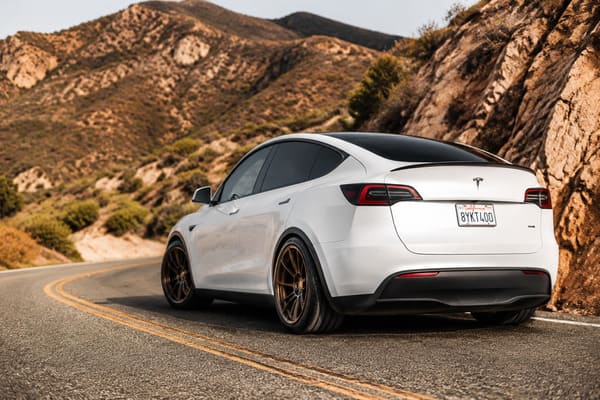
I think the appeal comes down to one thing: warmth. The Model Y has very sharp, geometric lines. White makes it look clean but also a little cold. Bronze or gold breaks that up and gives the car a lifestyle feel — like it belongs on a canyon road, not just in a supercharger parking lot.
Bronze vs. Gold: How to Choose the Right One
These two finishes look similar in photos but feel very different in person. I always show customers side-by-side photos of both on a white Model Y before they decide. Nine times out of ten, they know immediately which one is theirs.
| Finish | Tone | Visual Character | Best Pairing |
|---|---|---|---|
| Bronze | Dark, earthy, muted | Subtle, sporty, grounded | Lowered setups, aggressive fitment, matte or satin accents |
| Champagne Bronze | Lighter, slightly golden | Softer, more versatile | Stock or mild lowered setups, cleaner builds |
| Gold | Bright, rich, warm | Loud, premium, statement-making | Luxury-leaning builds, owners who want a high-end feel |
Bronze works best on lowered setups with a sporty vibe. It reads as intentional without being loud. Gold suits owners who want the car to feel closer to a luxury statement — it has more presence and commands more attention. Both are growing fast in the US and Middle East markets.8 If a customer is unsure, I usually recommend bronze first. It has a wider range and is harder to get wrong.
What Are the Best Color Rims for a White Car?
I’ve shipped custom forged wheels to customers in the US, Canada, Australia, Dubai, and the UK. White cars are consistently in the top three most common base colors across all of those markets.9 So I’ve seen a lot of combinations work — and a few combinations fail badly.
The best rim colors for a white car are gloss or satin black, dark gunmetal, bronze, brushed or hyper silver, and red. These five colors work across almost all white car models and body styles. Chrome and white-on-white are the two combinations I most often steer customers away from.
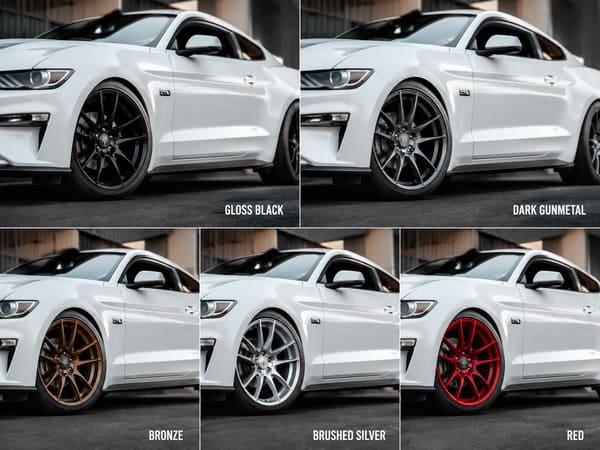
White is the most forgiving base color for wheel customization. Almost any strong, intentional finish looks good against it. But "almost any" is not the same as "all of them." There are real differences between the options — and a few choices that consistently disappoint.
The Five Colors That Work and the Two That Don’t
Here’s a breakdown based on what I’ve seen across thousands of orders from multiple markets over the past two decades.
| Wheel Color | Visual Effect | Market Popularity | Notes |
|---|---|---|---|
| Gloss / Satin Black | Highest contrast, bold, modern | Most popular globally | Gloss needs frequent cleaning; satin is more practical |
| Dark Gunmetal | Modern, refined, slightly more subtle than black | Strong in US and UK | Great for drivers who want edge without full aggression |
| Bronze | Warm, earthy, lifestyle-oriented | Growing fast in US and Middle East | Works best on sporty, lowered builds |
| Brushed / Hyper Silver | Timeless, clean, always intentional | Consistent across all markets | Safe choice that never looks outdated |
| Red | Aggressive, motorsport feel, polarizing | Niche but effective | Works best on performance-oriented builds |
| Chrome | Flashy, outdated on modern EVs | Declining globally | Looked great in 2005; feels wrong on a Model Y |
| White on White | Subtle, but often disappears | Rarely recommended | Only works if the wheel design is extremely aggressive and fitment is perfect |
A subtle white wheel on a white car just disappears. And a wheel that disappears is a missed opportunity. The whole point of a custom forged wheel is to be seen. Chrome has the same problem in the opposite direction — it’s too busy and too dated for a clean, modern EV like the Model Y.10 Every other color on that list can work. The question is just which story you want the car to tell.
Conclusion
Wheel color is one of the most important decisions a white Tesla Model Y owner makes. Black gives contrast, bronze gives warmth, and silver keeps it clean. Choose based on the story you want your car to tell. Tree Wheels offers fully custom forged wheels with expert color guidance — built for drivers who want it done right.
-
"Cast vs Flow Formed vs Forged Wheels – The Real Difference", https://astforgedwheels.com/cast-vs-flow-formed-vs-forged-wheels-the-real-difference/. Engineering references describe forged aluminum wheels as produced by compressing aluminum billets under high pressure, resulting in a denser grain structure with higher strength-to-weight ratios compared to cast wheels, which are formed by pouring molten aluminum into molds. Evidence role: definition; source type: encyclopedia. Supports: The manufacturing distinction between forged and cast aluminum wheels and the properties that define forged wheels as a premium category. Scope note: Performance differences between forged and cast wheels depend on specific alloy composition and design; the distinction is meaningful but not absolute across all applications. ↩
-
"Tesla Model Y – Wikipedia", https://en.wikipedia.org/wiki/Tesla_Model_Y. According to Wikipedia’s article on the Tesla Model Y, the vehicle is a compact battery electric crossover SUV manufactured by Tesla, Inc., introduced in 2020, and has ranked among the best-selling electric vehicles globally in subsequent years. Evidence role: definition; source type: encyclopedia. Supports: Basic identification of the Tesla Model Y as a compact electric crossover SUV and its market significance. Scope note: Wikipedia entries are subject to revision; production figures and sales rankings should be verified against Tesla’s official investor reports for precision. ↩
-
"Color theory – Wikipedia", https://en.wikipedia.org/wiki/Color_theory. Color theory literature, including treatments in encyclopedic sources such as Wikipedia’s article on color theory, classifies white as an achromatic color that reflects all visible wavelengths, giving it a neutral quality that does not compete with adjacent chromatic colors. Evidence role: mechanism; source type: encyclopedia. Supports: The principle that white is an achromatic or neutral color that does not carry inherent chromatic visual weight in color theory. Scope note: Color perception is context-dependent; the claim that white ‘doesn’t push in any direction’ is a simplification of more nuanced perceptual phenomena. ↩
-
"Tesla Model Y – Wikipedia", https://en.wikipedia.org/wiki/Tesla_Model_Y. Tesla’s official Model Y product page and major automotive publications such as Car and Driver describe the Model Y’s exterior as featuring clean, angular body lines consistent with Tesla’s broader design language. Evidence role: definition; source type: other. Supports: Description of the Tesla Model Y’s exterior design language and body line characteristics. Scope note: Design descriptions are partly subjective; ‘sharp and geometric’ reflects one interpretive framing and may not appear verbatim in official sources. ↩
-
"The Psychology of Color and Graphic Design", https://platt.edu/blog/psychology-color-graphic-design/. Design and color theory curricula at institutions such as the Bauhaus tradition and contemporary art and design programs describe white as a high-value, low-chroma color that can reduce perceived surface depth and three-dimensionality, with contrasting darker or warmer elements used to restore visual weight and spatial definition. Evidence role: mechanism; source type: education. Supports: The perceptual tendency of white surfaces to appear visually flat or cold and the role of contrasting elements in creating visual depth. Scope note: Perceptual effects of white are context-dependent and influenced by lighting conditions, surface texture, and surrounding colors; the ‘cold and flat’ characterization is a generalization rather than a universal perceptual law. ↩
-
"The Psychology of Wheel Color: How Rim Finishes Influence the …", https://pedalcommander.com/blogs/backyard/the-psychology-of-wheel-colors. Industry reports from organizations such as SEMA (Specialty Equipment Market Association) track aftermarket wheel finish preferences; black finishes have consistently ranked among the top-selling categories in North American aftermarket wheel sales. Evidence role: statistic; source type: institution. Supports: Market data or consumer survey showing black wheel finishes as the leading choice in aftermarket wheel purchases. Scope note: Available reports may cover North American or regional markets rather than a verified global ranking, making a strict ‘globally most popular’ claim difficult to confirm directly. ↩
-
"Brake wear particle emissions: a review – PMC – NIH", https://pmc.ncbi.nlm.nih.gov/articles/PMC4315878/. Research on brake wear particles, including studies published in journals such as Atmospheric Environment, identifies brake dust as a mixture of iron oxides, carbon, and metallic particles that adhere to wheel surfaces; the contrast between these reddish-brown particles and dark gloss finishes makes accumulation visually apparent after short driving periods. Evidence role: mechanism; source type: paper. Supports: The composition and rapid accumulation of brake dust on wheel surfaces, and its visibility on dark or high-gloss finishes. Scope note: Accumulation rate varies significantly by driving style, brake pad composition, and urban versus highway use; ‘one or two drives’ is an approximation rather than a measured threshold. ↩
-
"Stand Out from the Crowd: In a sea of black and silver, bronze rims …", https://www.facebook.com/performanceplustire/posts/why-bronze-rims-are-taking-over-the-automotive-scene-have-you-noticed-more-cars-/1247978350708126/. SEMA market research and regional aftermarket industry reports have documented increased consumer interest in warm metallic finishes, including bronze and gold, as part of a broader diversification away from black and silver in the US and Gulf region aftermarket wheel segments. Evidence role: statistic; source type: institution. Supports: Growth in consumer demand for warm-tone wheel finishes such as bronze and gold in US and Middle Eastern markets. Scope note: Publicly available reports may not isolate bronze and gold specifically or provide granular regional breakdowns confirming the Middle East trend independently. ↩
-
"Most Popular Car Colors | Study by iSeeCars | Germain Auto Group", https://www.germaincars.com/most-popular-car-colors/. Annual global automotive color popularity reports published by coatings manufacturers such as Axalta and BASF consistently rank white among the top one to three vehicle colors worldwide, including in North American, European, and Middle Eastern markets. Evidence role: statistic; source type: research. Supports: White’s ranking as one of the most popular vehicle colors across major global automotive markets. Scope note: Rankings vary by year and region; ‘top three’ may not hold uniformly across all five markets cited in every reporting period. ↩
-
"Are Chrome Wheels Out Of Style? – Auto Service World", https://www.autoserviceworld.com/are-chrome-wheels-out-of-style/. Automotive design trend analyses and SEMA market data have noted a broad industry shift away from chrome exterior trim and wheel finishes toward matte, satin, and dark finishes, a trend accelerated by the minimalist design language adopted by electric vehicle manufacturers. Evidence role: historical_context; source type: institution. Supports: The trend away from chrome finishes in modern automotive design, particularly on electric vehicles. Scope note: The characterization of chrome as ‘outdated’ is partly subjective and market-dependent; chrome retains popularity in certain regional and demographic segments. ↩