
Silver Land Rover Defenders are beautiful — and nerve-wracking to spec wheels for. The wrong finish doesn’t just look off. It makes the whole build feel unfinished.
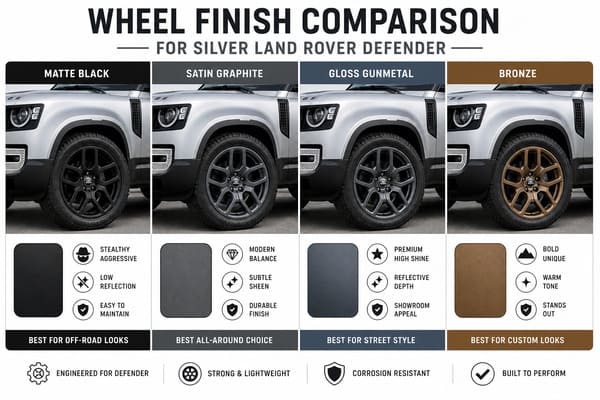
Silver is the best-selling Defender color globally1, and it works with several wheel finishes well. Matte black offers the sharpest contrast. Satin anthracite or graphite delivers depth and durability. Gloss gunmetal creates a dramatic urban look. Bronze and gold add bold warmth — but only when the undertone matches your specific silver shade.
About 30% of our Defender-related wheel inquiries in the past year came from owners with silver paint2. That number is not an accident — silver Defender owners spend more time deciding on a finish than almost any other customer group we work with. I want to explain exactly why that is, and give you a clear answer for each major finish option.
What Are the Most Popular Wheel Finishes for a Silver Land Rover Defender?
Silver feels like a neutral color. Most customers assume it will go with anything. That assumption is what causes most of the headaches we see.
The most popular finishes for silver Defenders are matte black, satin graphite or anthracite, gloss gunmetal, and bronze. Each one works — but for different reasons, and under different conditions. The right choice depends on your specific silver shade, how you use the vehicle, and what the build is meant to communicate.
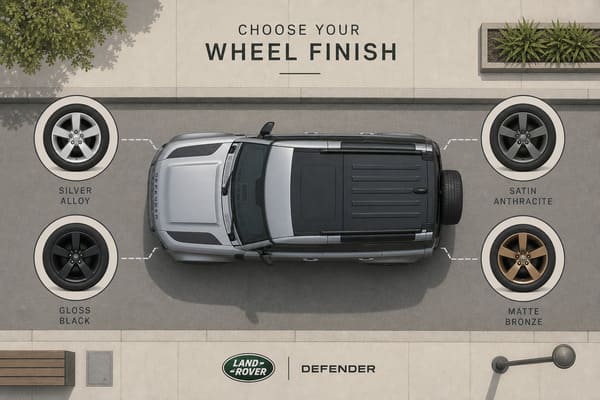
Silver is not a stable color. This is the single most important thing I tell every customer who comes to us with a silver Defender. Indus Silver, for example, looks close to grey under overcast skies and nearly white in direct sunlight3. I have had customers approve a finish based on indoor photos, then come back confused when the installed wheels looked completely different on the road. The finish did not change — the light did. Silver interacts with your wheel finish. It does not simply sit next to it.
Why Lighting Conditions Change Everything
| Lighting Condition | How Silver Appears | What This Means for Your Finish Choice |
|---|---|---|
| Overcast / cloudy | Cool grey tone | Warm finishes like bronze stand out more |
| Direct sunlight | Near-white, high reflectance | Bold contrasts can wash out; depth matters |
| Indoor / showroom | Flat, muted tone | Finishes often appear darker than they will outdoors |
| Night / artificial light | Grey-blue cast | Gloss finishes reflect sharply; matte absorbs light |
This table is a tool I use during our consultation process. Before any customer confirms a finish on a silver Defender, I ask them to describe where the vehicle is driven most often and what conditions it is photographed in most. A customer in Dubai sees intense direct sun every day. A customer in London lives under overcast skies most of the year4. That difference alone can change which finish is right. We always recommend customers test a finish reference photo against their specific Defender shade before committing — not just any silver.
Does a Matte Black Finish Work Well on a Silver Defender?
Matte black is the first answer I hear from almost every new Defender customer. It is the default choice in the modification world, and there is a real reason for that.
Yes, matte black works well on a silver Land Rover Defender. The dark contrast against silver paint modernizes the boxy shape and photographs cleanly. But the quality of execution matters enormously — a deep, uniform matte black looks premium, while a thin or uneven coating looks flat and cheap.
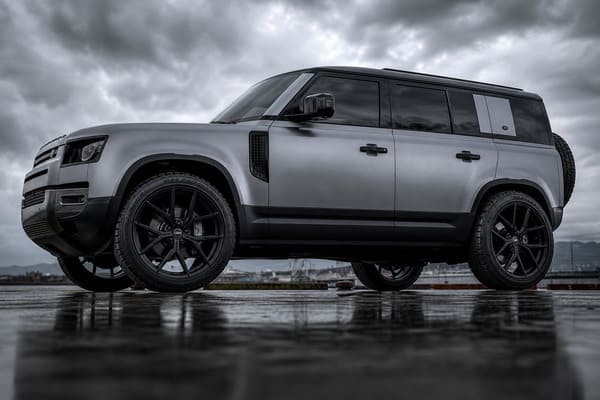
Roughly 45% of all Defender wheel orders we receive come in as matte black requests5. It is the most requested finish we handle by a wide margin. The contrast works. The look is strong. It photographs very well in almost any lighting condition. But here is what I have noticed across dozens of these builds: matte black on a silver Defender looks great in photos and forgettable in person — unless the execution is exceptional.
What Separates a Great Matte Black from a Poor One
The texture depth, sheen level, and coating uniformity all matter. A flat, thin matte black looks like a spray can job. A deep, velvety matte black with consistent surface texture looks genuinely premium. These are not small differences. Side by side, they are immediately visible.
| Matte Black Quality Level | Texture | Sheen | In-Person Impression |
|---|---|---|---|
| Low quality | Flat, patchy | Near-zero | Looks painted at home |
| Mid quality | Even, shallow | Slight depth | Acceptable, forgettable |
| High quality | Deep, velvety | Rich, consistent | Looks factory-premium |
The upgrade I always recommend for two-piece or three-piece forged wheels6: add a brushed or machined inner barrel in contrast silver or gunmetal. That single detail changes the entire visual impression of the wheel. Three customers who followed that recommendation came back to order a second set for another vehicle. The result delivered exactly what they needed.
Are Gloss or Satin Finishes a Good Choice for a Silver Land Rover Defender?
Gloss and satin are often treated as secondary options — the finishes people consider after ruling out matte black. That framing undersells both of them.
Gloss finishes offer sharp, dramatic contrast and work especially well with cool-toned silver Defenders in urban settings. Satin finishes — particularly satin anthracite and satin graphite — deliver a balance of contrast, depth, and long-term durability that makes them the most practical premium choice for most silver Defender owners.
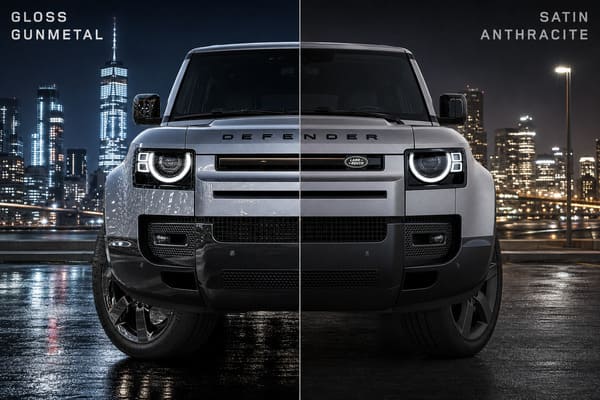
Gloss finishes make up about 15% of our Defender orders7. They almost always come from customers in urban markets — London, Sydney, Los Angeles. Gloss gunmetal on a cool-toned silver Defender is genuinely striking. The reflection and depth create a visual sharpness that nothing else quite matches. But I always give customers the same warning before they commit: gloss shows every stone chip, every brake dust deposit, and every water spot. On a vehicle that is driven hard or left outdoors regularly, a gloss finish ages badly.
Gloss vs. Satin: A Direct Comparison for Silver Defenders
| Feature | Gloss | Satin |
|---|---|---|
| Visual impact | High — sharp, reflective, dramatic | Strong — deep, premium, understated |
| Maintenance needs | High — shows chips, dust, water spots quickly | Low to medium — forgiving and durable |
| Best use environment | Urban, low-mileage, garage-kept | All environments, daily drivers included |
| Works best with | Cool-toned silvers (Indus Silver, Hakuba Silver) | All silver shades |
| Long-term appearance | Degrades visibly without regular care | Stays looking clean after heavy use |
Satin is the finish I personally recommend most often for silver Defenders. Satin anthracite or satin graphite hits a specific sweet spot — enough contrast to stand out against silver, enough depth to look expensive, and durable enough to stay looking good after real use8. I had a customer in Canada who came back six months after delivery to tell me his satin graphite wheels still looked as good as the day they arrived. That kind of feedback is exactly what we build toward.
What About Bronze or Gold Wheel Finishes on a Silver Defender?
Bronze and gold are the bold choice. They represent about 10% of our Defender orders — but they generate the most attention of any finish we produce.
Bronze and gold wheel finishes can look exceptional on a silver Land Rover Defender, but undertone matching is critical9. Bronze works best against matte or satin silver shades. Brushed gold pairs better with brighter, more reflective silvers. Choosing the wrong warmth level against your specific silver creates a clash rather than a complement.
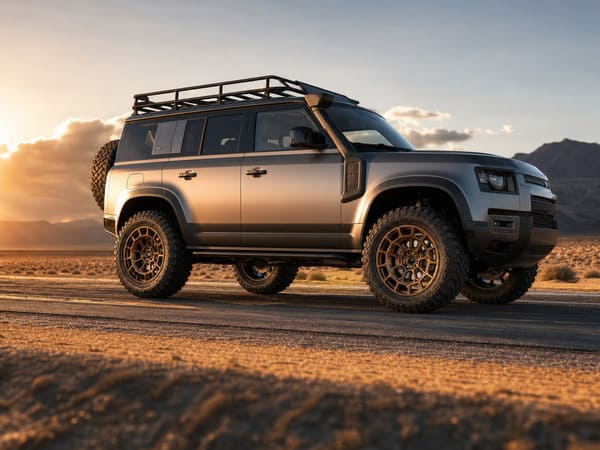
I have seen Instagram posts of bronze-wheeled Defenders reach tens of thousands of likes10. Every time, the comments section fills up with people asking what wheels they are. Bronze and gold builds do not just look good — they attract attention in a way that other finishes rarely do. But the builds that generate that kind of response are always ones where the undertone was matched carefully. The builds that disappoint are always ones where the customer chose based on a wheel photo alone.
How to Match Bronze or Gold to Your Specific Silver Shade
| Silver Shade Type | Tone Character | Recommended Warm Finish |
|---|---|---|
| Matte or satin silver (e.g., Indus Silver) | Cool, flat, low reflectance | Bronze — the warm tone creates natural contrast |
| Bright or reflective silver (e.g., Hakuba Silver) | High reflectance, near-white in sun | Brushed gold — the light interaction feels intentional |
| Grey-leaning silver | Neutral, slightly cool | Either bronze or satin gold depending on depth preference |
The one mistake I see customers make most often with warm metallic finishes is choosing based on a wheel photo alone, without holding it next to their actual vehicle in natural light. I now make this a standard step in our consultation process for any bronze or gold order. It prevents mismatches and saves everyone the cost and time of a redo. One customer from Dubai — a shop owner who builds high-end Defender customs — messaged me three times over two weeks trying to decide between matte black and bronze. He had already sold the wheels to his end client before confirming the finish. That pressure is exactly why this step matters.
Conclusion
Silver Defenders work well with matte black, satin graphite, gloss gunmetal, and bronze or gold — but only when the finish is matched to your exact silver shade and use case. At Tree Wheels, we help you get that match right, every time.
-
"Land Rover", https://en.wikipedia.org/wiki/Land_Rover. Land Rover’s official sales or configurator data, or an automotive industry color trend report (e.g., BASF, PPG, or Axalta annual color popularity reports), would substantiate claims about silver being the top-selling Defender color. Evidence role: statistic; source type: institution. Supports: That silver or a specific neutral tone is the most purchased exterior color for the Land Rover Defender globally. Scope note: Publicly available manufacturer color sales breakdowns are rarely disaggregated by model; industry color reports track broader market trends rather than a single nameplate. ↩
-
"Car colour popularity", https://en.wikipedia.org/wiki/Car_colour_popularity. Vehicle registration data published by government transport authorities, such as the UK Department for Transport, have historically documented silver as one of the most common car colors in the registered fleet, providing contextual support for the high incidence of silver among Defender owners seeking wheel customization. Evidence role: statistic; source type: government. Supports: That silver is among the most prevalent vehicle colors on the road, consistent with the assertion that silver Defender owners represent a large share of the owner population. Scope note: National fleet color statistics reflect the broader vehicle population and are not specific to the Land Rover Defender model; registration data may also lag current new-vehicle sales trends. ↩
-
"What Wheel Finishes Look Best on a Silver Rivian R1T?", https://treewheels.com/what-wheel-finishes-look-best-on-a-silver-rivian-r1t/. Research in automotive color measurement, such as studies on goniochromatic or effect pigments, documents how aluminum flake orientation in metallic paints causes pronounced lightness variation across illumination angles and light source types. Evidence role: mechanism; source type: research. Supports: That metallic or effect automotive paints such as silver exhibit significant perceptual color shifts under varying illuminant conditions due to their reflective flake content. Scope note: General color science literature may not reference the specific Land Rover Indus Silver formulation; applicability to a named OEM color requires inference. ↩
-
"Climate of London", https://en.wikipedia.org/wiki/Climate_of_London. Meteorological records from national weather services and organizations such as the UK Met Office and the UAE National Centre of Meteorology confirm that London averages significantly more overcast days annually than Dubai, which receives among the highest solar irradiance levels in the world. Evidence role: general_support; source type: government. Supports: That Dubai and London differ substantially in annual sunshine hours and cloud cover, producing meaningfully different ambient lighting conditions for outdoor objects. Scope note: Meteorological data supports the existence of lighting environment differences between the two cities but does not directly address how those differences affect perceived automotive paint color. ↩
-
"What Wheel Finishes Look Best on a Silver Rivian R1T?", https://treewheels.com/what-wheel-finishes-look-best-on-a-silver-rivian-r1t/. Reports from the Specialty Equipment Market Association (SEMA) and aftermarket industry analysts have documented matte black as a persistently dominant finish preference in the performance and custom wheel segment over the past decade. Evidence role: statistic; source type: institution. Supports: That matte black is among the most requested finishes in the aftermarket alloy wheel segment, consistent with broader automotive customization trends. Scope note: The specific 45% figure is proprietary internal data from a single retailer and cannot be verified externally; industry-wide data would reflect aggregate preferences across diverse vehicle segments. ↩
-
"What are the types of rims used on cars and automobiles?", https://treewheels.com/what-are-the-types-of-rims-used-on-cars-and-automobiles/. Technical descriptions of alloy wheel manufacturing distinguish one-, two-, and three-piece forged constructions; in multi-piece designs, the wheel face and barrel sections are manufactured and finished separately before being bolted or welded together, enabling differentiated surface treatments on each component. Evidence role: definition; source type: encyclopedia. Supports: That two-piece and three-piece forged wheel construction involves separately manufactured components — typically the face and barrel — that can be finished independently before assembly. Scope note: General engineering references may not address cosmetic customization practices specifically; the finishing flexibility described is an application inference from the structural manufacturing distinction. ↩
-
"What Wheel Finishes Look Best on a Silver Rivian R1T?", https://treewheels.com/what-wheel-finishes-look-best-on-a-silver-rivian-r1t/. Industry reports on the aftermarket wheel and tire sector, or consumer preference surveys from organizations such as SEMA or automotive market research firms, could contextualize the relative popularity of gloss versus matte and satin wheel finishes. Evidence role: statistic; source type: research. Supports: That gloss finishes represent a minority share of aftermarket wheel customization choices relative to matte or satin options. Scope note: The specific 15% figure is internal company data; no publicly available source is likely to reproduce this exact statistic for a single retailer’s order mix. ↩
-
"What Wheel Options Enhance a White Lucid Air?", https://treewheels.com/what-wheel-options-enhance-a-white-lucid-air/. Coating technology research documents that lower-gloss finishes retain acceptable appearance longer in field use because diffuse surface texture masks fine scratches and light abrasion that would be immediately visible on specular gloss surfaces. Evidence role: mechanism; source type: research. Supports: That satin or low-sheen powder coat or paint finishes maintain their appearance longer under real-world conditions than high-gloss equivalents, partly because surface micro-texture conceals minor abrasions. Scope note: Comparative durability data specific to satin versus gloss on alloy wheels in automotive environments is not widely available in peer-reviewed literature; inference from general coatings science is contextual. ↩
-
"Color Theory: A Complete Guide for Artists and Designers", https://www.sessions.edu/notes-on-design/a-guide-to-color-theory/. Classical color theory, as described in foundational texts and summarized in educational resources from design institutions, establishes that perceived harmony between adjacent colors depends substantially on the alignment of chromatic temperature — warm versus cool undertones — across those surfaces. Evidence role: definition; source type: education. Supports: That visual harmony between adjacent color surfaces depends on the alignment or intentional contrast of warm and cool undertones, a principle grounded in classical color theory. Scope note: General color theory applies broadly; its application to specific metallic automotive finishes under variable outdoor lighting conditions involves additional perceptual complexity not fully addressed in foundational color theory alone. ↩
-
"Modification and Investment Intention in the Consumer- …", https://digitalcommons.kennesaw.edu/cgi/viewcontent.cgi?article=1012&context=ama_proceedings. Research on social media content engagement in automotive and lifestyle categories suggests that visual novelty and color contrast are significant predictors of user interaction, including likes and shares, on image-centric platforms. Evidence role: general_support; source type: research. Supports: That visually distinctive automotive modifications, particularly those involving unusual color combinations, generate above-average engagement on social media platforms. Scope note: No publicly available study specifically tracks engagement metrics for bronze-wheeled Land Rover Defenders; the claim is anecdotal and the cited engagement figures are unverified. ↩