

Last month, a customer from Texas sent me a photo of a 1969 Mustang on original Magnum 500 wheels1. He wanted the same look on a 2023 Mustang GT. The problem? Nothing fit.
Vintage wheel aesthetics are being reimagined by combining original spoke geometry and proportions with modern forging processes, updated bolt patterns, and corrected offsets — preserving the visual identity of a classic design while rebuilding it to meet the fitment and performance demands of today’s vehicles.
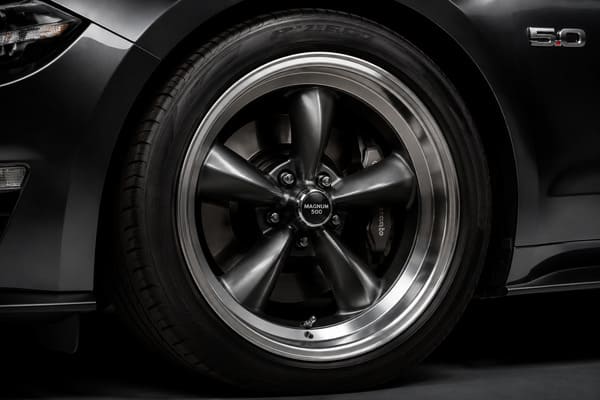
The bolt pattern was wrong. The offset did not work. The original design could not clear modern brake calipers. But the look — he was not willing to give that up. This is the exact problem I solve every week. About 40% of the custom orders we receive reference a design from before 1990. The challenge is always the same: keep the soul of the original, and rebuild it with tools that did not exist when it was first drawn.
What Makes Vintage Wheel Designs So Timeless in the Modern Automotive World?
A shop owner in Sydney told me something a few years ago that I still think about. He said, "The old designs just look finished." I knew exactly what he meant.
Vintage wheel designs are timeless because they were created under real manufacturing constraints. Every line had a purpose. Nothing was added for visual complexity. That discipline produced proportions that remain visually correct across decades, regardless of the car they are placed on.
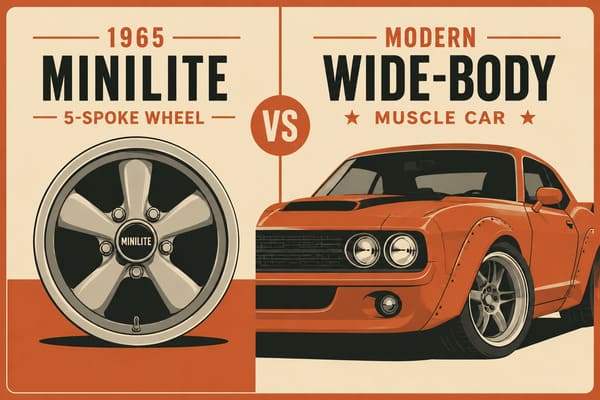
Think about the 5-spoke Minilite from 19652 or the deep-dish BBS mesh from 19833. Those designers had limited manufacturing options. Every spoke, every cutout, every curve had to earn its place on the wheel. Nothing was added just because it could be added. Today, CNC machines can cut almost any shape. That freedom is real, but it sometimes produces wheels that look busy and unresolved. The vintage designs had no such problem. A 5-spoke wheel from 1967 still looks proportionally correct on a modern wide-body build because the geometry was solved right the first time.
Why Do Constraints Produce Better Design?
When a designer works with limited tools, every decision is forced to be deliberate. There is no room for decoration that does not serve the overall form. This is why so many vintage wheels hold up visually across different eras and car styles.
| Design Era | Manufacturing Constraint | Visual Result |
|---|---|---|
| 1960s | Limited casting capability | Simple, clean spoke geometry |
| 1970s | Basic CNC not yet available | Functional cutouts became visual features |
| 1980s | Early CNC introduced | More detail, but still restrained |
| 2000s | Full CNC freedom | Over-complexity, designs aged quickly |
| Today | Full CNC + forging | Return to restraint, vintage language revived |
The restraint built into vintage designs is not a limitation. It is the reason those designs transfer so well into modern builds. A clean 5-spoke profile does not compete with the body lines of the car. It completes them. That kind of visual clarity does not expire. When I look at the orders coming into our production floor, the most requested references are almost always from the decade when manufacturing constraints were still tight enough to force good decisions. That tells me something important about what makes a wheel design last.
How Does Modern Forging Technology Improve Classic Wheel Styles?
A customer in Dubai ordered a set of vintage 3-spoke mag-style wheels for a restored 1971 Porsche 911. He wanted them to look exactly like the original Fuchs wheel — same petal cutout shape4, same polished lip. But the original Fuchs weighed around 7.5 kg per corner5.
Modern forging technology improves classic wheel styles by reducing weight, increasing structural strength, and allowing precise reproduction of original geometry. A forged aluminum version of a vintage design can match the original visual profile while weighing 20–30% less and handling significantly higher stress loads.
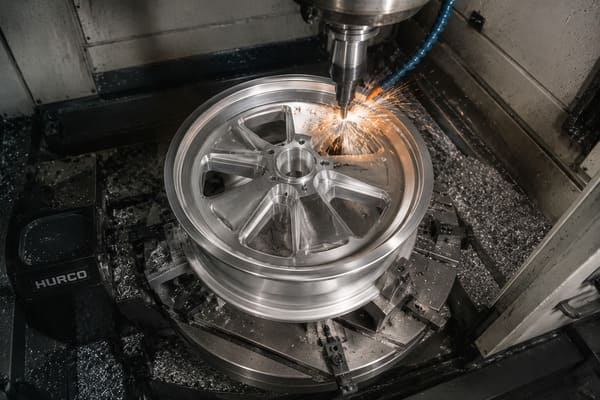
We produced his forged version at 5.2 kg — same visual profile, 30% lighter. That weight difference came entirely from material and process. We used 6061-T6 aluminum billet, forged under 10,000 tons of pressure6, then CNC machined to final dimensions. The grain structure of a forged wheel is fundamentally tighter than a cast wheel7 from the 1970s. That means it handles stress better at the same or lower wall thickness. The design is preserved. The weak points are gone.
What the Forging Process Actually Changes
The original Fuchs wheel was cast. Casting was the only practical production method available at scale in 1967. Casting produces a wheel that works, but the internal grain structure is irregular8. Stress does not travel through the material in a predictable path. To compensate, cast wheels need more material in critical areas, which adds weight.
| Property | Original Cast Wheel (1970s) | Modern Forged Version |
|---|---|---|
| Production Method | Gravity or low-pressure casting | Forged under 10,000-ton press |
| Material | Early aluminum alloy | 6061-T6 aluminum billet |
| Grain Structure | Irregular, unpredictable | Aligned, tight, consistent |
| Weight (example) | ~7.5 kg per corner | ~5.2 kg per corner |
| Wall Thickness | Thicker to compensate for casting | Thinner, supported by grain density |
| Visual Profile | Original design | Identical to original |
When we machine a forged blank to reproduce a vintage design, we are not just copying the shape. We are rebuilding the structural logic of that shape from the ground up using materials and processes that did not exist when the original was made. The customer gets the exact look he wants. He also gets a wheel that is lighter, stronger, and built to clear his modern brake calipers — none of which the original could do.
What Are the Most Popular Vintage-Inspired Wheel Designs Available Today?
Based on the orders we have handled across the US, Australia, and the Middle East over the past year, the demand for vintage-inspired designs is consistent and growing. But it is not one market. It is several.
The most popular vintage-inspired wheel designs today fall into four main categories: telephone dial and turbine spoke designs for American muscle builds, deep-dish 5-spoke mag styles for European classics, mesh and cross-lace patterns for UK and Australian markets, and reverse-lip three-piece designs for wide-body and concave builds.
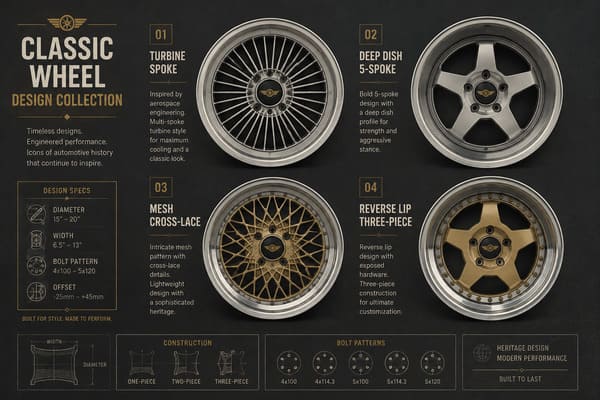
The most requested vintage-inspired styles we see fall into these four clear categories. Telephone dial and turbine spoke designs are heavily requested for American muscle restomods, especially Camaros and Mustangs referencing the late 1960s era. Deep-dish 5-spoke mag-style wheels are most popular with European classic builds, especially air-cooled Porsches and vintage BMWs. Mesh and cross-lace patterns — originally wire wheel aesthetics, now reproduced in forged aluminum — are very popular in the UK and Australian markets. Reverse-lip three-piece designs carry a vintage feel through the concave face and wide lip, while the construction underneath is entirely modern.
How the Market Segments by Car Culture
One pattern I notice consistently is that the vintage wheel market segments tightly by car culture. A shop in Los Angeles building a Japanese nostalgic Datsun 240Z wants something very different from a shop in Dubai building an American classic. The reference points are different. The non-negotiables are different.
| Market | Primary Car Type | Preferred Vintage Style | Key Reference Era |
|---|---|---|---|
| USA (West Coast) | Japanese nostalgic builds | Dish wheels, simple spoke | Late 1970s–1980s |
| USA (South/Midwest) | American muscle restomods | Turbine, telephone dial | Late 1960s–1970s |
| Australia | European and JDM classics | Mesh, cross-lace | 1980s |
| UK | Classic British and European | Wire-style, mesh | 1970s–1980s |
| Middle East / Dubai | American and European luxury classics | Deep-dish, polished lip | 1980s–1990s |
The vintage category looks unified from the outside. Once you go one level deeper, it is actually four or five separate sub-markets, each with its own references and its own standards. What this means for us as a manufacturer is that customization is not optional in this category. A single stock design does not serve these customers. Every order carries specific visual expectations tied to a specific car culture, and those expectations are not flexible.
How Did the Design of the Wheel Change?
I think about wheel design history as a six-stage story. Each stage produced a visual language. Some of those languages aged badly. Some of them are now the most requested references on our production floor.
Wheel design evolved from purely structural steel spokes before 1950, through decorative full covers in the 1950s and 1960s, into the first true alloy wheel designs of the late 1960s and 1970s, followed by a period of over-complexity in the 2000s, and now a clear return to the restrained, clean aesthetics of the 1970s and 1980s.
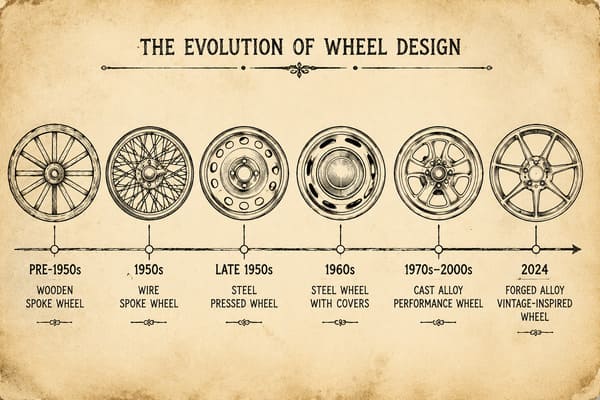
Before the 1950s, wheels were wood and steel spoke — purely structural9, with no aesthetic intent at all. Through the 1950s and into the 1960s, full wheel covers hid the rim entirely10. The wheel itself was not considered a design surface. Then in the late 1960s and 1970s, the alloy wheel emerged. The Minilite, the Panasport, the Fuchs — spokes became a visual feature for the first time. The 1980s and 1990s brought an explosion of multi-spoke and mesh designs. This is the decade that most vintage-inspired orders reference today. The 2000s and early 2010s pushed toward over-complexity — too many spokes, too much aggressive machining, designs that aged poorly. From around 2015 onward, there has been a visible return to restraint11: fewer spokes, deeper lips, cleaner faces, and the vintage language rebuilt with modern precision.
The 20-Year Cycle That Explains Today’s Market
What I find most interesting about this history is the cycle it follows. The designs that looked dated in 2005 are the exact designs that modification shops are now asking me to reproduce in forged aluminum.
| Era | Design Character | Status in 2005 | Status Today |
|---|---|---|---|
| Pre-1950s | Structural steel spoke | Historical artifact | Niche restoration only |
| 1950s–60s | Full wheel covers | Ignored | Ignored |
| Late 1960s–70s | First alloy spokes — Minilite, Fuchs | Respected, some demand | High demand, widely reproduced |
| 1980s–90s | Mesh, multi-spoke, deep dish | Considered dated | Now on waiting lists |
| 2000s–2010s | Over-complex multi-spoke | Current mainstream | Already aging poorly |
| 2015–now | Clean, restrained, vintage-influenced | Emerging | Dominant in custom market |
The 1980s mesh wheel that nobody wanted for a decade is now on waiting lists. Every aesthetic era eventually becomes a reference era. The cycle appears to run about 20 to 25 years12. We are currently living through the moment when the 1980s and 1990s wheel designs cross that line. The shops and customers I work with are not chasing nostalgia. They are recognizing that those designs solved proportional problems that later decades made worse. That recognition is what drives the orders we receive every week.
Conclusion
Vintage wheel designs endure because their proportions were solved correctly the first time. Modern forging technology lets us reproduce that visual clarity without the original structural limitations. At Tree Wheels, we build exactly that — classic aesthetics, modern precision, custom fitment for every order.
-
"Rostyle wheel – Wikipedia", https://en.wikipedia.org/wiki/Rostyle_wheel. The Magnum 500 wheel, a steel five-spoke design produced by Motor Wheel Corporation, was offered as a factory option on Ford Mustangs and other American muscle cars during the late 1960s and became a defining visual element of that era’s performance vehicles. Evidence role: historical_context; source type: encyclopedia. Supports: The Magnum 500 wheel’s association with late-1960s Ford Mustang and other American muscle cars as a factory or period-correct option. Scope note: Detailed production history and factory fitment records may be more thoroughly documented in marque-specific historical sources than in general encyclopedic references. ↩
-
"Magnesium wheels", https://en.wikipedia.org/wiki/Magnesium_wheels. The Minilite wheel, developed in the mid-1960s in the United Kingdom, became widely associated with period motorsport and road applications; its five-spoke cast alloy construction is documented as an early example of purpose-designed alloy wheels for performance vehicles. Evidence role: historical_context; source type: encyclopedia. Supports: The Minilite wheel’s introduction date, spoke configuration, and role in motorsport and road car history. Scope note: Sources may vary on the precise introduction year; the 1965 date given in the article should be verified against manufacturer or motorsport historical records. ↩
-
"BBS Autotechnik – Wikipedia", https://en.wikipedia.org/wiki/BBS_Autotechnik. BBS Kraftfahrzeugtechnik, founded in Germany, introduced multi-piece and mesh-style alloy wheel designs during the late 1970s and 1980s that became influential in both motorsport and the aftermarket wheel industry. Evidence role: historical_context; source type: encyclopedia. Supports: BBS’s development of mesh-style alloy wheels during the early 1980s and their influence on automotive wheel design. Scope note: The specific year 1983 cited in the article may refer to a particular model variant; general BBS history sources may not confirm this precise date. ↩
-
"Fuchs wheel – Wikipedia", https://en.wikipedia.org/wiki/Fuchs_wheel. The Fuchs wheel, named after its manufacturer Fuchs Felgen, was introduced on the Porsche 911 S in 1967 and is recognized for its distinctive five-petal forged aluminum construction, which reduced unsprung weight while establishing an enduring visual identity for the model. Evidence role: historical_context; source type: encyclopedia. Supports: The Fuchs wheel’s design origin, its distinctive petal-shaped cutouts, and its introduction on the Porsche 911 in 1967. ↩
-
"Fuchs wheel – Wikipedia", https://en.wikipedia.org/wiki/Fuchs_wheel. The Fuchs wheel, developed for the Porsche 911 beginning in 1967, was a forged and machined alloy design; period technical documentation and restoration sources cite weights in the range of approximately 7–8 kg depending on size and variant. Evidence role: statistic; source type: other. Supports: The approximate weight of the original Porsche Fuchs alloy wheel as produced for the 911 in the late 1960s. Scope note: Weight figures vary by wheel size and production year; the 7.5 kg figure cited in the article is representative but may not apply uniformly across all Fuchs variants. ↩
-
"6061 aluminium alloy – Wikipedia", https://en.wikipedia.org/wiki/6061_aluminium_alloy. 6061-T6 aluminum alloy is widely documented in materials engineering literature as a high-strength, heat-treatable alloy used in aerospace and automotive forging applications; the forging process aligns the material’s grain structure, improving fatigue resistance and tensile strength relative to cast equivalents. Evidence role: mechanism; source type: research. Supports: The use of 6061-T6 aluminum alloy in forged wheel production and the role of high-pressure forging in aligning grain structure to improve mechanical properties. Scope note: The specific press tonnage of 10,000 tons cited in the article is a manufacturer claim; published engineering sources describe forging pressure ranges broadly and may not confirm this exact figure. ↩
-
"[PDF] Review of the Effects of Micro structure on Fatigue in Aluminum Alloys", https://ntrs.nasa.gov/api/citations/19840014667/downloads/19840014667.pdf. Metallurgical studies document that the forging process induces directional grain flow in aluminum alloys, improving tensile strength, fatigue resistance, and impact toughness relative to gravity or low-pressure cast components of equivalent geometry. Evidence role: mechanism; source type: research. Supports: That the forging process produces a more aligned and consistent grain structure in aluminum alloys compared to casting, resulting in improved fatigue strength and stress distribution. Scope note: The degree of improvement varies by alloy composition, forging parameters, and heat treatment; the article’s claim of general superiority is supported directionally but specific performance gains depend on application conditions. ↩
-
"Characterization and Analysis of Porosities in High Pressure Die …", https://pmc.ncbi.nlm.nih.gov/articles/PMC7412358/. Materials engineering literature documents that gravity and low-pressure die casting of aluminum alloys can produce dendritic grain structures and micro-porosity, which reduce fatigue strength and necessitate increased wall thickness in load-bearing regions compared to wrought or forged components. Evidence role: mechanism; source type: research. Supports: That gravity and low-pressure casting of aluminum alloys produces irregular grain structure and potential porosity, requiring greater material thickness in stress-critical areas compared to forged equivalents. Scope note: Modern casting techniques, including squeeze casting and thixocasting, have reduced some of these deficiencies; the article’s characterization applies most accurately to casting methods available in the 1960s and 1970s. ↩
-
"Wire wheel – Wikipedia", https://en.wikipedia.org/wiki/Wire_wheel. Automotive history sources document that early vehicle wheels evolved from wooden artillery-style and wire-spoke designs toward pressed steel disc wheels during the first decades of the twentieth century, with aesthetic consideration of the wheel as a design surface emerging only later with the introduction of styled hubcaps and, eventually, alloy wheels. Evidence role: historical_context; source type: encyclopedia. Supports: That early automotive wheels were primarily structural in design, transitioning from wooden artillery-style wheels and wire spokes to pressed steel disc wheels through the first half of the twentieth century. Scope note: The claim that pre-1950s wheels had ‘no aesthetic intent’ is a generalization; styled wheel covers and decorative hubcaps were introduced in the 1930s and 1940s, indicating some aesthetic consideration prior to the 1950s. ↩
-
"Center cap – Wikipedia", https://en.wikipedia.org/wiki/Center_cap. Automotive design histories note that full wheel covers, often elaborately styled in chrome or painted steel, were standard equipment on most American production vehicles through the 1950s and early 1960s, with the structural wheel beneath treated as a functional rather than aesthetic component. Evidence role: historical_context; source type: encyclopedia. Supports: That full wheel covers and decorative hubcaps were the dominant wheel aesthetic treatment on American and European production cars during the 1950s and into the 1960s, concealing the structural wheel beneath. Scope note: Sports and performance vehicles of the same era, including those using wire wheels, represent exceptions to this generalization that the article does not address. ↩
-
"Retro-style automobile – Wikipedia", https://en.wikipedia.org/wiki/Retro-style_automobile. Industry and automotive design commentary from the mid-2010s onward has noted a broader shift in vehicle styling toward retro-influenced and restrained design language, including wheel design, reflecting consumer preference for heritage aesthetics across multiple automotive segments. Evidence role: general_support; source type: institution. Supports: That the aftermarket and OEM wheel design market has trended toward simpler, vintage-influenced aesthetics from approximately the mid-2010s onward. Scope note: The 2015 date is the author’s observation based on order data; independent market research specifically quantifying this trend in wheel design is limited, and the claim is supported directionally by broader automotive design trend reporting rather than wheel-specific data. ↩
-
"[PDF] The Analysis of Culture through Semiotics and its role in the …", https://etd.auburn.edu/bitstream/handle/10415/4180/Thesis_Morley_v2.pdf. Consumer behavior and design history research has documented cyclical nostalgia in product aesthetics, with revival interest in prior-era styles commonly observed at intervals approximating one generation, typically cited as 20–30 years in cultural and marketing literature. Evidence role: general_support; source type: research. Supports: That consumer aesthetic preferences in automotive and product design tend to cycle back to earlier styles on an approximate generational timeline. Scope note: The specific 20–25 year figure cited in the article is the author’s observation; academic sources describe the general phenomenon of nostalgic revival cycles but do not uniformly confirm a precise interval for automotive wheel design specifically. ↩