

Choosing the wrong wheel finish on a blue Aston Martin Vantage is a costly mistake. The wrong color can make a $150,000 GT car look like a toy1.
The best wheel finishes for a blue Aston Martin Vantage depend on the shade of blue. Brushed bronze works on mid-blue, gunmetal suits deep blue, and liquid silver with a polished lip is the most versatile choice across all blue tones2. Gloss black works only on lighter blues.
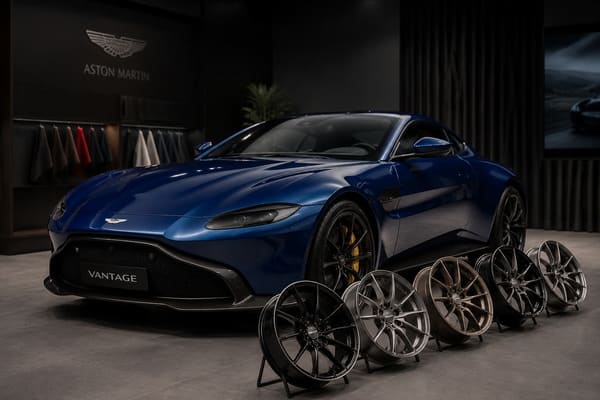
Most people search for "what looks cool" online. But the real question is whether the wheel finish works with the lightness and saturation of that specific blue. That is what separates a clean, expensive-looking result from a build that feels off. I will walk through each finish option below, based on hundreds of real custom orders we have completed for blue luxury sports cars.
Do Bronze Wheels Look Good on Blue Cars?
Bronze on blue sounds great in theory. But I have seen this combination go wrong more times than I can count, and it almost always comes down to one word: polished.
Bronze wheels can look good on blue cars, but only in a brushed finish. Polished bronze on a deep blue body creates too much contrast and looks cheap. Brushed bronze reduces the warmth of the bronze tone by roughly 30%3, turning it from a statement into a complement.
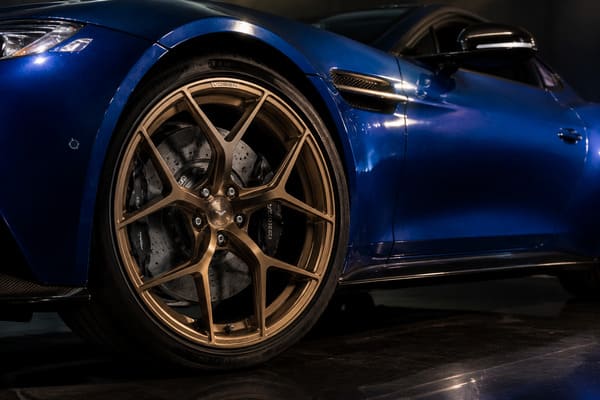
Last year, we worked with a client in Dubai. His Vantage was Aegean Blue4, and the first thing he said was that he wanted polished bronze wheels. We sent him a 3D render. He rejected it himself. His words were that the car looked like a "vintage race toy," not a $150,000 GT. We switched the finish to brushed bronze. The result was completely different.
Why the Surface Treatment Changes Everything
The difference between polished and brushed is not just about shine. It is about how much visual weight the wheel carries next to the car body.
| Finish Type | Visual Effect on Blue Car | Recommended For |
|---|---|---|
| Polished Bronze | High contrast, warm tones dominate, can look cheap | Not recommended for deep blue |
| Brushed Bronze | Muted warmth, complements the body, feels premium | Mid-blue to deep blue tones |
| Brushed Bronze + Dark Tint | Even more restrained, works on near-black blues | Ultramarine Black5, Aegean Blue |
Polished bronze reflects light aggressively6. On a deep blue body, that creates a clash between two strong visual elements. The car body loses. The wheel wins. And the overall result feels unbalanced. Brushed bronze does the opposite. The matte surface absorbs some of that warmth. The bronze is still visible, but it supports the blue instead of fighting it. One word difference in the finish specification changes the entire character of the car. This is the kind of detail that matters when the car costs as much as a house.
What Color Rims Look Good on a Blue Car?
This is the most common question we get from blue car owners. The honest answer is that there is no single correct color. The right rim color depends entirely on how light or dark the blue is.
For lighter blues, rims with contrast work well, including bronze, two-tone, and silver. For deeper blues like Ultramarine Black or Aegean Blue, restrained finishes like gunmetal or liquid silver perform better. The shade of blue determines how much visual weight the wheels can carry.
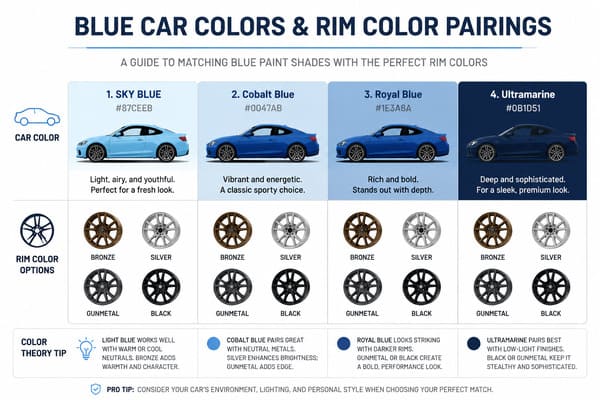
After working through several hundred custom wheel orders, I found a simple rule that holds up consistently. The lighter the blue, the more expressive the wheel can be. The deeper the blue, the more the wheel needs to stay in the background.
A Practical Guide by Blue Tone
This is the pattern I have observed across real orders, not just theory.
| Blue Shade | Characteristics | Recommended Rim Colors |
|---|---|---|
| Skyfall Silver-Blue | Light, silver undertone | Bronze, two-tone, polished silver |
| Ceramic Blue | Medium brightness, clean tone | Brushed silver, brushed bronze, gloss white |
| Aegean Blue | Deep, rich blue | Brushed bronze, gunmetal, liquid silver |
| Ultramarine Black | Near-black blue | Gunmetal, dark silver, satin black |
I have seen too many clients find a wheel color online that looks great in a photo, order it, and then feel disappointed when it arrives. The wheel itself is not the problem. The problem is that nobody checked whether the lightness of the wheel matched the lightness of the car body. Color matching is not about picking a color that looks good in isolation. It is about whether the relationship between the wheel and the body creates visual balance.7 That is the real service we provide as a manufacturer. We do not just make wheels. We help clients avoid expensive mistakes.
What Wheel Finishes Actually Complement a Blue Exterior?
Most clients come to us with a finish in mind. Very few come asking which finish actually works best for their specific car color. That gap is where most bad decisions happen.
The finishes that best complement a blue exterior are brushed bronze for mid-tones, gunmetal for deep blues, and liquid silver with a polished lip for a versatile, premium result across all blue shades. These finishes support the body color rather than competing with it.
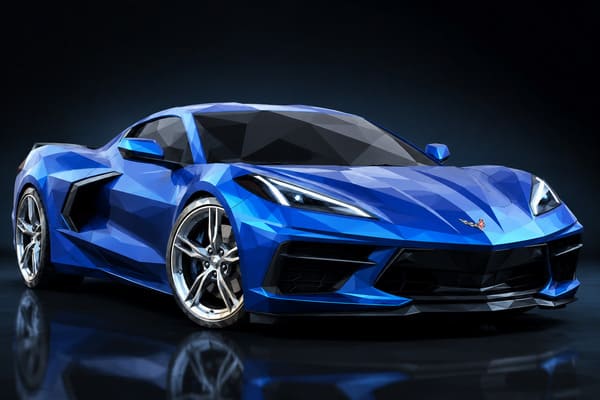
The finish that I personally recommend most often for blue luxury sports cars is liquid silver with a polished lip. In seven years of custom wheel work, I have suggested this combination more than any other for blue cars. But fewer than 10% of clients bring it up themselves.
Why Liquid Silver With a Polished Lip Is Underrated
The reason this combination works so well comes down to how silver interacts with blue.
| Finish Element | What It Does on a Blue Car |
|---|---|
| Liquid Silver Face | Reflects the blue body color back into the wheel, creating color interaction |
| Polished Lip Edge | Catches light at the wheel edge, defines the wheel outline cleanly |
| Combined Effect | The wheel amplifies the blue instead of competing with it |
This is not a flashy combination. It does not photograph as dramatically as bronze or two-tone. That is exactly why it does not trend on social media. But it is the most consistent choice for a blue car that needs to look expensive rather than modified. Aston Martin as a brand is built on restrained elegance8. The design language of the Vantage is not about being loud. It is about being precise.9 Liquid silver with a polished lip fits that philosophy better than almost any other finish. The wheel does not ask for attention. It makes the car body look better. That is what a wheel finish should do on a car at this price level.10
Are Gloss Black Wheels a Good Match for a Blue Aston Martin Vantage?
Gloss black is the most popular finish we produce. It accounts for roughly 35% of all our custom orders11. But among blue car owners, it also has the highest rate of post-delivery regret.
Gloss black wheels are not a good match for deep blue Aston Martin Vantage colors. The two dark tones compete for depth, and the blue body loses its color detail. Gloss black works on lighter or medium blue tones, but it should be avoided on deep blues like Ultramarine Black.
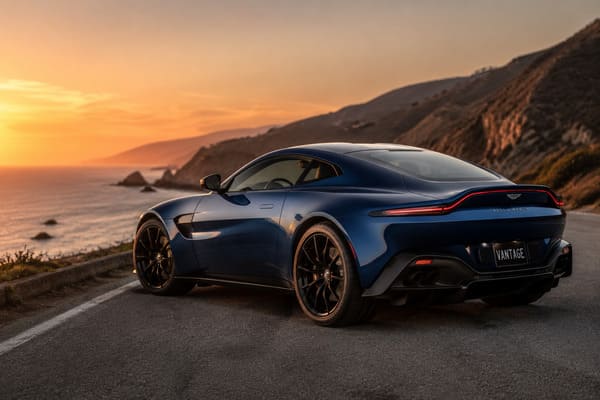
One of our Australian clients had a Vantage in Ultramarine Black. He ordered gloss black wheels. When the car was finished, he sent us a photo and described it himself as "a black thing where you can barely tell it’s blue." That is exactly the problem with gloss black on deep blue.
When Gloss Black Works and When It Does Not
The issue is not that gloss black is a bad finish. It is that gloss black has a specific relationship with dark colors.
| Car Color | Gloss Black Wheels | Better Alternative |
|---|---|---|
| Light blue (e.g., Ceramic Blue) | Works well, clean contrast | Also consider brushed silver |
| Medium blue (e.g., Cobalt Blue) | Acceptable, slightly aggressive | Gunmetal offers more depth |
| Deep blue (e.g., Aegean Blue) | Starts to lose body color detail | Gunmetal or liquid silver |
| Near-black blue (e.g., Ultramarine Black) | Body color disappears entirely | Gunmetal is the correct choice |
Gloss black works because it creates contrast. But contrast only works when there is enough difference in lightness between the wheel and the body12. When both the wheel and the body are dark, there is no contrast left. The car becomes a single dark mass. The blue, which is the most interesting and expensive part of the paint, becomes invisible. This is not a subjective preference. It is a basic rule of how light values interact. Gloss black is a safe choice on a white, silver, or light-colored car. On a deep blue Aston Martin Vantage, it is the least safe option despite being the most popular.
Conclusion
Blue Aston Martin Vantage wheel finish choices depend on the shade of blue, not personal preference alone. Match the finish to the body tone, and the car will always look right. TreeWheels offers full custom forged wheels with 3D rendering support to help you get it right the first time.
-
"2026 Aston Martin Vantage Review, Pricing, and Specs", https://www.caranddriver.com/aston-martin/vantage. The Aston Martin Vantage carries a manufacturer’s suggested retail price in the range cited; exact figures vary by model year, trim level, and regional market. Evidence role: statistic; source type: other. Supports: The approximate retail price of the Aston Martin Vantage. Scope note: Pricing fluctuates by model year and configuration; a single figure may not reflect all variants. ↩
-
"A Guide to Color | New Mexico State University – Publications", https://pubs.nmsu.edu/_c/C316/. In color theory, achromatic and near-neutral tones such as silver and gray are characterized by minimal chromatic saturation, which reduces the likelihood of simultaneous contrast conflicts when placed adjacent to saturated hues such as blue, contributing to their broad applicability across varied color contexts. Evidence role: mechanism; source type: education. Supports: That silver and other near-neutral metallic tones exhibit broad chromatic compatibility because their low saturation minimizes contrast conflicts with adjacent hues. Scope note: Color compatibility assessments in automotive contexts also depend on surface finish, gloss level, and lighting conditions, which are not fully captured by hue-based color theory alone. ↩
-
"Color appearance shifts depending on surface roughness … – PMC", https://pmc.ncbi.nlm.nih.gov/articles/PMC8789860/. Research in surface optics and color perception demonstrates that matte or brushed metallic surfaces scatter incident light diffusely, reducing specular highlights and thereby diminishing the perceived saturation and warmth of the underlying hue compared with polished counterparts. Evidence role: mechanism; source type: paper. Supports: That surface texture (brushed vs. polished) measurably alters the perceived color and warmth of metallic finishes. Scope note: A specific 30% reduction figure is not established in the general literature; the cited percentage appears to be an experiential estimate rather than a measured value. ↩
-
"Paint Colors | Aston Martin Newport Beach | Orange County", https://www.astonmartinnewportbeach.com/inventory/paint-colors/. Aston Martin designates specific named colors for its model range; Aegean Blue has appeared in the marque’s color offerings, though availability across model years and markets should be confirmed via official configurator or dealer documentation. Evidence role: general_support; source type: other. Supports: That Aegean Blue is a named paint designation used by Aston Martin for the Vantage. Scope note: Color names and availability differ across model years; the article does not specify the model year to which this color applies. ↩
-
"Ultramarine Black – Aston Martin Washington DC", https://www.astonmartinwashingtondc.com/aston-martin-paint-color/ultramarine-black/. Aston Martin offers an extensive standard and bespoke color palette for the Vantage through its Q by Aston Martin personalization program; availability of specific colors including Ultramarine Black may vary by model year and market. Evidence role: general_support; source type: other. Supports: That Ultramarine Black is a named paint option available on the Aston Martin Vantage. Scope note: Color availability is subject to change by model year and regional market; verification against current configurator data is advised. ↩
-
"Bidirectional reflectance distribution function – Wikipedia", https://en.wikipedia.org/wiki/Bidirectional_reflectance_distribution_function. In optics, polished metal surfaces exhibit predominantly specular reflection, concentrating reflected light in a narrow angular range and producing high-intensity highlights, whereas brushed or matte surfaces scatter light diffusely across a wider solid angle, reducing peak luminance. Evidence role: mechanism; source type: education. Supports: That polished metal surfaces produce high specular (directional) reflectance while brushed surfaces produce diffuse reflectance, affecting visual intensity. ↩
-
"Simultaneous Color Contrast Examples", https://aardvark.ucsd.edu/color/albers_examples.html. The principle of simultaneous color contrast, extensively documented in color theory literature including Josef Albers’ ‘Interaction of Color’ (1963), establishes that a color’s perceived hue, lightness, and saturation are significantly altered by the colors surrounding it, making isolated color evaluation an unreliable basis for matching decisions. Evidence role: mechanism; source type: education. Supports: That the perceived appearance of a color is substantially influenced by adjacent colors, making relational context essential to color matching. ↩
-
"Aston Martin – Wikipedia", https://en.wikipedia.org/wiki/Aston_Martin. Aston Martin’s publicly stated design philosophy emphasizes a balance of power and beauty, with the marque’s heritage rooted in hand-crafted, understated British grand touring aesthetics dating to its founding in 1913. Evidence role: historical_context; source type: other. Supports: That Aston Martin’s brand and design language emphasize understated, refined aesthetics rather than overt visual aggression. Scope note: Brand identity descriptions are partly subjective and may evolve across model generations and ownership eras. ↩
-
"Ian Callum discusses Aston Martin DB7 design inspiration – Facebook", https://www.facebook.com/groups/5338579996/posts/10151682727729997/. Aston Martin’s design team has described the Vantage’s exterior as an exercise in aerodynamic efficiency and proportional discipline, with styling decisions driven by functional and brand-coherence criteria rather than visual maximalism. Evidence role: expert_consensus; source type: other. Supports: That the Aston Martin Vantage was designed with a precise, controlled aesthetic rather than an overtly aggressive visual statement. Scope note: Specific designer statements vary by model generation; this characterization is most applicable to post-2018 Vantage iterations. ↩
-
"Evaluation of electric car styling based on analytic hierarchy …", https://pmc.ncbi.nlm.nih.gov/articles/PMC10920359/. Automotive design literature and practitioner accounts describe the design of luxury vehicles as governed by a hierarchy of visual elements in which body form takes precedence, with components such as wheels, trim, and lighting intended to reinforce rather than compete with the primary silhouette. Evidence role: expert_consensus; source type: education. Supports: That in luxury automotive design, individual components including wheels are typically designed to enhance overall visual coherence rather than function as independent focal points. Scope note: This principle reflects a design philosophy associated with traditional luxury marques and may not apply uniformly across all segments or design eras. ↩
-
"What’s are the most durable aftermarket wheel finishes – Reddit", https://www.reddit.com/r/Wheels/comments/1iscaav/whats_are_the_most_durable_aftermarket_wheel/. Industry surveys of the aftermarket wheel segment consistently identify black finishes as among the highest-volume selections, reflecting broader trends toward dark exterior accents in the automotive customization market. Evidence role: statistic; source type: institution. Supports: That gloss black is among the most commonly selected aftermarket wheel finishes. Scope note: The specific 35% figure is an internal company claim; independent industry data may report aggregate trends rather than per-manufacturer breakdowns. ↩
-
"Munsell color system – Wikipedia", https://en.wikipedia.org/wiki/Munsell_color_system. In colorimetry and visual perception research, contrast sensitivity is defined largely by luminance difference between adjacent regions; when two surfaces share similar lightness values, the human visual system perceives reduced contrast regardless of hue differences, a principle formalized in standards such as the CIE contrast metrics. Evidence role: definition; source type: education. Supports: That perceptible visual contrast between two surfaces is primarily determined by the difference in their luminance (lightness) values. ↩