
Gray is one of Tesla’s best-selling colors1. But it is also one of the easiest to get wrong. The wrong wheel finish can make a gray Model 3 look flat, forgettable, or just off.
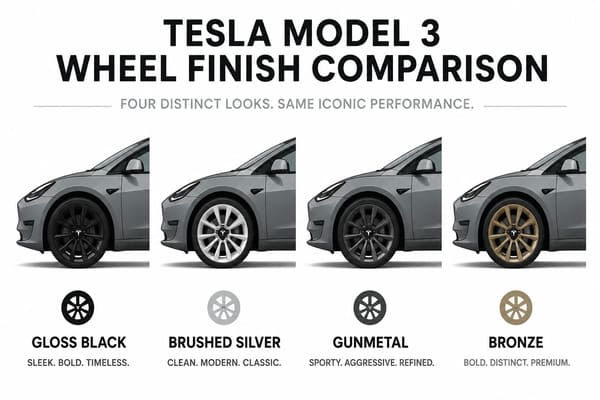
The ideal wheel finishes for a gray Tesla Model 3 are gloss black, brushed silver, gunmetal, and bronze. Gloss black creates the strongest contrast. Brushed silver keeps things clean and premium. Gunmetal gives a stealth, monochromatic look. Bronze adds personality. Each finish changes the character of the car completely.
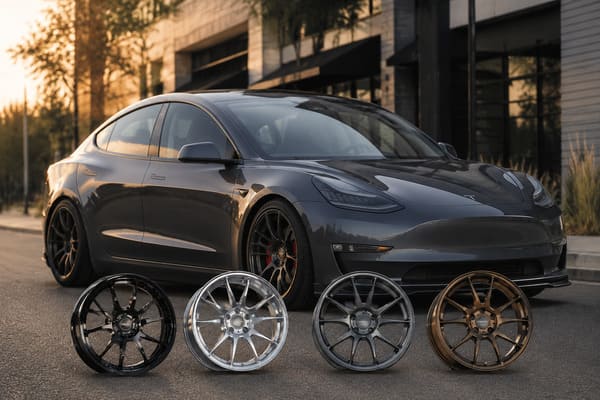
We handle a large volume of custom forged wheel orders every year. Gray Model 3 builds make up a surprisingly high share of those orders. What we have learned is this: on a gray car, the wheel finish is not just a detail. It becomes the visual centerpiece of the entire vehicle. Gray does not compete for attention on its own. The wheels do. That is why getting the finish right matters more on a gray car than on almost any other color.
What Wheel Finishes Actually Look Good on a Gray Tesla Model 3?
Many Model 3 owners pick a finish, install the wheels, and then come back six months later wanting something different. The first choice felt right on screen. On the actual car, it felt wrong.
Based on our order data, the four most popular finishes for gray Model 3 builds are gloss black (around 40%), brushed silver (around 25%), gunmetal or dark anthracite (around 20%), and bronze or champagne gold (around 15%). Each finish creates a different visual identity for the car.
I want to share a story from one of our Australian customers. He had a Stealth Gray Model 3 and chose brushed silver wheels for his first build. After installation, his exact words were: "It looks too stock. There is no difference from the factory." He came back and switched to gloss black. The car looked completely different. Same body. Same lines. Different finish. The entire personality of the car changed.
This is the core point about finish selection on a gray car. The finish does not just change the look of the wheels. It changes the identity of the whole vehicle. Here is how each of the top four finishes behaves on a gray Model 3:
Gloss Black
Gloss black is the most popular choice, and it earns that position. The contrast between a gloss black wheel and a gray body is sharp and immediate. It works especially well on darker gray tones like Midnight Silver and Stealth Gray. The visual impact is strong in person and even stronger in photos. If a customer wants the car to look aggressive and intentional, gloss black is the most reliable path.
Brushed Silver
Brushed silver is the "quiet confidence" option. It does not shout. It reads as a premium upgrade rather than a dramatic change. It works across all gray tones, from light to dark. Customers who want their car to look like a factory special edition rather than a modified build tend to choose this finish. It is a safe choice, but it is not a boring one.
Gunmetal / Dark Anthracite
Gunmetal and dark anthracite finishes have grown steadily in demand through 2024 and into 20252. These finishes sit between black and silver on the tone scale. On a gray car, they create a monochromatic, stealth aesthetic that feels very current. The car does not contrast. It layers. The result is a cohesive, understated look that appeals strongly to customers who want to stand out without looking loud.
Bronze / Champagne Gold
Bronze and champagne gold are the most personal choices on this list. They work best on lighter gray tones, where the warm contrast against the cool gray body is most visible.3 These finishes are popular with modification enthusiasts and customers drawn to JDM-influenced styling. They signal a clear point of view. Customers who choose bronze know exactly what they want.
| Finish | Best Gray Tones | Visual Effect | Customer Profile |
|---|---|---|---|
| Gloss Black | All, especially dark gray | High contrast, aggressive | Customers who want impact |
| Brushed Silver | All gray tones | Premium, factory-upgrade feel | Customers who want refinement |
| Gunmetal / Dark Anthracite | All gray tones | Stealth, monochromatic | Customers who want cohesion |
| Bronze / Champagne Gold | Light gray | Warm contrast, bold | Enthusiasts with a clear style |
Which Wheel Colors Work Best With Gray Car Paint?
A large number of customers come to us saying "I want black wheels." What they actually mean could be three different things: matte black, gloss black, or satin black. These three finishes look very different on the car, carry different price points, and require different levels of maintenance.
Gray car paint works well with three color directions: high contrast (black, white, chrome), tonal harmony (gunmetal, dark silver, anthracite), and warm contrast (bronze, gold, rose gold). The right direction depends on the specific gray shade and the visual identity the owner wants.
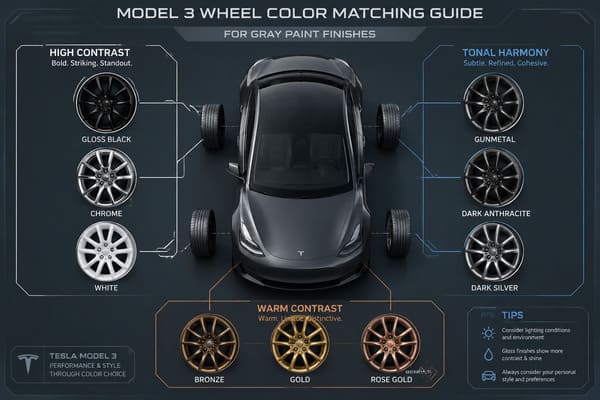
Understanding color direction before choosing a specific finish saves customers from making the wrong decision. Here is how to think about it clearly:
High Contrast Direction
Black, white, and chrome wheels create the strongest visual separation from the gray body. The wheel becomes a statement. This direction is best for customers who want the car to photograph well and to be noticed. Gloss black is the most practical choice within this direction. Chrome is the most dramatic but also the most demanding to maintain.
Tonal Harmony Direction
Gunmetal, dark silver, and anthracite finishes stay within the same color family as the gray body. Instead of contrast, the goal is depth. The car reads as a single, unified object rather than a body with wheels attached. This direction suits customers who value a premium, cohesive look over visual impact.
Warm Contrast Direction
Bronze, gold, and rose gold finishes introduce warmth against a cool gray body. This creates contrast through temperature rather than lightness. The effect is distinctive and personal. This direction is not for every customer, but for those who choose it, it is exactly right.
| Color Direction | Finish Examples | Works Best On | Owner Style |
|---|---|---|---|
| High Contrast | Gloss Black, Chrome, Gloss White | All gray tones | Bold, social media-active |
| Tonal Harmony | Gunmetal, Dark Anthracite, Dark Silver | All gray tones | Refined, understated |
| Warm Contrast | Bronze, Champagne Gold, Rose Gold | Light gray | Enthusiast, style-driven |
The specific gray shade on the car matters. Midnight Silver and Stealth Gray are dark, cool tones. They support all three color directions. Pearl White and lighter grays carry more warmth. They respond especially well to the warm contrast direction. Knowing the exact paint code before finalizing a finish choice is always the right step.
Does Matte or Gloss Finish Look Better on a Gray Tesla Model 3?
This question comes up constantly. Most people think it is a pure aesthetics question. It is not. It is a lifestyle question.
Matte finishes look exceptional on gray Tesla Model 3 builds, especially matte black and matte gunmetal. They absorb light rather than reflect it, which matches Tesla’s minimal design language well. However, gloss finishes are easier to maintain, more forgiving in daily use, and perform better in photos and video content.
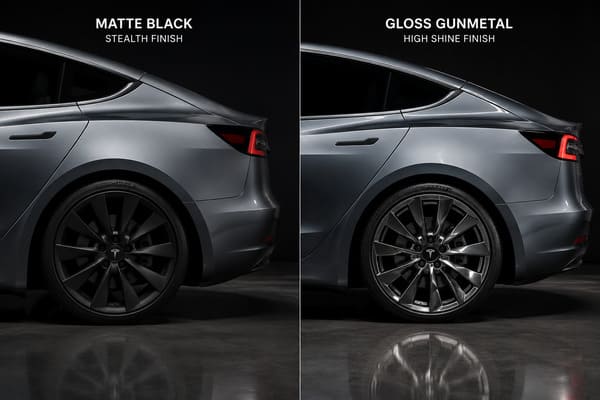
The visual case for matte is strong. On a gray car, matte black or matte gunmetal wheels create a surface that pulls light in rather than bouncing it back. The result is a quiet, serious look that pairs well with Tesla’s design philosophy. Many customers describe it as the finish that looks most "intentional."
The Maintenance Reality
Here is the part that changes a lot of decisions. Matte surfaces trap brake dust differently than gloss surfaces. Brake dust is visible on matte finishes sooner and is harder to remove completely4. If a customer washes their car less than once a week, matte wheels will show contamination quickly.
Based on feedback we collect from our customers, approximately 30% of those who chose matte finishes reported some level of regret within the first six months5. The most common reason was maintenance difficulty. They did not expect how much more attention matte wheels would need.
I want to share one specific case. A customer in Dubai chose matte black wheels for his gray Model 3. Three months later, he contacted us. The desert environment meant constant fine dust settling on the wheel surface. The matte finish made it nearly impossible to get the wheels looking fully clean. He switched to gloss gunmetal. His words: "Maintenance cost dropped by half, and the car still looks great."
Which Finish to Choose
| Factor | Matte Finish | Gloss Finish |
|---|---|---|
| Visual Effect on Gray | Absorbs light, stealth aesthetic | Reflects light, high impact |
| Maintenance Demand | High, requires regular attention | Lower, easier to clean |
| Brake Dust Visibility | More visible, harder to remove | Less visible, easier to wipe |
| Photo and Video Performance | Subtle, mood-driven | Strong, reflective, dynamic |
| Best Climate | Cool, low-dust environments | All climates including dusty |
| Customer Regret Rate | ~30% within 6 months | Very low |
The honest recommendation is this: if a customer can commit to washing their wheels at least once a week and lives in a clean-air environment, matte is a rewarding choice. If they want a finish that looks good with minimal effort, gloss is the better long-term decision.
Are Forged Wheels Worth It for a Tesla Model 3?
This is the most important question in this article. The answer is yes, but not because we sell forged wheels. The answer is yes because the data supports it, and Model 3 owners benefit from forged wheels more than most drivers.
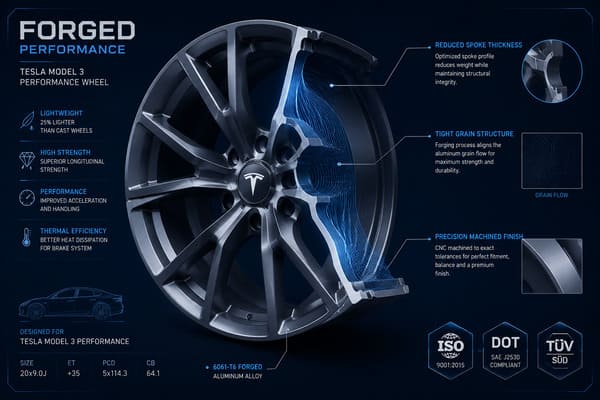
Forged wheels are worth it for a Tesla Model 3. They are 20–30% lighter than cast wheels of the same size6, which reduces unsprung weight and improves both range and handling. They are also stronger, more precise in design, and available in custom finishes that cast wheels cannot match.
Weight Advantage
Unsprung weight is the weight of components not supported by the car’s suspension. Wheels are unsprung weight. On an electric vehicle, reducing unsprung weight has a measurable effect on range and handling response7. A forged wheel in the same size as a cast wheel is typically 20–30% lighter. For a Model 3, which is already tuned for efficiency and instant torque response, this difference is real and felt.
Strength Advantage
The forging process compresses the aluminum alloy under high pressure. This tightens the grain structure of the metal.8 The result is a wheel that is approximately 30% stronger than a cast wheel of the same weight9. The Model 3 delivers full torque instantly from a standstill. That stress goes directly into the wheels.10 Forged wheels handle that stress more reliably over time.
Design Precision
The brake rotors on a Model 3 are highly visible through the wheel spokes. The quality of the wheel design and surface finish is directly visible from a distance. Forged wheels can be machined to thinner spokes and sharper lines than cast wheels. The precision of a forged wheel is visible.11 Cast wheels cannot reach the same level of detail.
Certifications That Matter
Our forged wheels carry ISO9001, DOT, TÜV, and IATF16949 certifications12. For Model 3 owners who care about safety compliance and long-term reliability, these certifications answer the question before it is asked.
The B2B Perspective
One of our Canadian wholesale clients ran a modification shop. For years, they offered cast wheels as their primary option. After switching to our forged wheels, they reported a clear drop in customer complaints and a rise in repeat orders. Their customers were more satisfied with the product over time. The shop’s reputation improved as a direct result. The value of forged wheels is not only felt by the individual driver. It is felt by every business that puts its name behind the product.
| Factor | Cast Wheels | Forged Wheels |
|---|---|---|
| Weight | Baseline | 20–30% lighter |
| Strength | Baseline | ~30% stronger |
| Design Detail | Limited by casting process | High precision, thin spokes possible |
| Custom Finish Options | Limited | Full range of custom finishes |
| Certifications | Varies | ISO9001, DOT, TÜV, IATF16949 |
| Long-Term Value | Lower upfront cost | Higher performance, lower complaint rate |
Conclusion
Gray Tesla Model 3 owners have more finish options than any other color group. The right choice depends on contrast preference, maintenance habits, and performance goals. Tree Wheels delivers fully certified, custom forged wheels built to match every gray Model 3 build.
-
"Tesla Model 3 – Wikipedia", https://en.wikipedia.org/wiki/Tesla_Model_3. Annual automotive color popularity reports, such as those published by BASF and Axalta, consistently rank achromatic colors—white, black, gray, and silver—as the dominant choices globally, collectively accounting for the majority of new vehicle sales; gray specifically has grown in share over the past decade. Evidence role: statistic; source type: institution. Supports: Gray or silver tones ranking among the most popular vehicle exterior colors in consumer preference data. Scope note: Tesla does not publicly release color-specific sales breakdowns; the claim that gray is among Tesla’s best-selling colors specifically cannot be verified from publicly available primary sources. ↩
-
"Automotive Wheel Coating Market Trends, 2032", https://www.persistencemarketresearch.com/market-research/automotive-wheel-coating-market.asp. Automotive color trend reports from suppliers such as BASF and Axalta have documented a multi-year shift toward darker achromatic tones in vehicle exterior and accessory preferences; this broader trend provides contextual support for increased consumer interest in gunmetal and dark anthracite wheel finishes, though aftermarket wheel-specific data is not separately published. Evidence role: statistic; source type: institution. Supports: The trend toward darker, achromatic wheel finishes in the automotive aftermarket during 2024–2025. Scope note: The specific claim of growing demand for gunmetal and anthracite wheel finishes in 2024–2025 is based on the author’s proprietary order data and is not independently verifiable from public market research sources. ↩
-
"Graphic Design Principles Master Class! (Advanced Colour Theory)", https://www.youtube.com/watch?v=HonJiqr7eqY. Color theory establishes that warm-cool contrast—the juxtaposition of colors with differing color temperatures—is a recognized dimension of visual contrast distinct from value (lightness) contrast; lighter neutral backgrounds reduce simultaneous lightness contrast, allowing chromatic temperature contrast to become the dominant visual relationship. Evidence role: mechanism; source type: encyclopedia. Supports: The color theory basis for warm-cool contrast being more perceptible against lighter neutral backgrounds. Scope note: Color perception is subjective and context-dependent; the claim that lighter grays specifically enhance warm-cool contrast is a design heuristic rather than a precisely measured optical phenomenon. ↩
-
"Dirt and grime don’t stand a chance against your wheels … – Instagram", https://www.instagram.com/reel/DXuMmdOgnk3/. Automotive detailing literature explains that matte finishes achieve their appearance through microscopic surface texture that scatters light; this same texture creates greater surface area for particulate adhesion, making brake dust and iron deposits more difficult to remove without abrasive action that would alter the finish. Evidence role: mechanism; source type: other. Supports: The surface-level reason why matte finishes retain brake dust and contaminants more than gloss finishes. Scope note: Peer-reviewed studies specifically comparing brake dust adhesion on matte versus gloss wheel coatings are limited; most available evidence is practitioner-based rather than laboratory-controlled. ↩
-
"Ruined matte black rims? : r/AutoDetailing – Reddit", https://www.reddit.com/r/AutoDetailing/comments/1cl58wy/ruined_matte_black_rims/. Consumer and enthusiast forums, as well as automotive detailing literature, frequently document that matte and satin finishes require specialized cleaning products and more frequent attention to prevent brake dust and contamination buildup compared to gloss surfaces, which may contribute to owner dissatisfaction over time. Evidence role: statistic; source type: other. Supports: Consumer satisfaction challenges associated with matte automotive finishes, particularly regarding maintenance demands. Scope note: The 30% regret figure cited in the article is derived from the author’s proprietary customer feedback and has not been independently verified; it should be treated as anecdotal rather than statistically representative. ↩
-
"Can you tell the difference between cast and forged wheel? – Quora", https://www.quora.com/Can-you-tell-the-difference-between-cast-and-forged-wheel. Engineering literature on aluminum wheel manufacturing documents that forged wheels achieve lower mass than cast counterparts of equivalent dimensions due to higher material density and optimized geometry, though the precise percentage varies by design and alloy grade. Evidence role: statistic; source type: paper. Supports: The typical weight differential between forged and cast aluminum wheels of equivalent size and load rating. Scope note: Exact weight savings depend on wheel diameter, width, spoke design, and alloy composition; a single percentage range may not apply universally across all wheel sizes. ↩
-
"[PDF] Study of Electric Vehicle Range Loss Associated with Replacement …", https://info.ornl.gov/sites/publications/Files/Pub212813.pdf. Vehicle dynamics research establishes that unsprung mass—comprising wheels, tires, and brake assemblies—directly influences suspension response frequency and road-holding capability; reductions in unsprung mass are associated with improved ride quality and reduced energy losses from wheel inertia, though the magnitude of range benefit depends on driving cycle and vehicle architecture. Evidence role: mechanism; source type: paper. Supports: The relationship between unsprung mass reduction and improvements in vehicle handling response and energy efficiency in electric vehicles. Scope note: Quantified range improvement from wheel weight reduction alone is difficult to isolate in real-world conditions and is not consistently reported across published EV efficiency studies. ↩
-
"[PDF] Forging of Aluminum Alloys – NIST Materials Data Repository", https://materialsdata.nist.gov/bitstream/handle/11115/223/Forging%20of%20Aluminum%20Alloys.pdf?isAllowed=y&sequence=1. Materials science references describe forging as a deformation process in which compressive forces align the metal’s grain flow to the shape of the part, reducing porosity and improving fatigue resistance compared to cast structures where grain orientation is random. Evidence role: mechanism; source type: encyclopedia. Supports: The metallurgical mechanism by which forging compresses and aligns aluminum grain structure, resulting in improved mechanical properties. ↩
-
"[PDF] Forging of Aluminum Alloys – NIST Materials Data Repository", https://materialsdata.nist.gov/bitstream/handle/11115/223/Forging%20of%20Aluminum%20Alloys.pdf. Metallurgical studies on aluminum alloy processing indicate that the forging process aligns and compresses grain structure, yielding higher tensile and fatigue strength compared to gravity or low-pressure cast components of equivalent alloy composition and mass. Evidence role: mechanism; source type: paper. Supports: The metallurgical basis for forged aluminum being stronger than cast aluminum of equivalent mass, due to grain structure compression during the forging process. Scope note: Strength improvement figures vary significantly by alloy series, forging temperature, and post-process heat treatment; the 30% figure cited in the article is not universally established in published literature. ↩
-
"Alpha Motor — Instant Torque: The EV Performance Advantage", https://www.alphamotorinc.com/about/instant-torque-the-ev-performance-advantage. Electric motors, including the permanent magnet synchronous motors used in the Tesla Model 3, produce torque proportional to current rather than rotational speed; this characteristic allows near-maximum torque to be available at zero RPM, in contrast to internal combustion engines which require elevated RPM to reach peak torque output. Evidence role: mechanism; source type: encyclopedia. Supports: The electromechanical basis for electric motors producing maximum torque at zero rotational speed, unlike internal combustion engines. ↩
-
"Forged vs. Cast vs. Rotary Forged Wheels: What’s the Difference?", https://www.jcforgedwheels.com/blog-posts/forged-vs-cast-vs-rotary-forged-wheels-whats-the-difference. Manufacturing engineering literature on aluminum wheel production notes that forged blanks, having higher and more uniform mechanical properties than cast structures, can be CNC-machined to thinner cross-sections without compromising structural integrity, enabling spoke designs that would be insufficiently strong if produced by casting. Evidence role: mechanism; source type: paper. Supports: The manufacturing basis for forged wheels achieving thinner spoke profiles and sharper geometric detail compared to cast wheels. Scope note: The degree of design freedom advantage depends on the specific alloy, forging method, and post-process machining capability; the claim is a general manufacturing principle rather than a quantified design specification. ↩
-
"Interpretation ID: 86-1.39 – NHTSA", https://www.nhtsa.gov/interpretations/86-139. IATF 16949 is an international quality management standard specific to automotive production, developed by the International Automotive Task Force; DOT certification indicates compliance with U.S. Federal Motor Vehicle Safety Standards; TÜV marks denote testing and certification by German technical inspection associations; ISO 9001 covers general quality management systems applicable across industries. Evidence role: definition; source type: institution. Supports: The scope and relevance of IATF 16949, ISO 9001, DOT, and TÜV certifications as applied to automotive wheel manufacturing and safety compliance. Scope note: Certification requirements and their enforcement vary by market; possession of a certification mark does not independently verify compliance without third-party audit documentation. ↩