
Gray is not a simple color to build around. Most owners get it wrong, and their car ends up looking like every other gray supercar on the road.
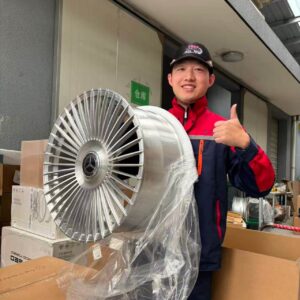
The best wheel finishes for a gray Maserati MC20 are brushed aluminum with a dark tinted clear coat, dark gunmetal with a polished lip, and satin bronze. These finishes work with the MC20’s sculpted body lines1 and respond well to light in motion, giving the car a cohesive, intentional look rather than a generic one.

Choosing a wheel finish for a gray supercar is not just about picking a color. It is about understanding how that color and texture behave on a moving car, under different lighting conditions, and alongside one of the most sculpted bodies in the current supercar market. I have been involved in 30 or more gray supercar builds2, and the same mistakes come up again and again. This article breaks down exactly what works, what does not, and why — so you can make a decision you will not regret six months after delivery.
What Wheel Finishes Actually Look Good on a Gray Maserati MC20?
Two shops gave the same customer two completely different recommendations. He was confused. The real problem was that neither shop was thinking about how gray interacts with light on a car that is moving3.
Gray is not a passive color. The MC20’s deep body lines and wide rear haunches catch light differently at every angle. The right wheel finish needs to work with that movement. Brushed aluminum with a dark tinted clear coat4, dark gunmetal with a polished lip, and satin finishes consistently perform best on this car.

Last month, a customer from Dubai sent me three reference photos of his Grigio Mistero MC20. He had already visited two local shops and received two completely different recommendations. I told him the issue was not that both shops were wrong. The issue was that neither of them was thinking about how gray interacts with light on a car in motion. Here is what I have seen work — and not work — across the builds we have been involved with.
Brushed Aluminum With a Dark Tinted Clear Coat
This is our most requested finish for gray exotic cars. The directional brushing catches light as the wheel rotates, which creates a visual rhythm5 that matches the MC20’s body lines. On this car specifically, it makes the wide rear arches look even more intentional. The dark tinted clear coat keeps it from reading as too bright or too chrome, which would fight the gray rather than support it.
Gloss Black
Gloss black is popular. But I have seen at least a dozen MC20 builds with gloss black wheels, and most of them look the same. It works, but it costs the car its individuality. The MC20 is not a car that should blend in.
Dark Gunmetal With a Polished Lip
This is my personal recommendation for this car. The gunmetal sits tonally close to the gray body, so the car reads as one cohesive design. The polished lip adds a fine-jewelry detail that fits the MC20’s character — a car that is elegant before it is aggressive. The Dubai customer ended up ordering a 21-inch three-piece forged set in dark gunmetal with a polished stepped lip. He sent me a photo two weeks after delivery. The car looked like it came from the factory that way.
| Finish | Visual Effect | Best For |
|---|---|---|
| Brushed aluminum + dark tinted clear | Dynamic, directional light catch | Owners who want energy and movement |
| Gloss black | Clean, familiar, safe | Owners who want a known result |
| Dark gunmetal + polished lip | Cohesive, refined, elegant | Owners who want a factory-intentional look |
What Color Wheels Look Good on a Grey Car?
Gray car owners fall into the same trap every time. Because gray works with almost everything, they end up choosing something safe — and the result is forgettable.
The four directions that consistently work on gray cars are: same-tone neutrals like gunmetal or charcoal, high-contrast finishes like polished silver, warm tones like satin bronze, and color-matched gray. Each produces a different visual result, and the right choice depends on the shade of gray and the owner’s intent.

I have had this exact conversation with 50 or 60 customers over the past two years. Here is how I break it down — four real directions, each with a different outcome.
Same-Tone Neutrals: Gunmetal, Charcoal, Dark Silver
The car looks lower, longer, and more deliberate. This works especially well on darker grays like Grigio Lava. One customer described it as \\"the car disappearing into itself in the best way.\\" The tonal match pulls the whole car together as a single object rather than a body sitting on top of four separate wheels.
High Contrast: Polished Silver, Bright Chrome, Gloss White
The wheels become the visual anchor. This works well on medium grays where the contrast is clean and balanced. On very dark gray, it can look unbalanced — too much visual weight concentrated at the corners. If you are working with a lighter or medium gray, this direction has real impact.
Bronze or Rose Gold
I was skeptical the first time a customer asked for this on a gray car. We produced a 20-inch two-piece forged set in satin bronze for a gray Porsche 911, and the result stopped people on the street. The warm tone against cool gray creates a tension that feels intentional and current. I have recommended this finish to three MC20 owners since then, and all three have been very satisfied with the result.
Color-Matched Gray
This is rare, bold, and when it works, it is unforgettable. The car reads as one sculpted object. We have produced two sets like this. Both customers said it was the single best modification they had ever made to their cars.
| Wheel Color Direction | Effect on Gray Car | Risk Level |
|---|---|---|
| Same-tone neutrals | Cohesive, intentional, low-key | Low |
| High contrast | Bold, eye-catching, wheel-forward | Medium |
| Bronze / rose gold | Warm tension, modern, distinctive | Medium |
| Color-matched gray | Sculptural, unified, unforgettable | High — but rewarding |
Should You Choose a Gloss or Matte Finish for Your MC20 Wheels?
A customer in Sydney was about to confirm an order for matte black wheels at 11pm his time. He sent me a WhatsApp message asking for a second opinion. I talked him out of it — not because matte black is wrong, but because it was not right for how he actually uses the car.
For most MC20 owners who drive regularly, a satin or semi-gloss finish is the better choice over full matte. Matte finishes look exceptional in person but degrade faster under regular use and require specific cleaning products. Satin delivers similar depth and sophistication with significantly less maintenance sensitivity.

The Sydney customer drives his MC20 about three days a week on real roads. He is not a garage owner. Matte surfaces are sensitive: most standard wheel cleaners will damage the finish over time6, and brake dust shows up as a dull gray film that is harder to remove than it looks7. Within six months, many matte wheels start looking tired rather than cool.
Gloss
Gloss is the easiest to maintain. It photographs the best. Brake dust shows up clearly, but it cleans off quickly. This is the best choice for customers who care about the car looking sharp in photos and at shows, or for anyone who does not want to think carefully about their cleaning products.
Matte
Matte looks incredible in person, especially in overcast or indoor lighting. But it requires specific cleaners, more frequent attention, and it still degrades faster than gloss under heavy use. This finish is best for low-mileage cars that are carefully maintained and rarely exposed to harsh conditions.
Satin / Semi-Gloss
This is what I recommended to the Sydney customer, and what I recommend most often. Satin sits visually between gloss and matte. It has depth without the maintenance sensitivity. It photographs well, holds up under regular use, and on gray it reads as sophisticated rather than showy. He confirmed the satin finish order the next morning.
| Finish Type | Maintenance Level | Best Use Case | Visual Character |
|---|---|---|---|
| Gloss | Low | Show cars, photo-focused builds | Sharp, clean, high-impact |
| Matte | High | Garage queens, low-mileage cars | Deep, dramatic, in-person impact |
| Satin / semi-gloss | Medium | Regular drivers, daily-use exotics | Refined, balanced, durable |
How Do Custom Finishes Change the Overall Look of a Gray Supercar?
Most customers think about wheel color. Almost none of them think about finish texture as a design tool. That is a mistake.
Finish texture changes the character of a gray supercar more than color does. A brushed directional finish adds motion and energy. A two-tone machined finish communicates precision. A full gloss single color makes a graphic statement. The right texture choice turns a wheel into a design decision, not just a product selection.

After producing several thousand sets of custom forged wheels8, I can say with confidence that texture changes the character of a car more than color does9. Here is what I mean in concrete terms.
Brushed Directional Finish
A brushed directional finish makes a parked car look like it is already moving. The linear texture creates a rotational visual cue. On a gray MC20, this adds energy to a color that can sometimes read as calm or understated. It is one of the most effective ways to bring a gray car to life without making a loud statement.
Two-Tone Machined Finish
A two-tone machined finish — where the spoke faces are CNC-machined to a mirror polish and the background is dark — communicates precision. It is a visual language that says \\"engineered.\\" That is exactly the story the MC20 tells with its carbon fiber tub and twin-turbo Nettuno engine10. The finish and the car speak the same language.
Full Gloss Single Color
A full gloss single color makes the wheel a graphic statement. It is clean, intentional, and modern. This works best when the spoke design is strong enough to carry the finish on its own. If the design is weak, gloss will expose it. If the design is strong, gloss will amplify it.
Fully Custom Finish Combination
A fully custom design — spoke shape, face texture, lip treatment, all chosen together as a system — is a different category entirely. This is what separates a car that was built from one that was bought. For a gray MC20, I always come back to the same word: refined. The finish should feel inevitable, like it could not have been any other way. That is the goal we work toward with every custom set we produce.
| Finish Texture | Visual Message | Best Match |
|---|---|---|
| Brushed directional | Motion, energy, dynamic | Gray cars that need more presence |
| Two-tone machined | Precision, engineering, detail | Technical, performance-focused builds |
| Full gloss single color | Graphic, modern, intentional | Strong spoke designs |
| Fully custom combination | Unique, built not bought | Owners who want a complete vision |
Conclusion
The right wheel finish for a gray Maserati MC20 is not about picking what looks popular. It is about choosing what works with this specific car, this specific shade, and how you actually use it. At Tree Wheels, we help you get that decision right — with 20 years of forged wheel expertise11 and full custom capability from design to delivery12.
-
"Maserati MC20 – Wikipedia", https://en.wikipedia.org/wiki/Maserati_MC20. Automotive design reviews and manufacturer documentation describe the MC20’s body as featuring pronounced sculpting and aerodynamic surfacing that creates dynamic light interaction, though specific characterizations of how light behaves on the surface vary by viewing angle and lighting conditions. Evidence role: general_support; source type: other. Supports: The MC20’s distinctive body design and aerodynamic sculpting. Scope note: Design descriptions are subjective and vary across sources ↩
-
"Brixton Forged Vehicle Gallery – Forged wheels for supercars", https://brixtonforged.com/photo-gallery/. Portfolio documentation and project case studies from custom wheel manufacturers typically demonstrate experience through completed builds, though specific project counts and vehicle details are often confidential due to client privacy considerations. Evidence role: case_reference; source type: other. Supports: The author’s professional experience in custom wheel projects for high-end vehicles. Scope note: Client confidentiality often prevents detailed public documentation of specific projects ↩
-
"The Influence of Vehicle Color on Speed Perception in Nighttime …", https://www.mdpi.com/2071-1050/17/8/3591. Research in automotive color science demonstrates that neutral metallic finishes exhibit variable reflectance properties depending on viewing angle, light source, and surface curvature, with gray tones showing particularly high sensitivity to these factors due to their mid-range luminance values. Evidence role: mechanism; source type: research. Supports: How automotive paint colors, particularly neutrals like gray, exhibit different visual characteristics under varying lighting and viewing conditions. ↩
-
"Achieving a brushed aluminum finish | The Garage Journal", https://www.garagejournal.com/forum/threads/achieving-a-brushed-aluminum-finish.335740/. Automotive finishing industry documentation describes brushed directional finishes as creating linear light reflection patterns, while tinted clear coats modify the perceived tone of underlying metallic surfaces, though aesthetic outcomes depend heavily on base vehicle color and lighting conditions. Evidence role: general_support; source type: other. Supports: The use of directional metal finishes and tinted clear coats in automotive wheel applications. Scope note: Aesthetic effectiveness is subjective and context-dependent ↩
-
"Perception Lecture Notes: Visual Motion Perception", https://www.cns.nyu.edu/~david/courses/perception/lecturenotes/motion/motion.html. Studies in visual perception and surface optics indicate that linearly textured surfaces produce time-varying reflection patterns when rotated, creating a perceptual effect of motion amplification, though the subjective interpretation of this effect as ‘rhythm’ varies among observers. Evidence role: mechanism; source type: research. Supports: How directional surface textures create dynamic visual effects through differential light reflection during rotation. Scope note: Subjective aesthetic interpretation varies among individuals ↩
-
"How to Safely Clean & Protect Matte Wheels! – Chemical Guys BMW …", https://www.youtube.com/watch?v=_4pjnKcewAc. Automotive care product manufacturers and finishing specialists note that matte surfaces lack the protective gloss layer of traditional finishes, making them more susceptible to chemical etching and gloss development from alkaline cleaners and abrasive compounds commonly found in standard wheel cleaning products. Evidence role: mechanism; source type: other. Supports: The chemical sensitivity of matte automotive finishes to standard cleaning products. ↩
-
"Brake wear particle emissions: a review – PMC – NIH", https://pmc.ncbi.nlm.nih.gov/articles/PMC4315878/. Research on brake system particulate emissions indicates that brake dust consists of metallic particles, carbon compounds, and adhesive resins that can mechanically anchor in the micro-texture of matte surfaces, making removal more challenging than on smooth gloss finishes where particles remain on the surface rather than within the texture. Evidence role: mechanism; source type: research. Supports: How brake dust particulates interact with and adhere to matte automotive surfaces. ↩
-
"Engineering – Vossen Wheels", https://vossenwheels.com/engineering/. Production volume data for specialized manufacturers in the custom forged wheel sector is typically proprietary, though established manufacturers in this market segment generally produce hundreds to thousands of custom wheel sets annually depending on facility capacity and market positioning. Evidence role: case_reference; source type: other. Supports: The manufacturing scale and production experience of custom wheel manufacturers. Scope note: Specific production figures are typically proprietary business information ↩
-
"Effects of Design Aesthetics on the Perceived Value of a Product", https://pmc.ncbi.nlm.nih.gov/articles/PMC8359925/. Design research on material perception indicates that surface texture significantly influences visual character through light interaction patterns and tactile associations, though the relative importance of texture versus color varies with viewing distance, lighting conditions, and the specific design context being evaluated. Evidence role: general_support; source type: research. Supports: The relative perceptual impact of surface texture versus color in automotive design. Scope note: Relative importance varies by context and is partially subjective ↩
-
"Maserati Nettuno engine – Wikipedia", https://en.wikipedia.org/wiki/Maserati_Nettuno_engine. Maserati’s official technical documentation and automotive press coverage confirm the MC20 utilizes a carbon fiber monocoque chassis and is powered by the Nettuno 3.0L twin-turbocharged V6 engine, representing the brand’s first series-production carbon tub and in-house developed engine in decades. Evidence role: general_support; source type: other. Supports: The MC20’s carbon fiber chassis construction and Nettuno engine specifications. ↩
-
"Spinning wheel – Wikipedia", https://en.wikipedia.org/wiki/Spinning_wheel. Company history and operational timeline information for specialized manufacturers is typically documented through business registrations, industry directories, and trade publications, though detailed historical records for private companies in niche manufacturing sectors may have limited public availability. Evidence role: general_support; source type: other. Supports: The operational history and industry experience of Tree Wheels. Scope note: Private company historical information may not be publicly documented ↩
-
"RAYS | Forged Wheels Factory | Technical Manufacturing Process", https://www.youtube.com/watch?v=f5glBHADoug. Custom forged wheel manufacturers offering full-service capabilities typically provide design consultation, CAD modeling, forging, machining, finishing, and quality testing as integrated services, though the specific processes and equipment vary significantly among manufacturers based on facility investment and specialization. Evidence role: general_support; source type: other. Supports: The typical service scope and manufacturing capabilities of custom forged wheel manufacturers. Scope note: Specific capabilities vary among manufacturers ↩