Matching custom wheel colors to vehicle paint is both an art and science. Many modification projects fall short because wheels clash with the vehicle's overall aesthetic, creating a disjointed appearance that undermines the entire build.
The perfect wheel color match enhances the vehicle's appearance by either complementing or intentionally contrasting with the body paint. This requires understanding color theory, automotive paint properties, and following a systematic matching process that considers both technical accuracy and aesthetic principles.
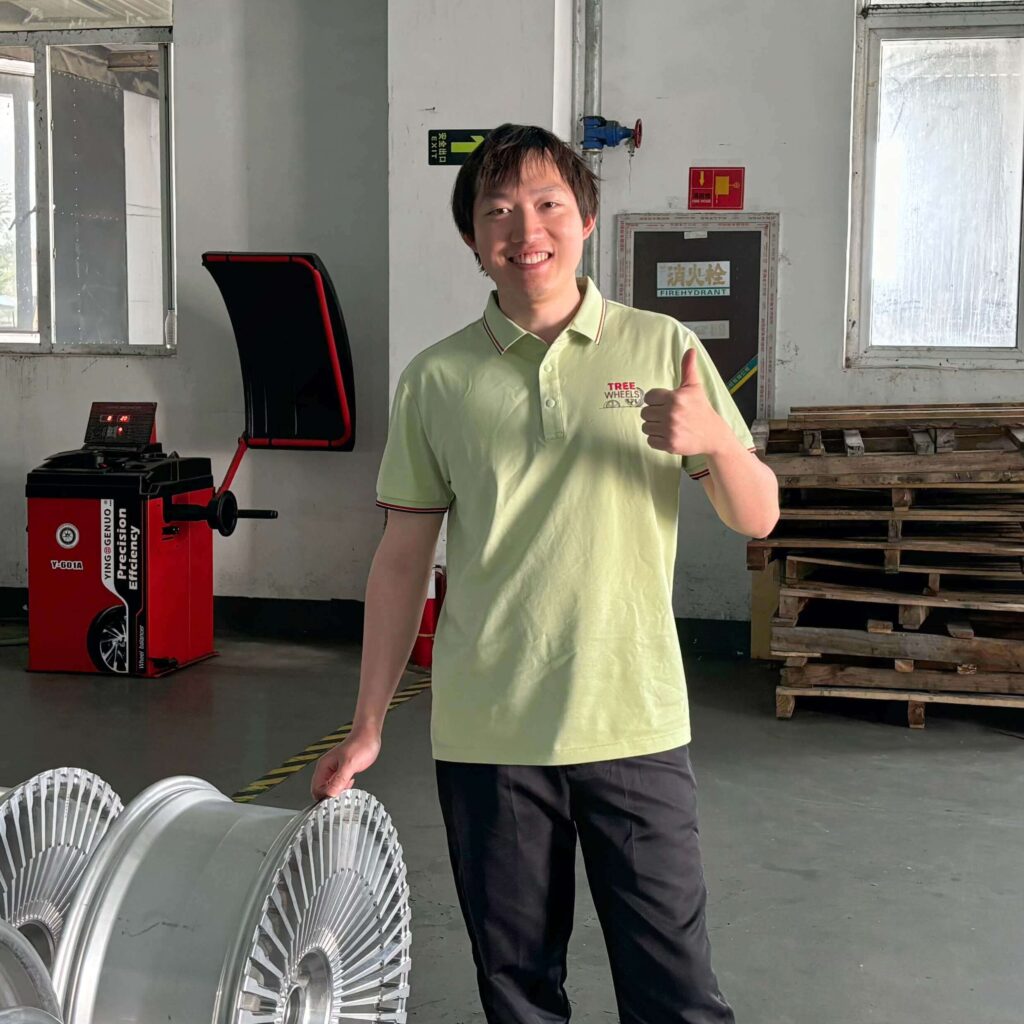
After handling hundreds of custom wheel projects at Tree Wheels, I've developed comprehensive expertise in color matching techniques. Our clients—primarily modification shops—rely on our ability to deliver perfectly matched wheels that elevate their customer builds. Let me share the insights we've gained from creating thousands of custom-colored forged wheels for premium vehicles worldwide.
How to Match Colors on Color Wheel for Wheels and Vehicle Paint?
Finding the right color combination can be overwhelming. Many wheel builders struggle with basic color theory, leading to combinations that feel "off" despite using quality components.
To match colors using the color wheel for vehicle builds, identify whether you want harmony (using adjacent colors) or contrast (using opposite colors). For wheels, complementary colors (opposite on the wheel) create bold statements, while analogous colors (adjacent) create subtle, cohesive looks that appear factory-designed.
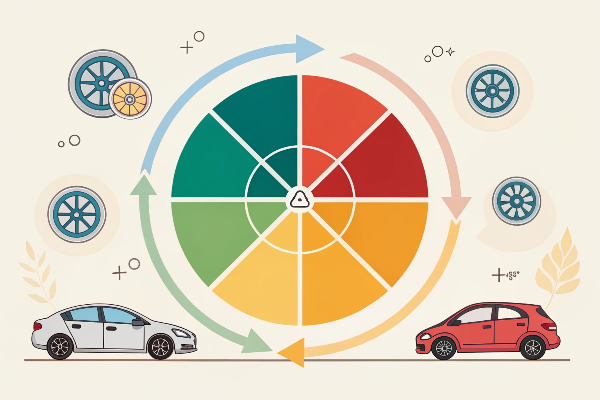
Color matching is more nuanced than simply following rigid rules. Our five-step color matching process has proven successful across hundreds of projects:
| Step | Process | Purpose |
|---|---|---|
| 1 | Obtain vehicle factory paint code | Establish accurate baseline reference |
| 2 | Create digital color simulations | Visualize potential combinations |
| 3 | Produce physical color samples | Confirm client approval before production |
| 4 | Production with strict color controls | Ensure consistency in manufacturing |
| 5 | Quality control (△E≤0.5) | Verify color accuracy meets industry standards |
Our data reveals clear patterns in successful color combinations by vehicle type:
| Vehicle Type | Popular Wheel Colors | Body Colors | Design Philosophy |
|---|---|---|---|
| Luxury Sedans | Matte/Gloss Black | Pearl White, Silver, Deep Blue | Classic contrast (65% of Mercedes/BMW clients) |
| Sports Cars | Carbon Black with colored accents | Match to body color details | "Echo design" approach |
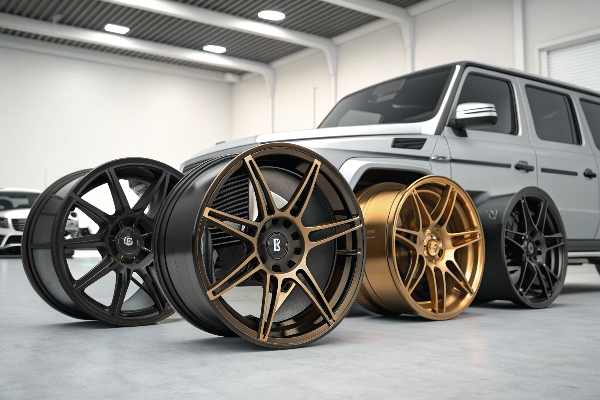
| SUVs | Bronze, Bronze-Gold | Military Green, Deep Gray, White | "Tactical luxury" aesthetic |
| JDM Style | Bright Gold, Antique Bronze | Darker body colors | Traditional contrast (40% higher social sharing) |
How Do You Match Alloy Wheel Color to Your Vehicle?
Many vehicle owners select wheel colors without considering how different alloy treatments react to paint. This often results in disappointed customers when the finished product looks different than expected.
To match alloy wheel color to your vehicle, consider both the wheel face and lip as separate design elements. Multi-tone finishes allow the face to complement the vehicle body while the lip can provide contrast or match interior accents. Consider the alloy's base properties and how treatments like anodizing or powder coating will affect the final appearance.

At Tree Wheels, our production team has mastered 14 different surface treatment processes. For our signature three-piece forged wheels, we can achieve up to three different color and surface treatment combinations on a single wheel, offering unmatched customization flexibility to modification shops.
| Surface Treatment | Characteristics | Best Paired With |
|---|---|---|
| Traditional Polishing | High shine, reflective | Dark vehicle colors for contrast |
| Anodizing | Durable, satin finish | Sport vehicles, custom builds |
| Electroplating | Metallic, premium look | Luxury vehicles, show cars |
| Special Effect Coating | Unique textures, colors | Custom projects, themed builds |
| Matte Finishing | Subdued, sophisticated | Modern luxury vehicles |
We've developed the "60-30-10 rule" for multi-color wheel designs:
| Color Distribution | Wheel Component | Visual Effect |
|---|---|---|
| 60% Primary color | Typically the face | Establishes main visual identity |
| 30% Secondary color | Inner spokes or edges | Creates depth and dimension |
| 10% Accent color | Bolts, logos, small details | Adds distinctive character |
Environmental factors also play an important role in wheel color selection:
| Environment | Recommended Finishes | Practical Benefits |
|---|---|---|
| Rainy Regions | Darker tones, textured finishes | Hide dirt, more practical |
| Sunny Locations | Polished metal, mirror effects | Create striking light plays |
| Cold Climates | Powder coated, sealed finishes | Better corrosion resistance |
| Urban Settings | Brushed finishes, satin clear coats | Hide minor scratches, urban wear |
How to Match Automotive Paint Color for Custom Wheels?
Paint matching frustrates many builders who discover too late that automotive finishes have complex undertones and behaviors that don't translate well to digital screens or basic color samples.
To match automotive paint color accurately, analyze the base color, metallic flakes, pearl effects, and clear coat depth that define modern finishes. Use spectrophotometer technology to read and reproduce vehicle paintt codes with precision. For custom or vintage paints, analyze physical samples under multiple lighting conditions to ensure accurate matching.
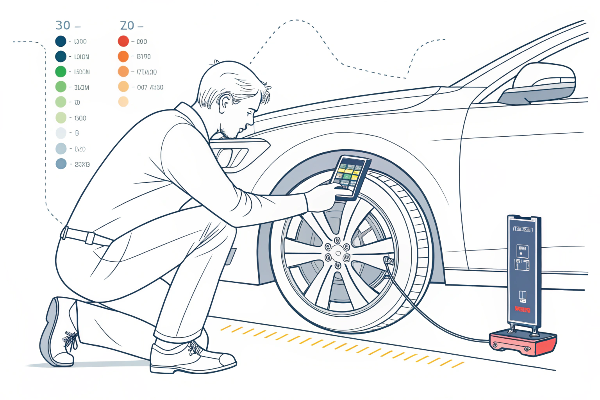
Based on our data at Tree Wheels, approximately 80% of customers request wheel colors that either perfectly match the vehicle body or echo some element of the interior. Perfect color matching directly impacts customer satisfaction—our studies indicate that precisely matched top-tier wheels can enhance overall modification effect by approximately 35%.
| Matching Technology | Accuracy Level | Best Application |
|---|---|---|
| Spectrophotometer | Within △E≤0.5 | Factory paint matching, precision work |
| On-site sampling | Error within 0.01% | Vintage/rare vehicles, custom paints |
| Pre-set color libraries | Factory-exact | BMW, Mercedes, Porsche (past decade) |
| Digital color simulation | Visual approximation | Initial client consultations |
For special projects involving vintage cars or limited-edition supercars, we dispatch technicians to take on-site samples, using portable spectrophotometers to capture precise color data directly from the body. Our manufacturing process allows us to recreate not just the color but also the exact texture and finish of modern automotive paints, including candy colors, pearl effects, and specialized finishes.
How Do I Find the Paint Code for My Wheels?
Locating exact paint codes causes needless delays in many custom builds. Shop owners waste time searching for information that should be readily accessible.
To find the paint code for wheels, first check if they're factory wheels (codes are in the vehicle manual or manufacturer database). For aftermarket wheels, contact the manufacturer directly with the model and serial number. For custom-painted wheels, use a spectrophotometer for color reading or remove a small sample from an inconspicuous area for paint matching.
 location diagram](https://treewheels.com/wp-content/uploads/2025/10/image-5-vehicle-paint-code-location-diagram-a-.png "Finding [paint code](https://www.reddit.com/r/Autobody/comments/1fauorg/anyone_know_how_to_find_the_paint_code_for/)s on vehicles")
| Wheel Type | Where to Find Paint Code | Alternative Method |
|---|---|---|
| OEM (Factory) | Vehicle documentation, VIN lookup | Contact dealership with VIN |
| Aftermarket | Contact wheel manufacturer with model/serial | Industry database lookup |
| Custom-painted | Previous build documentation | Spectrophotometer reading |
| Vintage/Unknown | Laboratory paint analysis | Micro-sampling technique |
Common paint code locations on vehicles:
| Vehicle Brand | Common Paint Code Locations |
|---|---|
| BMW | Driver's door jamb, engine compartment |
| Mercedes | Inside fuel door, driver's door jamb |
| Audi/Volkswagen | Spare tire well, trunk |
| Japanese Makes | Driver's door jamb, firewall |
| American Makes | Door jamb, glove compartment |
For vehicles with custom paint jobs, we've developed a micro-sampling technique that removes an almost invisible amount of paint from an inconspicuous area, allowing for precise laboratory analysis without damaging the vehicle's appearance. This has proven particularly valuable for rare or collector vehicles where information about the exact paint formulation may no longer be available.
Conclusion
Matching custom wheel colors to vehicle paint requires both technical precision and artistic vision. By understanding color theory, utilizing proper matching techniques, and considering the vehicle's overall aesthetic, you'll create builds that truly stand out.
At Tree Wheels, we're committed to delivering perfectly color-matched forged wheels that elevate your custom builds—because we believe sincerity in craftsmanship creates lasting impressions.