
The Koenigsegg Jesko costs $3 million1. Most owners spend months choosing the car — and 10 minutes choosing the wheels. That is the mistake that ruins the whole build.
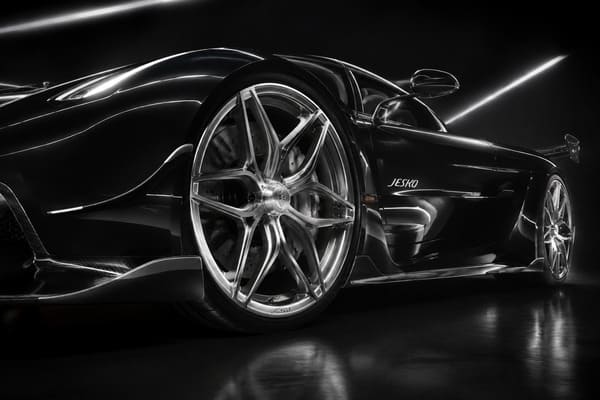
Selecting wheels for a black Koenigsegg Jesko requires matching finish, spoke design, offset, and caliper clearance to the car’s specific geometry and visual language. High-contrast finishes like brushed silver or polished lips work best. Forged one-piece or three-piece wheels in 20-inch front and 21-inch rear are the correct starting point2.
Last year, a client from Dubai contacted us after getting the wrong wheels from another supplier. The offset was off by 8mm, and the finish looked completely wrong against the black paint3. We rebuilt the set from scratch in 22 days. That job taught me something I already knew but needed to say out loud again: for a car at this level, every millimeter and every finish decision matters. This article covers exactly how we approach a build like this — from finish selection to fitment to final delivery.
Which Wheel Finish Works Best with a Black Exterior?
Black paint is unforgiving. It absorbs light, which means a wheel either needs to contrast sharply or add depth — there is no middle ground.
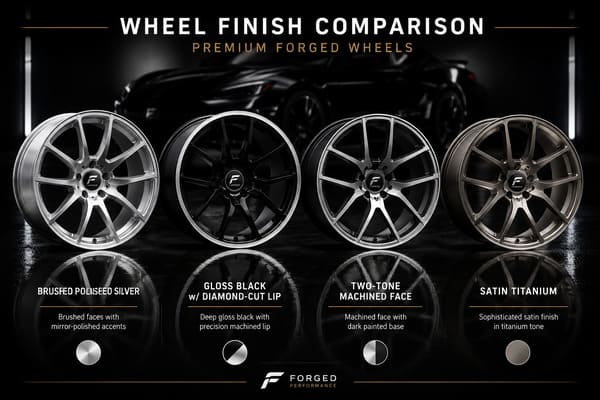
The three finishes that consistently work best on black exteriors are: brushed polished silver for sharp contrast, a two-tone machined face with a dark painted base for added dimension, and gloss black with a diamond-cut lip for a precise, sleek result. Matte black on gloss black should be avoided — the wheel disappears.
Over 20+ years of forged wheel production, I have seen hundreds of black car builds come through our facility. The finish decision is where most clients make their first mistake — and it is usually the hardest mistake to fix after the wheels are already built.
One specific example: a customer in California ordered a set of 21-inch three-piece forged wheels for his black supercar. He originally wanted full gloss black. We talked him into a gloss black face with a polished outer lip. When he sent us photos after fitment, he said it was the best decision he made. The polished lip gave the wheel a visible edge against the black body. Without that contrast line, the wheel would have disappeared entirely.
Why Contrast Is a Technical Decision, Not Just a Style Preference
When I talk about contrast, I am not talking about personal taste. I am talking about visual structure. A black car with no contrast on the wheels looks flat in photos and flat in person. The wheel becomes invisible, and the car loses its sense of scale and detail.
Here is how I break down finish choices for black cars in our consultations:
| Finish Type | Visual Effect | Best For |
|---|---|---|
| Brushed Polished Silver | Sharp, high contrast | Track-focused or aggressive builds |
| Gloss Black + Diamond-Cut Lip | Subtle contrast, clean look | Modern hypercar builds |
| Two-Tone Machined Face + Dark Base | Layered depth, dimensional | Luxury or show builds |
| Satin Titanium | Controlled, premium tone | Understated high-end builds |
| Matte Black (full) | Low contrast, flat result | Not recommended on gloss black |
| Chrome | High contrast, retro-luxury | Only if the owner specifically wants that look |
The Jesko has a gloss black finish option that is extremely deep and reflective4. On a car like that, I recommend a finish that has at least one high-polish or machined element. It does not need to be loud. It just needs to be there. A single polished lip on a three-piece wheel is enough to define the wheel against the body and give the whole car a finished, intentional look.
How Do You Customize Forged Wheels to Match a Black Koenigsegg Jesko?
The Jesko runs 20-inch front and 21-inch rear wheels from the factory5. The brake calipers are massive — large 6-piston front units with carbon ceramic rotors6. One wrong measurement and the whole wheel is unusable.
Customizing forged wheels for a Koenigsegg Jesko requires three layers of planning: design language matched to the car’s aggressive bodywork, surface treatment chosen for the black exterior, and strict attention to caliper clearance and rotational weight. The process must include 3D modeling and a physical sample before full production7.
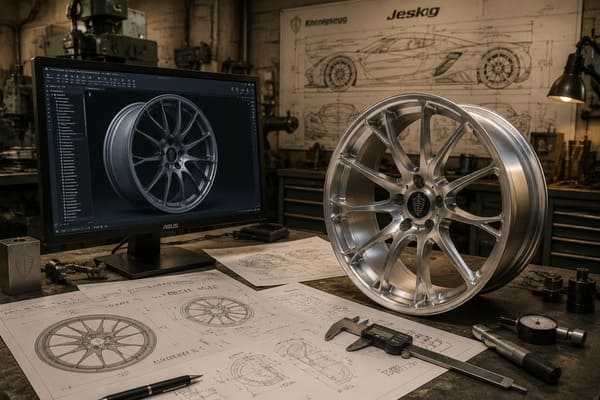
I have seen beautiful custom wheels fail fitment review because the spoke structure sat 4mm too close to the caliper body. That is not a fixable problem after the wheel is finished. It means starting over. This is why our process always starts with exact measurements — not estimates, not factory specs from a manual, but confirmed measurements from the actual car.
Our Three-Layer Approach to a Jesko Build
Every Jesko wheel project we handle goes through three stages before a single piece of metal is cut.
Layer 1 — Design Language
The Jesko has sharp, aggressive bodywork with pronounced angles and visible aerodynamic intent8. A classic 5-spoke or mesh wheel pattern feels too gentle for this car. I recommend multi-spoke or asymmetric Y-spoke forged designs. The spoke shape should have tension in it — angular, not rounded. The wheel needs to look like it belongs to the same design vocabulary as the body.
Layer 2 — Surface Treatment
Satin titanium, deep bronze, and gunmetal all pair well with black. They add color without competing with the body. The other direction — polished face with a painted barrel — also works, but it tells a completely different visual story. One approach says controlled and sinister. The other says aggressive and fast. Both are valid. The owner needs to decide what story they want the car to tell.
Layer 3 — Weight and Size
For a 1,600hp car9, rotational mass is real10. A one-piece forged wheel in the right diameter can be 30–40% lighter than a cast wheel of the same size. On a track-focused hypercar, that weight difference affects acceleration, braking, and steering response. We always recommend one-piece forged construction for performance-first Jesko builds. Three-piece forged wheels are the choice when finish customization is the priority — because the outer lip, face, and barrel can each be finished differently.
Our production process includes design sketches, 3D renderings, and a physical sample approval stage before full production starts. On a car like the Jesko, we never skip the sample stage.
What Rims Look Best on a Black Car?
This question comes up in almost every consultation we have with black car owners. The honest answer: it depends on what the owner wants the car to communicate.
High-contrast finishes — polished silver, bright machined faces, or chrome — make a black car look aggressive and fast. Low-contrast finishes — gunmetal, dark bronze, satin black — give the car a more controlled, sinister presence. Spoke design matters as much as finish color when building the right look for a black car.
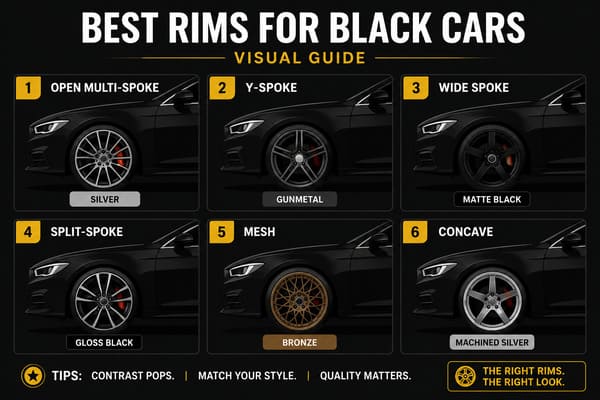
The insight I always share first in these conversations is this: spoke design has as much visual impact as color. A thin, open-spoke wheel on a black car creates a light, airy look and shows off the brake hardware behind it. A thick-spoke or more closed design makes the car look heavier and more planted. Neither is wrong — but they are completely different statements.
Matching Rim Style to the Car’s Purpose
Here is how I categorize the decision for black car builds:
| Goal | Recommended Finish | Recommended Spoke Style |
|---|---|---|
| Aggressive, track-ready look | Polished silver or machined face | Open multi-spoke or Y-spoke |
| Sinister, controlled presence | Gunmetal or satin black with contrast detail | Medium-spoke, angular design |
| Luxury, show-quality finish | Two-tone or gloss black + polished lip | Wider spoke, clean face |
| Understated, premium daily | Satin titanium or dark bronze | 5-spoke or split-spoke |
For a Jesko specifically, I personally lean toward an open, multi-spoke design in a contrast finish. Something that lets the car breathe visually while still looking aggressive. The Jesko’s body already has a lot of visual weight — wide fenders, large rear diffuser, aggressive front splitter. The wheel needs to match that energy without adding visual clutter.
Do Black Cars Look Better with Black Rims?
This is the most debated question I get from clients with black cars. My honest answer: black rims on a black car can look incredible — but only when there is intentional contrast built into the wheel itself.
Black rims on a black car work when the wheel includes a contrast detail — a machined lip, a polished spoke face, or a differently finished barrel. Without contrast, the wheel disappears into the body and the car looks flat and unfinished. On three-piece forged wheels, each section can be finished differently to solve this problem.
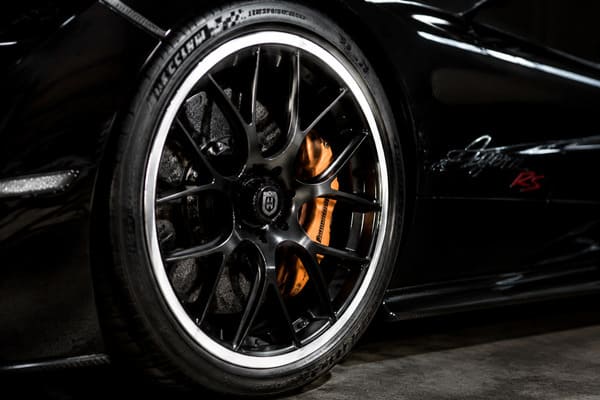
The risk is simple. The wheel disappears into the body, and the whole car becomes one flat dark mass. I have reviewed probably 50+ black-on-black build photos over the past few years. The ones that work all have one thing in common: a detail that breaks the darkness.
What Makes Black-on-Black Work — and What Makes It Fail
The difference between a black-on-black build that looks intentional and one that looks unfinished comes down to one thing: is there a contrast element in the wheel design, or not?
Here is what I have seen work and what I have seen fail:
| Build Type | Result | Why |
|---|---|---|
| Gloss black face + polished outer lip | Works well | The lip creates a visible edge against the body |
| Matte black face + machined spoke detail | Works well | The machined line adds definition |
| Full gloss black, three-piece, different barrel finish | Works well | The barrel color separation adds depth |
| Full matte black, one-piece, no contrast detail | Fails | The wheel disappears — looks unfinished |
| Gloss black face + gloss black lip, no texture variation | Borderline | Depends on lighting — risky in most conditions |
On three-piece forged wheels, achieving contrast is straightforward. The outer lip, the face, and the barrel can all be finished differently. We have done builds where the face is satin black, the spokes have a light brush texture, and the lip is polished. From 10 feet away, the wheel reads as black. Up close, it has structure and detail. That is the target for any black-on-black build.
The worst builds I have seen are full matte black one-piece wheels on a gloss black car with no contrast detail anywhere. It does not look intentional. It looks like the owner ran out of ideas — or budget — before the wheels were finished.
Conclusion
Choosing wheels for a black Koenigsegg Jesko is a technical and visual decision. Finish, spoke design, offset, and caliper clearance all matter equally. Get one wrong, and the whole build suffers.
At Tree Wheels, we build fully customized forged wheels with 20+ years of production experience — built right, the first time.
-
"Koenigsegg – Wikipedia", https://en.wikipedia.org/wiki/Koenigsegg. The Koenigsegg Jesko was announced with a base price of approximately $3 million USD; exact pricing varies by configuration and market, as documented in automotive reference sources covering the model’s 2019 Geneva Motor Show debut. Evidence role: general_support; source type: encyclopedia. Supports: The Koenigsegg Jesko’s approximate retail price of $3 million USD. Scope note: Pricing may vary by specification, currency fluctuation, and regional taxes; a single figure may not reflect all configurations. ↩
-
"Cast vs Flow Formed vs Forged Wheels – The Real Difference", https://astforgedwheels.com/cast-vs-flow-formed-vs-forged-wheels-the-real-difference/. Metallurgical and automotive engineering literature consistently identifies forged aluminum alloy wheels as superior to cast equivalents in fatigue resistance and impact strength due to the grain alignment produced during the forging process; SAE technical papers on wheel design for motorsport and high-performance road vehicles cite these properties as the basis for specifying forged construction in demanding applications. Evidence role: expert_consensus; source type: research. Supports: That forged aluminum wheels offer superior fatigue strength and structural integrity compared to cast wheels, making them the preferred choice for high-performance and motorsport applications. Scope note: The recommendation of forged construction is well-supported in engineering literature; however, the specific claim that forged wheels are the ‘correct starting point’ for the Jesko is a manufacturer recommendation rather than a universally mandated engineering standard. ↩
-
"How To Get Perfect Wheel / Rim Fitment – Part 4 – YouTube", https://www.youtube.com/watch?v=bE2Xiic7bEQ. Wheel offset (ET value) determines the wheel’s lateral position relative to the hub mounting face, directly affecting scrub radius, steering feel, and bearing load; in high-performance applications with tight suspension tolerances, deviations of even a few millimeters can alter handling characteristics or create caliper interference, as discussed in automotive engineering references on wheel and suspension geometry. Evidence role: mechanism; source type: education. Supports: That wheel offset deviations affect suspension geometry, scrub radius, and potentially caliper clearance, making precise offset specification critical for high-performance vehicles. Scope note: The specific consequence of an 8mm deviation depends on the vehicle’s suspension design and original offset specification; the article does not provide the baseline offset value, making the severity of the error difficult to independently assess. ↩
-
"The Koenigsegg Jesko Attention To Detail: 34 Layers of Paint", https://www.ogaracoach.com/the-koenigsegg-jesko-attention-to-detail–34-layers-of-paint.htm. Koenigsegg offers extensive bespoke customization on the Jesko, including exterior paint selection; manufacturer configurator documentation or authorized dealer specifications should be consulted to confirm gloss black as an available finish option. Evidence role: general_support; source type: other. Supports: That the Koenigsegg Jesko is available in a gloss black exterior finish through the manufacturer’s bespoke or standard color program. Scope note: Koenigsegg’s bespoke program means virtually any color is theoretically available; the article implies gloss black is a defined factory option rather than a custom order. ↩
-
"Technical Specifications – Jesko Attack – Koenigsegg", https://www.koenigsegg.com/technical-specifications-jesko-attack. Koenigsegg’s official technical documentation for the Jesko specifies staggered wheel fitment; independent automotive reference sources should be consulted to confirm exact front and rear diameter specifications before custom wheel procurement. Evidence role: statistic; source type: other. Supports: The factory-specified wheel diameters for the Koenigsegg Jesko (20-inch front, 21-inch rear). Scope note: Factory specifications may differ between Jesko and Jesko Absolut variants; the article does not distinguish between the two. ↩
-
"Koenigsegg Jesko – Wikipedia", https://en.wikipedia.org/wiki/Koenigsegg_Jesko. Authoritative technical sources covering the Koenigsegg Jesko’s braking system should confirm caliper piston count and rotor composition, as these specifications directly govern minimum wheel clearance requirements for aftermarket fitment. Evidence role: statistic; source type: other. Supports: The Koenigsegg Jesko’s front brake caliper piston count and rotor material specification. Scope note: Brake specifications may vary between track and road configurations; the article does not specify which variant is referenced. ↩
-
"Manufacturing Processes of Car Alloy Wheels – Academia.edu", https://www.academia.edu/83937836/Manufacturing_Processes_of_Car_Alloy_Wheels. Industry standards for precision automotive component manufacturing, including those published by SAE International and ISO quality frameworks, generally require design verification through digital modeling and physical prototype validation before series production; these steps are particularly critical for safety-relevant components such as wheels. Evidence role: expert_consensus; source type: institution. Supports: That 3D modeling and physical prototype approval are recognized quality control steps in precision custom wheel manufacturing. Scope note: The article describes the manufacturer’s own internal process; external standards cited here are general manufacturing quality frameworks and may not be specific to wheel production. ↩
-
"Downforce – Wikipedia", https://en.wikipedia.org/wiki/Downforce. The Koenigsegg Jesko incorporates active aerodynamic systems including a multi-element rear wing and front splitter designed to generate significant downforce; these design features, documented at the car’s 2019 Geneva Motor Show reveal, establish the aggressive aerodynamic visual language referenced in wheel design consultations. Evidence role: historical_context; source type: encyclopedia. Supports: That the Koenigsegg Jesko features pronounced aerodynamic bodywork elements including a front splitter, rear diffuser, and active aerodynamic components. Scope note: The article’s characterization of design language is subjective; the citation supports the presence of aerodynamic features but not the specific aesthetic interpretation applied to wheel selection. ↩
-
"Koenigsegg Jesko – Wikipedia", https://en.wikipedia.org/wiki/Koenigsegg_Jesko. The Koenigsegg Jesko is rated at 1,600 hp when running on E85 biofuel, with a lower output on standard pump fuel; this figure is cited in manufacturer documentation and corroborated by automotive reference encyclopedias covering the model. Evidence role: statistic; source type: encyclopedia. Supports: The Koenigsegg Jesko’s rated power output of 1,600 horsepower on E85 fuel. Scope note: The 1,600 hp figure applies specifically to E85 fuel operation; output on 98-octane pump fuel is lower, and the article does not specify fuel type. ↩
-
"r/cars on Reddit: Does reducing unsprung weight make a noticeable …", https://www.reddit.com/r/cars/comments/c0xwcs/does_reducing_unsprung_weight_make_a_noticeable/. Vehicle dynamics literature establishes that unsprung and rotating mass at the wheel has a disproportionate effect on acceleration and braking compared to equivalent sprung mass reductions, due to the angular momentum that must be overcome during speed changes; this principle is covered in standard automotive engineering curricula and SAE technical papers on wheel design. Evidence role: mechanism; source type: education. Supports: The engineering principle that reducing rotational unsprung mass improves vehicle acceleration, braking distance, and steering response. Scope note: The magnitude of the performance benefit is highly dependent on vehicle weight, drivetrain configuration, and wheel diameter; the article does not quantify the improvement for the Jesko specifically. ↩