
About one-third of our customers drive silver or dark gray cars1. And almost all of them spend months deciding before they place an order.
The best wheel finishes for a silver Peugeot 308 GTi are deep space gray, matte black, brushed titanium, and smoked bronze. These finishes create visual contrast against the silver body, making the car look lower, tighter, and more aggressive. A matching silver wheel is the one finish you should avoid.
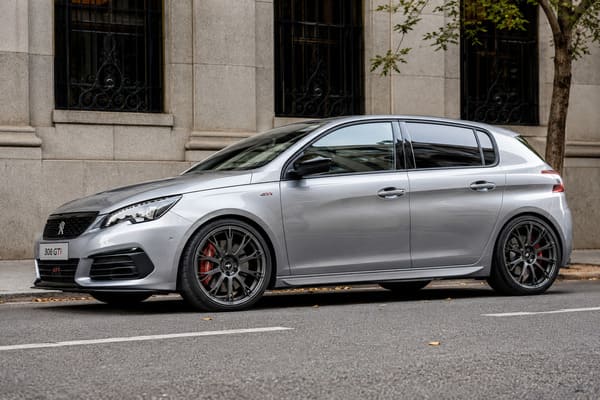
Silver is a neutral base. It does not fight for attention, but it also gives you very little visual tension for free. That means the wheels have to do more of the visual work. I have seen customers choose a plain silver wheel on a silver car, and the finished result looks like a photo that never came into focus. The 308 GTi is a car with real character. Your wheel choice should amplify that character, not dilute it.
Which Forged Wheel Colors Complement a Silver Peugeot 308 GTi?
Many customers with silver cars assume they should match the wheel color to the body. That is almost always the wrong call.
The forged wheel colors that work best on a silver Peugeot 308 GTi are deep space gray, matte black, and two-tone finishes that combine a polished face with a dark base. These colors visually "cut" the body lines and create the contrast that a silver car needs.
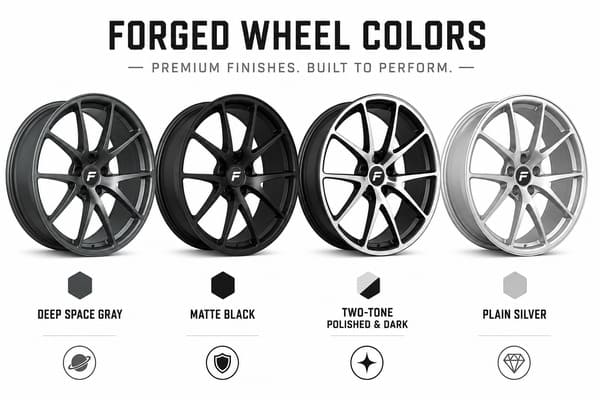
We ran an internal review of all our silver car wheel orders last year. Close to 60% of those customers chose deep space gray or matte black. That is not a coincidence.
Why Dark Colors Work on a Silver Body
The 308 GTi has a full, well-defined wheel arch2. When you put a dark wheel inside that arch, the wheel appears to "sit deeper" inside the car. The result is a lower, more planted stance, and that is exactly the feeling this car is built to deliver.
| Wheel Color | Visual Effect on Silver Body | Recommended For |
|---|---|---|
| Deep Space Gray | Adds contrast without being aggressive | Everyday driving, subtle sport look |
| Matte Black | Strong contrast, very aggressive stance | Track-focused builds, bold styling |
| Two-Tone (Polished + Dark) | Contrast + refinement at the same time | Customers who want sport and elegance |
| Plain Silver | No contrast, body and wheel merge visually | Not recommended |
One of our customers in Australia had a pearl silver 308 GTi. He originally wanted silver wheels. We recommended a deep space gray two-tone forged wheel instead. When the finished photos came in, he told us: "This is exactly what I wanted but could not describe." That is a response we hear often when customers move away from matching and toward contrast.
Should You Go Gloss or Matte for Your Silver Peugeot 308 GTi Wheels?
Gloss or matte is one of the most common questions we get. Most customers assume gloss is the safer, more premium choice. The data we have from our own orders says otherwise.
For a silver Peugeot 308 GTi, matte wheels almost always look better than gloss. A silver car body already has its own shine3. A gloss wheel adds no texture contrast. A matte wheel creates a layered effect — one surface reflects light, the other absorbs it — and that contrast makes the whole car look more three-dimensional.
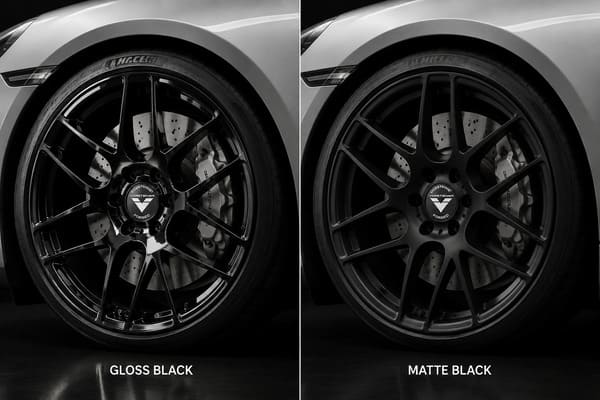
We tested this internally. We placed the same wheel design in both gloss and matte next to a silver car. More than 70% of people said the matte version looked more expensive at first glance4.
The Manufacturing Side of Matte
There is also a production reason why matte finishes carry more value. Gloss coatings are forgiving. Small surface imperfections get hidden under the reflective layer. Matte coatings expose everything5. Any unevenness in the surface treatment shows up immediately because there is no shine to cover it.
| Finish Type | Visual Quality on Silver | Surface Tolerance | Maintenance |
|---|---|---|---|
| Gloss Black | High contrast, bold | More forgiving | Easier to clean |
| Matte Black | High contrast, premium feel | Very tight tolerance required | Needs matte-safe products |
| Gloss Gray | Moderate contrast | More forgiving | Easier to clean |
| Matte Gray | Refined, layered look | Very tight tolerance required | Needs matte-safe products |
This means a well-made matte wheel is not just a style choice. It is a product that requires higher manufacturing precision to produce correctly. At Tree Wheels, our matte surface treatments go through additional quality checks at the finishing stage for exactly this reason.
What Wheel Finishes Actually Look Good on a Silver Car?
Most people focus on color when they think about wheel finishes. The surface treatment itself — how the metal is worked before and after coating — is just as important.
The wheel finishes that look best on a silver car are brushed face with tinted clear coat, smoked titanium, and two-tone forged designs with a dark spoke and bright rim6. These finishes add texture and depth that flat painted wheels cannot deliver.
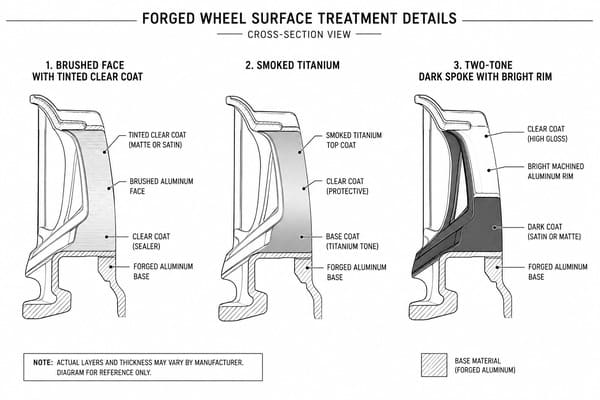
The most underrated finish for silver cars is brushed face with a tinted clear coat7. It is a finish that most customers do not know to ask for, but once they see it, they rarely choose anything else.
How Surface Treatment Changes the Look in Different Light
We had a customer in Dubai with an ice silver car. We recommended a brushed titanium surface with a very thin smoked clear coat on top. Inside a showroom, the wheel reads as a quiet, refined metallic. In direct Dubai sunlight, a faint blue-gray tone surfaces in the finish, and it creates a "same color family, different temperature" relationship with the silver body.
| Surface Treatment | Indoor Look | Outdoor / Sunlight Look | Best Pairing |
|---|---|---|---|
| Brushed + Smoked Clear | Subtle metallic | Blue-gray tone, dynamic | Ice silver, pearl silver |
| Flat Matte Paint | Consistent, low-key | Consistent, no change | All silver tones |
| Two-Tone (Dark Spoke + Bright Rim) | Contrast + detail | Strong contrast, premium | Any silver body |
| Plain Gloss Paint | Shiny, simple | High glare, flat | Not recommended for silver |
That Dubai customer came back with three more orders after that first set. Each one was for a different friend’s car. Two-tone forged wheels8 — dark spokes with a bright machined rim — are another finish that works extremely well on silver cars. They give you contrast and refinement at the same time. A single-color wheel can usually deliver one or the other. A two-tone design delivers both.
Do Bronze Wheels Look Good on a Silver Car?
Bronze is the fourth most requested color we receive from customers. But it also has the lowest order conversion rate of any color we offer — around 25%9.
Bronze wheels can look good on a silver car, but only if you choose the right shade. A smoked bronze — bronze with a gray undertone — works well on silver. A light champagne bronze looks faded and dirty. A deep dark bronze looks too heavy. The undertone is everything.
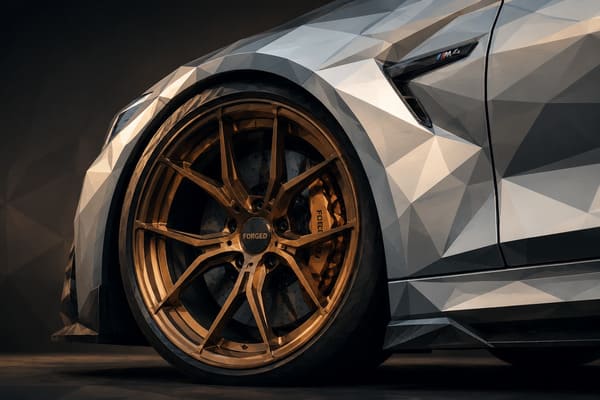
The reason bronze has a low conversion rate is straightforward. Bronze is a warm tone. Silver is a cool tone. There is a natural color temperature conflict between them10. Many customers see a render and like it, then see a real-car photo and start to hesitate.
How to Make Bronze Work on a Silver Car
That conflict is not always a problem. When it is handled correctly, it becomes tension — and tension is what makes a car look interesting. The key is the depth of the bronze.
| Bronze Shade | Effect on Silver Car | Our Recommendation |
|---|---|---|
| Light Bronze / Champagne | Looks faded, slightly dirty | Avoid |
| Standard Warm Bronze | Noticeable color clash | Use with caution |
| Smoked Bronze (gray undertone) | Warm-cool tension, dynamic | Recommended |
| Deep Dark Bronze | Too heavy, overwhelms silver | Avoid |
A light bronze that leans toward champagne gold will look like it has faded next to a silver body. A very deep bronze that leans toward dark brown will feel heavy and will visually overpower the car. Smoked bronze — a bronze tone that carries a gray undertone — sits in the right place. It keeps the warmth of bronze without the full color temperature clash. One of our customers in Canada ordered a set of 19-inch three-piece forged wheels in smoked bronze for his silver car. The finished photos he sent us went directly onto our website as a case study. That is how well it came out.
Conclusion
Silver cars need wheels that create contrast and texture. The right finish transforms the 308 GTi from neutral to sharp. Tree Wheels builds fully custom forged wheels to match exactly what your car needs.
-
"Car colour popularity – Wikipedia", https://en.wikipedia.org/wiki/Car_colour_popularity. Annual automotive color popularity reports by coatings manufacturers such as BASF and PPG consistently rank silver and gray among the top two or three most popular vehicle colors worldwide, providing market-level context for the prevalence of these finishes among car owners. Evidence role: statistic; source type: research. Supports: Silver and gray are consistently among the top car colors by market share globally. Scope note: Industry color reports reflect new-vehicle sales data and may not directly correspond to the aftermarket wheel customer demographic described in the article. ↩
-
"Peugeot 308 – Wikipedia", https://en.wikipedia.org/wiki/Peugeot_308. Peugeot’s official product documentation and independent automotive press reviews of the 308 GTi describe the model’s sport-tuned exterior, which includes widened and sculpted wheel arches intended to accommodate the GTi’s broader track and larger wheel fitments. Evidence role: general_support; source type: other. Supports: The Peugeot 308 GTi features pronounced wheel arch styling as part of its sport-oriented exterior design. Scope note: Manufacturer marketing materials may emphasize design features selectively; independent road test reviews provide more neutral corroboration of specific styling elements. ↩
-
"Metallic paint", https://en.wikipedia.org/wiki/Metallic_paint. Silver metallic automotive paints derive their reflective appearance from oriented aluminum flake pigments dispersed within the paint layer; the flakes act as small mirrors that reflect incident light, producing the characteristic brightness and sparkle associated with silver finishes, as described in automotive coatings chemistry literature. Evidence role: mechanism; source type: research. Supports: Silver metallic automotive paint achieves its characteristic shine through aluminum flake pigments suspended in the paint binder, which reflect and scatter incident light. Scope note: The degree of reflectivity varies with flake size, orientation, and clear coat thickness; the article’s use of ‘shine’ as a uniform property of silver paint is a simplification of a variable optical phenomenon. ↩
-
"Color and material perception: Achievements and challenges – PMC", https://pmc.ncbi.nlm.nih.gov/articles/PMC4456617/. Consumer behavior and product design research has documented that surface texture and finish type influence perceived quality, with matte finishes in certain product categories associated with higher perceived exclusivity, though findings vary by product context and consumer segment. Evidence role: expert_consensus; source type: paper. Supports: Surface finish texture, including matte versus gloss, influences consumer perception of product quality and premium positioning. Scope note: Published research on finish perception is largely drawn from packaging and consumer goods contexts; direct studies on automotive wheel finish perception are limited in the academic literature. ↩
-
"Coating and Paint Inspection on Metal Aluminium wooden and glass …", https://intelgic.com/Coating-and-paint-surface-inspection-metal-aluminium-wooden-glass. Coatings science literature describes how matte finishes achieve low gloss through micro-texture or flatting agents that scatter incident light diffusely; this diffuse scattering reduces the masking effect that specular reflection provides in gloss coatings, making substrate surface preparation and application uniformity more critical for acceptable matte finish quality. Evidence role: mechanism; source type: research. Supports: Matte surface coatings scatter light diffusely and therefore reveal substrate surface irregularities that specular gloss coatings conceal through reflection. Scope note: Technical coatings literature addresses industrial and architectural applications broadly; specific quality tolerance standards for automotive aftermarket wheel coatings may differ from general findings. ↩
-
"The Finest Custom Forged 2-Piece Wheels & Rims-RVRN Forged", https://rvrnwheel.com/collections/custom-fully-forged-2-piece-wheels?srsltid=AfmBOoo2VRrL8ITPj_-UTWsxvbgaoge5DWgPaTt-rbukyv-idBNX0ooi. Two-tone wheel finishing, in which spoke surfaces receive a painted or powder-coated treatment while rim lips or spoke faces are CNC-machined to expose bright aluminum, is a documented production technique used by both original equipment manufacturers and aftermarket wheel producers to create contrast and visual depth within a single wheel design. Evidence role: general_support; source type: other. Supports: Two-tone wheel finishes combining painted or coated spokes with CNC-machined bright faces or rims are a widely used technique in aftermarket and OEM wheel manufacturing. Scope note: Industry documentation on specific two-tone finishing processes is largely proprietary; publicly available sources describe the technique in general terms without standardized nomenclature across manufacturers. ↩
-
"Custom Finishes – Forgelite Wheels", https://www.forgelitewheels.com/finishes. Brushed aluminum finishing creates a directional micro-groove texture through abrasive belt or rotary brushing processes; when overcoated with a tinted clear lacquer, the finish exhibits angle-dependent color behavior because the micro-texture scatters light differently at varying incidence angles, causing the tint to appear more or less saturated depending on lighting conditions. Evidence role: mechanism; source type: other. Supports: Brushed metal surfaces combined with tinted clear coats produce a finish whose apparent color shifts with viewing angle and lighting intensity due to the directional micro-texture of the brushed substrate interacting with the tint layer. Scope note: Detailed technical documentation on this specific combination as applied to aftermarket wheels is sparse in academic literature; the described optical behavior is inferred from general principles of surface optics and metallic finishing. ↩
-
"Cast vs Flow Formed vs Forged Wheels – The Real Difference", https://astforgedwheels.com/cast-vs-flow-formed-vs-forged-wheels-the-real-difference/. Forged aluminum wheels are manufactured by applying compressive force to heated aluminum billets, a process that refines grain structure and eliminates porosity present in cast components; materials engineering sources document that forging typically yields higher tensile strength and fatigue resistance per unit weight compared to gravity or low-pressure casting methods used for standard wheels. Evidence role: definition; source type: education. Supports: Forged wheels are produced by compressing aluminum billets under high pressure, aligning the grain structure of the metal and producing a stronger, lighter component compared to cast wheels. Scope note: Performance advantages of forging over casting depend on alloy composition, design geometry, and intended load conditions; generalized comparisons may not apply uniformly across all wheel designs. ↩
-
"Color Wheel – Color Calculator | Sessions College", https://www.sessions.edu/color-calculator/. Consumer decision research in automotive customization contexts suggests that interest expressed during product browsing frequently does not convert to purchase when the customization involves high visual risk, such as pairing warm-toned accessories with cool-toned vehicle colors; however, direct market data on bronze wheel conversion rates specifically is not available in published academic or industry literature. Evidence role: statistic; source type: research. Supports: Consumer interest in non-traditional wheel colors such as bronze does not always translate to purchase decisions, reflecting hesitation when unconventional color choices are applied to specific vehicle colors. Scope note: No published external source directly measures bronze wheel conversion rates; the cited internal figure cannot be independently verified, and the claim relies entirely on the article author’s proprietary data. ↩
-
"“Warm,” “cool,” and the colors – PMC", https://pmc.ncbi.nlm.nih.gov/articles/PMC11235144/. Color theory, as described in standard art and design references including the Itten color wheel framework, classifies bronze and gold tones as warm colors due to their yellow-orange undertones, while silver and blue-gray tones are classified as cool; placing warm and cool hues in proximity creates simultaneous contrast that the eye perceives as visual tension or conflict. Evidence role: definition; source type: encyclopedia. Supports: Color temperature in visual arts distinguishes warm hues (yellows, oranges, reds, bronzes) from cool hues (blues, grays, silvers), and juxtaposing warm and cool colors creates perceptible chromatic tension. Scope note: Color temperature classification is a perceptual and conventional framework rather than a physical measurement in this context; individual perception of warmth and coolness in metallic finishes can vary with lighting conditions. ↩