
Most customers come to me asking for wheels that look different. What they do not realize is they are also asking for wheels that last. Anodizing gives them both.
Anodizing changes a wheel’s appearance by forming a colored oxide layer that bonds into the aluminum surface, not on top of it1. It improves durability by creating a layer that resists corrosion, scratches, and chemical damage2 — harder than most stainless steel and capable of lasting 3 to 5 years under normal driving conditions.
From where I stand — as someone who manufactures forged wheels — anodizing comes up in almost every third conversation I have with a new customer. Last month, a shop owner from California messaged me asking for "something that looks different but won’t fall apart in six months." That one sentence is basically the story of anodizing. Most people come to it for the looks. They stay because of the durability. What changes their mind is when I explain that the oxide layer formed during anodizing is not sitting on top of the aluminum — it is chemically bonded into it. The layer can be anywhere from 10 to 25 microns thick3, depending on the grade. That is thinner than a human hair, but it is hard enough to score around 70 on the Rockwell hardness scale4. Paint cannot do that. Powder coating cannot do that either.
What Do Anodized Wheels Look Like?
Most people have seen photos of anodized wheels online. But photos do not tell the full story. The first time a customer holds one in person, the reaction is always the same.
Anodized wheels look like the metal itself has taken on color. There is no visible coating, no surface film, and no sprayed texture. The finish can be matte, satin, or semi-bright. Unlike paint, which can chip at edges within 6 to 12 months, a properly anodized wheel holds its appearance for 3 to 5 years without peeling or flaking5.
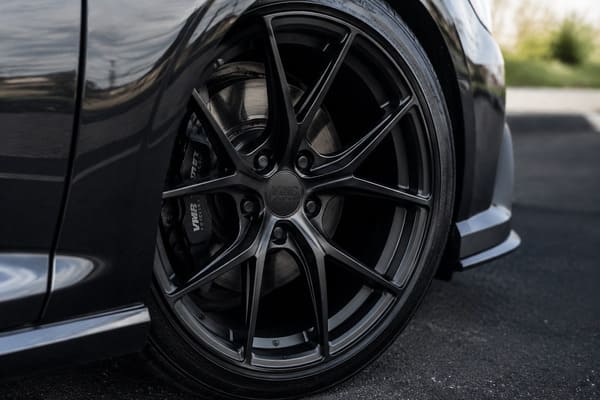
I remember the first time I showed a customer a set of anodized black forged wheels in person. He had been looking at photos online for weeks and thought he knew what to expect. When he actually held one, he went quiet for a few seconds. Then he said, "It looks like the metal is just… that color." That is the best description I have heard. The color — whether it is black, gold, bronze, or red — sits inside the surface, not on top of it. There is no visible film and no texture from a sprayed layer.
Why the Finish Looks Different From Paint or Powder Coating
The reason anodized wheels look different comes down to where the color lives. With paint or powder coating, the color layer sits on the outside of the metal. With anodizing, the color is absorbed into the oxide layer6, which is part of the metal itself. This changes how light interacts with the surface.
| Finish Type | Color Location | Surface Texture | Visible Film |
|---|---|---|---|
| Paint | On top of metal | Smooth or textured | Yes |
| Powder Coating | On top of metal | Slightly textured | Yes |
| Anodizing | Inside the metal surface | Determined by pre-treatment | No |
The pre-treatment step matters a lot here. If the aluminum is polished before anodizing, the result is a semi-bright finish. If it is bead-blasted or brushed first, the result is matte or satin. This means the final look of an anodized wheel can be controlled at two stages — before and during the process. That level of control is something paint cannot offer in the same way.
What Is Anodizing and How Does It Work on Wheels?
Customers hear the word anodizing often. Very few of them know what actually happens to the metal. I explain this process probably 10 to 15 times a month, so I have learned how to keep it simple.
Anodizing is an electrochemical process where aluminum is placed in an acid bath and exposed to electrical current.7 This causes the aluminum surface to react with oxygen and form a dense aluminum oxide layer. About 50% of this layer grows into the metal and 50% builds outward8, creating a surface that is part of the wheel itself.
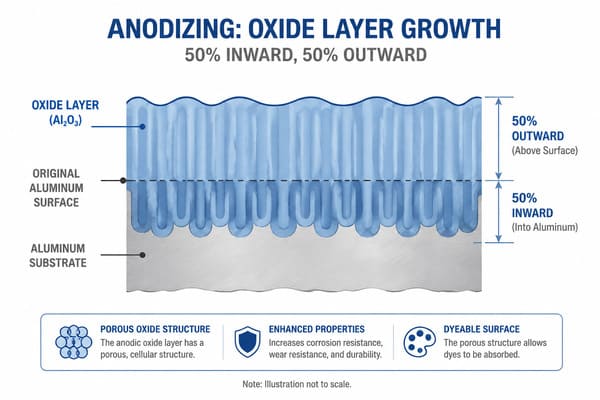
Here is how I put it to customers: the wheel goes into an acid bath — typically sulfuric acid — and a low electrical current is passed through it. The aluminum on the surface reacts with oxygen ions in the solution and forms aluminum oxide. That oxide does not stack on top of the metal. It grows into it. About 50% of the layer goes inward, and 50% builds outward. For wheels, we typically use what is called Type III anodizing, also called hard anodizing, which produces a layer between 25 and 50 microns thick9. That is roughly twice the thickness of standard anodizing.
The Three Main Types of Anodizing Used on Wheels
Not all anodizing is the same. The type used determines the thickness of the oxide layer, the level of hardness, and whether the result is decorative or functional.
| Anodizing Type | Layer Thickness | Primary Use | Hardness Level |
|---|---|---|---|
| Type I (Chromic Acid) | 0.5 – 2.5 microns | Aerospace, thin parts | Low |
| Type II (Sulfuric Acid) | 5 – 25 microns | Decorative applications | Medium |
| Type III (Hard Anodizing) | 25 – 50 microns | Structural and wear-resistant parts | High |
For forged wheels, Type III is the standard we use. The process runs at temperatures close to 0°C to keep the layer dense and uniform10. Higher temperatures during the process produce a softer, more porous layer. Lower temperatures produce a tighter, harder one. The entire bath process takes 30 to 60 minutes per batch depending on the target thickness. After that, the wheel goes through a dyeing stage if color is required, and then a sealing stage to close the pores. Each step affects the final result, so the process has to be controlled carefully from start to finish.
How Does Anodizing Improve the Durability of Wheels?
Durability is where anodizing separates itself from every other surface treatment I know. The numbers are not close. And I have seen the real-world results to back them up.
Anodizing improves wheel durability by forming a hard aluminum oxide layer that resists corrosion, surface scratches, and chemical exposure. Hard-anodized wheels score 60 to 70 HRC on the hardness scale — harder than most stainless steel — and can last 5 or more years in harsh environments like coastal climates with salt air and high humidity.
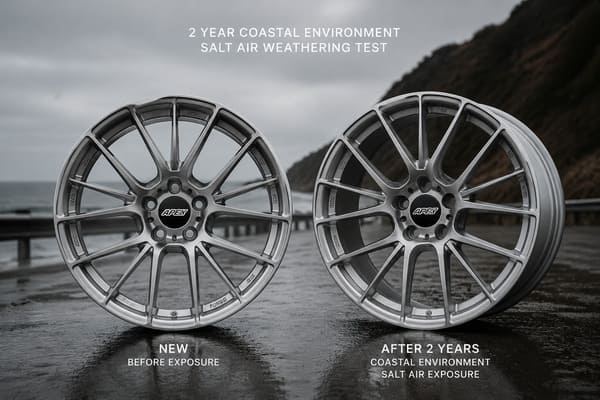
A customer once came back to me after two years with a set of anodized wheels I had supplied. He drove in a coastal city — salt air, humidity, regular rain. He sent me photos expecting to show me damage. The wheels looked almost identical to when he first installed them. That is not luck. That is the chemistry working. The anodized layer seals the aluminum surface and makes it far less reactive to moisture and salt. Standard aluminum starts to show surface corrosion within 6 to 12 months in coastal environments. A hard-anodized surface can last 5 years or more under the same conditions.
How Anodizing Compares to Other Wheel Surface Treatments
Customers often ask me to compare anodizing to paint and powder coating directly. Here is the breakdown I give them.
| Property | Paint | Powder Coating | Hard Anodizing |
|---|---|---|---|
| Surface Hardness | Low | Medium | High (60–70 HRC) |
| Corrosion Resistance | 1–2 years (coastal) | 2–3 years (coastal) | 5+ years (coastal) |
| Risk of Peeling | High | Medium | None |
| Chemical Resistance | Low | Medium | High (pH 2–12) |
| Repair if Damaged | Re-spray or repaint | Requires full re-coat | Difficult to touch up |
The hardness advantage matters most in day-to-day use. Brake dust, road grit, and gravel all contact the wheel surface constantly. Paint scratches under that kind of exposure. The anodized layer does not scratch in the same way because it is not a coating sitting on top — it is the surface itself. The layer also holds up against the pH range of most commercial wheel cleaners, which typically fall between pH 2 and pH 12. That covers almost every cleaning product a customer will ever use.
What Colors and Finishes Can Anodizing Achieve on Wheels?
Color is the part of this conversation that gets customers leaning forward. Most of them come in thinking anodizing means black or silver. The actual range is much wider than that.
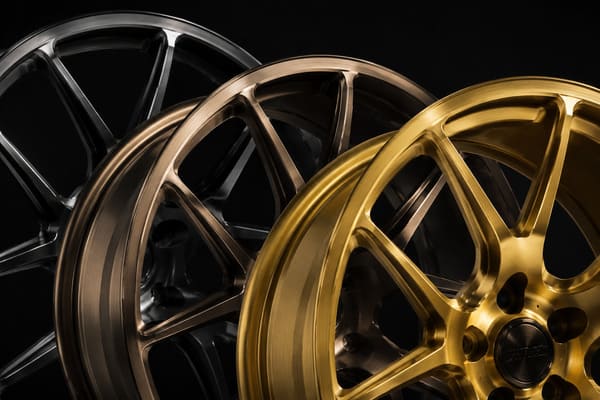
Anodizing can produce a wide range of colors on wheels, including matte black, champagne gold, dark bronze, red, blue, and custom shades. The color is absorbed into the oxide layer during a dyeing stage before sealing. The final shade depends on the dye concentration, the anodizing time, and the aluminum alloy used.
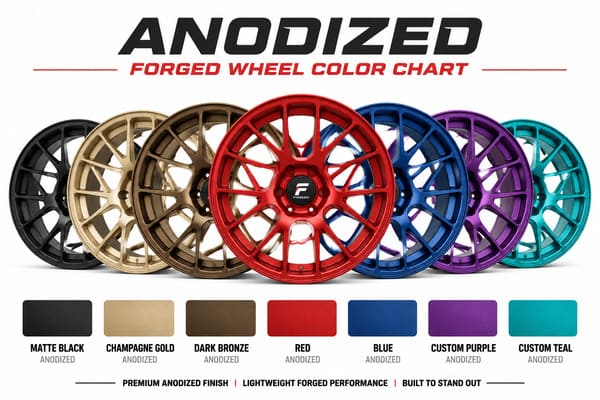
Color is the part of this conversation that gets customers leaning forward. I usually pull up our color chart at this point — we offer over 20 standard anodizing colors, and custom shades are possible with the right dye concentration. The most popular ones I see ordered are matte black, champagne gold, and dark bronze. The color enters the wheel surface during the dyeing stage, which happens after the oxide layer is formed but before it is sealed. The porous oxide layer absorbs the dye, and then a sealing step — usually hot deionized water or a nickel acetate solution — closes the pores and locks the color in.11
What Affects the Final Color Result
One thing I always tell customers upfront: the final color depends heavily on the alloy12. A 6061 aluminum wheel and a 7075 aluminum wheel dyed with the same black will come out at slightly different shades. I learned this the hard way early on when two batches from different alloys were supposed to match. They did not. Now I always confirm the alloy composition before quoting a color result.
| Factor | Effect on Color |
|---|---|
| Aluminum Alloy (6061 vs 7075) | Different base tone, affects final shade |
| Pre-treatment (polish vs bead-blast) | Changes surface texture and light reflection |
| Dye Concentration | Higher concentration = deeper, richer color |
| Anodizing Layer Thickness | Thicker layer absorbs more dye |
| Sealing Method | Affects color depth and surface sheen |
Beyond color, the finish type — matte, satin, or semi-bright — is set during the pre-treatment stage before the wheel enters the acid bath. This means a customer can get the same color in two different textures simply by changing how the surface is prepared. That combination of color and texture control is what makes anodizing one of the most flexible surface treatments available for forged wheels. No other method gives this level of customization while also improving the physical properties of the surface at the same time.
Conclusion
Anodizing changes both how a wheel looks and how long it lasts. The color goes into the metal. The hardness becomes part of the surface. No other finish does both at once. At Tree Wheels, we offer fully customized forged wheels with professional anodizing options built to last.
-
"A Short Review on Aluminum Anodizing: An Eco- Friendly Metal …", https://www.academia.edu/28678204/A_Short_Review_on_Aluminum_Anodizing_An_Eco_Friendly_Metal_Finishing_Process. A technical overview of anodizing explains that the process converts the aluminum surface to aluminum oxide rather than depositing a separate coating, supporting the claim that the layer is integral to the substrate. Evidence role: mechanism; source type: education. Supports: Anodizing changes appearance by forming an oxide layer that is integrated with the aluminum surface rather than applied as a surface coating.. Scope note: This supports the general anodizing mechanism, not wheel-specific performance. ↩
-
"[PDF] The Effect of Sand on the Wear of Anodized Aluminum by Sara Pope", https://etd.auburn.edu/bitstream/handle/10415/4390/Thesis_SaraPope_TheEffect_ofSand_onWear.pdf?sequence=2&isAllowed=y. Materials references describe anodized aluminum oxide layers as improving corrosion resistance, wear resistance, and chemical stability compared with untreated aluminum, supporting the durability mechanism described here. Evidence role: general_support; source type: education. Supports: Anodizing improves aluminum durability by increasing resistance to corrosion, wear, and chemical exposure.. Scope note: The source may describe anodized aluminum generally rather than forged automotive wheels specifically. ↩
-
"A Guide to Type II 8625 Anodizing Services – Injection Mold Plating", https://www.pfiinc.com/what-is-type-ii-aluminum-anodizing/. Standard references for sulfuric acid anodizing list typical anodic coating thicknesses in the micrometer range, including values comparable to 10–25 μm for conventional Type II anodizing. Evidence role: statistic; source type: institution. Supports: Common anodizing layer thicknesses can fall around 10–25 microns depending on process type and specification.. Scope note: Thickness ranges vary by alloy, bath chemistry, and specification; the source may not refer specifically to wheels. ↩
-
"Anodizing: Typical Hardness of Type III (Hardcoat) Anodized Coatings", https://www.pfonline.com/articles/anodizing-qa-typical-hardness-of-type-iii-hardcoat-anodized-coatings. Technical data on hard anodized aluminum report high Rockwell hardness values for Type III anodic coatings, supporting the claim that hard anodizing can reach approximately 60–70 HRC under suitable process conditions. Evidence role: statistic; source type: institution. Supports: Hard anodized aluminum coatings can reach hardness values around Rockwell C 70.. Scope note: Reported hardness depends on alloy, coating thickness, test method, and whether the value is measured on the coating or composite surface. ↩
-
"FAQs General – MISC Lab", https://misclab.umeoce.maine.edu/ftp/instruments/CTD%2037SI%20June%202011%20disk/website/FAQs/FAQsGeneralInstrument.htm. Descriptions of anodizing as an electrochemical conversion process support the statement that anodized layers are not prone to peeling or flaking in the same manner as applied organic coatings. Evidence role: mechanism; source type: education. Supports: Because anodizing converts the aluminum surface rather than adding a separate film, it generally does not peel or flake like paint.. Scope note: This explains why peeling is less likely, but it does not guarantee that every anodized part will remain defect-free under all service conditions. ↩
-
"(PDF) Porous Layer Characterization of Anodized and Black …", https://www.academia.edu/16823863/Porous_Layer_Characterization_of_Anodized_and_Black_Anodized_Aluminium_by_Electrochemical_Studies. References on dyed anodized aluminum explain that dyes enter the porous anodic oxide before sealing, supporting the statement that color is incorporated into the anodic layer rather than sprayed on top. Evidence role: mechanism; source type: education. Supports: In dyed anodizing, color is absorbed into the porous aluminum oxide layer before sealing.. Scope note: This supports the dyeing mechanism for porous anodic films generally, not the colorfastness of any specific wheel finish. ↩
-
"Anodizing – Wikipedia", https://en.wikipedia.org/wiki/Anodizing. Standard definitions of anodizing describe it as an electrolytic or electrochemical process in which aluminum serves as the anode in an acid electrolyte, supporting the process description. Evidence role: definition; source type: encyclopedia. Supports: Anodizing is an electrochemical process involving aluminum, an acid electrolyte, and electrical current.. Scope note: The definition covers anodizing broadly and does not specify wheel-manufacturing parameters. ↩
-
"Aluminum Anodizing Decoded: Avoid The Wrong Alloy And Finish", https://www.shengxinaluminium.com/aluminum-anodizing-decoded-avoid-the-wrong-alloy-and-finish_n592. Technical descriptions of anodic film growth commonly state that aluminum oxide forms partly by inward growth into the substrate and partly by outward growth from the original surface, often approximated as a roughly equal split. Evidence role: mechanism; source type: institution. Supports: Anodic oxide growth occurs both inward into the aluminum and outward from the original surface, approximately half in each direction under common conditions.. Scope note: The exact inward/outward ratio can vary with process conditions and alloy composition. ↩
-
"Hardcoat Anodizing (Type III) – Medical Device Surface Modifications", https://www.precisioncoating.com/hardcoat-anodizing-type-iii/. Anodizing specifications for Type III hard anodic coatings identify hard anodizing as a thicker, wear-resistant anodic coating class and give thickness ranges that commonly include approximately 25–50 μm. Evidence role: definition; source type: government. Supports: Type III hard anodizing is associated with comparatively thick anodic coatings, commonly around 25–50 microns.. Scope note: Specifications define coating classes and thicknesses but do not establish that every forged wheel uses Type III anodizing. ↩
-
"Anodizing – Wikipedia", https://en.wikipedia.org/wiki/Anodizing. Technical literature on hard anodizing reports that low electrolyte temperatures are used to form denser, harder anodic oxide layers, supporting the stated role of near-0°C processing. Evidence role: mechanism; source type: paper. Supports: Hard anodizing commonly uses low bath temperatures near 0°C to promote dense, hard oxide formation.. Scope note: The optimal temperature depends on electrolyte chemistry, current density, alloy, and target coating thickness. ↩
-
"Low Temperature Sealing of Anodized Aluminum Alloy for … – PMC", https://pmc.ncbi.nlm.nih.gov/articles/PMC7662489/. Anodizing references describe porous anodic oxide films being dyed and then sealed by hydration in hot water or by nickel acetate treatments, supporting the sequence of dye absorption followed by pore sealing. Evidence role: mechanism; source type: research. Supports: Dyed anodized aluminum is commonly sealed with hot water or nickel acetate to close pores after dye uptake.. Scope note: The source supports standard sealing mechanisms; actual sealing chemistry and color retention vary by specification and production control. ↩
-
"Effects of the Process Conditions on the Color of Dye-Treated …", https://pubmed.ncbi.nlm.nih.gov/30764976/. Studies and technical guides on aluminum anodizing note that alloy composition affects anodic film formation and dye appearance, supporting the claim that different aluminum alloys can produce different final colors. Evidence role: mechanism; source type: paper. Supports: Aluminum alloy composition can affect the final color and appearance of dyed anodized finishes.. Scope note: The source may support alloy effects generally rather than comparing 6061 and 7075 wheel batches directly. ↩