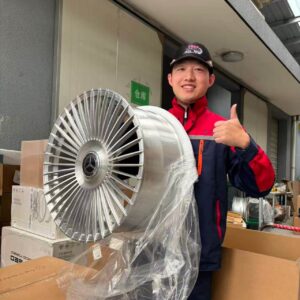

I had a client in Dubai who runs a modification shop. He ordered a batch of chrome mirror-finish wheels for his customers’ luxury cars. Three months later, he came back to me. The wheels were bubbling and clouding over.
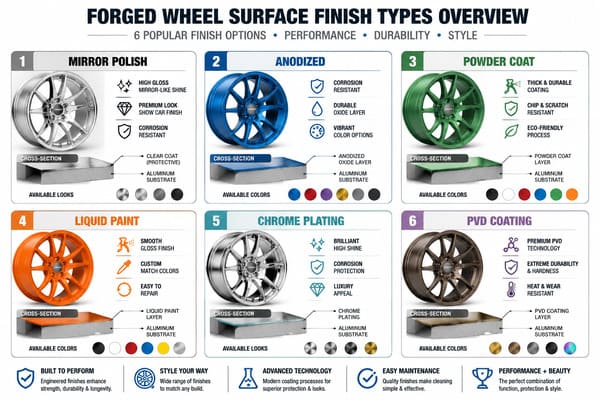
Forged wheels can be finished with mechanical polishing, anodizing, liquid paint, powder coating, electroplating, and PVD coating.1 Each finish has different durability, cost, and maintenance needs. The right choice depends on your climate, how the car is used, and what cleaning products will be used regularly.
I asked him what cleaning products his team used. He checked and came back with an answer: a high-alkaline foam cleaner. Dubai sits above 40°C for most of the year. At that temperature, a high-alkaline cleaner attacks a chrome plating layer 3 to 5 times faster than it would in a normal environment.2 That incident changed how I think about surface finishes. A finish is not just an appearance choice. It is an engineering decision that has to match the environment the wheel will live in. We now include a surface care instruction sheet with every shipment, clearly listing which cleaning products must never be used.
How to Keep Forged Wheels Shiny?
An American client sent me a photo of his wheels eight months after delivery. The surface had gone grey and lost its shine. He washed them every week, he told me, with whatever cleaner was sitting in his garage.
To keep forged wheels shiny, use a pH-neutral wheel cleaner and apply wheel wax as a sealant after each wash3. Avoid alkaline or acidic cleaners.4 A polished wheel has a clear coat layer averaging only 60 to 80 microns thick5, and harsh chemicals will degrade it within 6 to 12 months.6
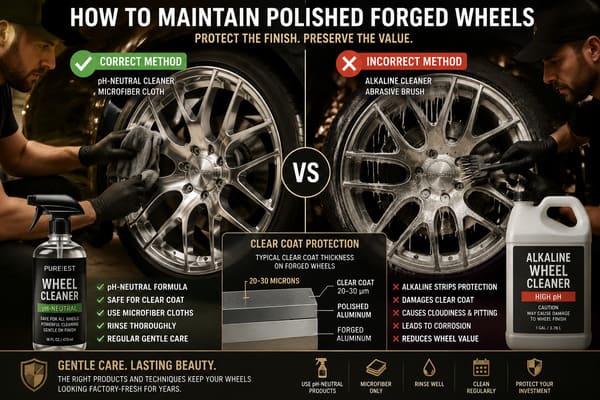
I asked him to send me the brand of the cleaner. I looked up the pH value. It was 12.5, which is strongly alkaline. That number explained everything. The clear coat on a polished wheel is thin. It is there to protect the mirror surface underneath, but it has limits. Once I explained the problem, he switched to a pH-neutral wheel cleaner and started applying wheel wax after each wash. His wheels recovered noticeably over the following months.
Why the Clear Coat Fails Faster Than People Expect
Most people assume a wheel finish is tough because the wheel itself is tough. The alloy underneath is. The coating on top is not. Here is a breakdown of how different factors speed up clear coat degradation:
| Factor | Effect on Clear Coat |
|---|---|
| Alkaline cleaner (pH > 10)7 | Breaks down the resin structure over time |
| High ambient temperature8 | Accelerates chemical reaction rate by 2–5x |
| Frequent washing without wax | Removes the protective wax layer, leaving clear coat exposed |
| Road salt and brake dust9 | Creates micro-abrasion on the surface |
The clear coat on a polished wheel is not decorative. It is the only barrier between the mirror finish and the outside world. Once it starts to break down, the degradation moves quickly. The correct maintenance routine is simple: pH-neutral cleaner, soft microfiber cloth, and wheel wax applied every 4 to 6 weeks. That routine alone extends the life of a polished finish by years.
Is It Safe to Powder Coat Forged Wheels?
A long-term client of mine in Australia once sent a set of our forged wheels to a local powder coating shop for a custom color. The result looked fine at first. About a year later, he noticed a hairline crack on one of the wheels.
Powder coating forged wheels is safe when the curing oven temperature is properly controlled. The critical limit for 6061-T6 aluminum alloy is 205°C.10 If the oven temperature exceeds this, the alloy enters an over-aged state and its yield strength begins to drop from the standard 276 MPa.11
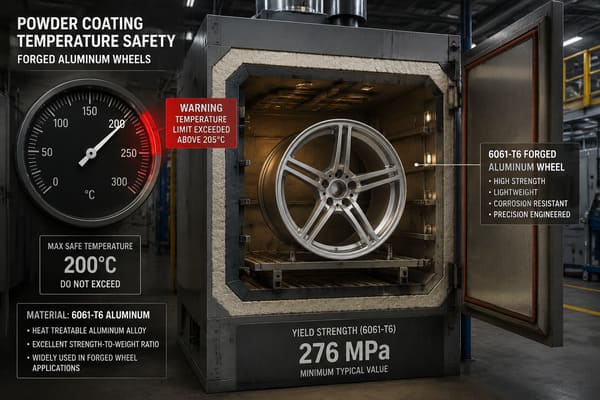
We traced the problem together. The powder coating shop’s oven had a temperature variance of ±25°C, which means the peak temperature had reached above 220°C. That is past the over-aging threshold for 6061-T6. The issue was not powder coating as a process. The issue was that shop’s equipment precision.
What to Check Before Sending Wheels for Powder Coating
Powder coating is a legitimate and durable finish option for forged wheels. The process itself is not the risk. The risk is the equipment and the operator. Before any customer sends our wheels to a third-party powder coater, I always give the same advice:
| Checkpoint | What to Ask |
|---|---|
| Oven temperature control | Can they provide a curing temperature log? |
| Peak temperature | Is the peak confirmed below 200°C? |
| Temperature variance | What is the oven’s variance tolerance? (Should be ±10°C or better) |
| Alloy awareness | Does the shop know they are working with 6061-T6? |
A good powder coating shop will have no problem providing oven temperature records. If they hesitate or cannot produce the data, that is a signal to find another shop. The powder coat layer itself, when applied correctly, offers excellent corrosion resistance and a wide range of colors.12 It is one of the more cost-effective finish options we offer. But it requires a shop that understands the material they are working with.
What Are the Different Finishes for Wheels?
We process over 500 custom orders every year at our facility. I noticed a pattern early on. Customers buying forged wheels for the first time almost always ask the same first question: "What colors do you have?" Customers who have been in the modification industry for years ask a different question: "What process makes that color?"
Wheel finishes fall into four main categories: mechanical finishes (polishing), chemical finishes (anodizing), coating finishes (liquid paint and powder coating), and electrochemical finishes (electroplating and PVD). Each category uses different equipment, carries different costs, and produces different durability results.
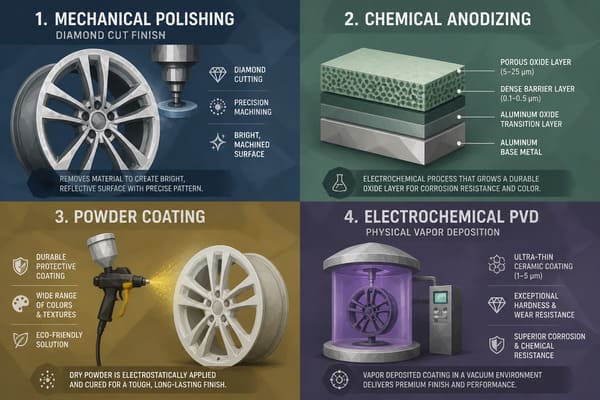
The gap between those two questions reflects how much someone understands about surface treatment. The finish category matters more than the color name, because the category determines how the wheel behaves over time.
A Breakdown of the Four Finish Categories
Here is how the four categories compare in practical terms:
| Category | Process Examples | Cost per Wheel (USD) | Key Strength | Key Weakness |
|---|---|---|---|---|
| Mechanical | Diamond cut, brushed, mirror polish | $20–$50 | High visual clarity | Thin clear coat, needs careful maintenance |
| Chemical | Anodizing | $30–$60 | Corrosion resistance, hard surface | Limited color range |
| Coating | Liquid paint, powder coat | $30–$80 | Wide color range, cost-effective | Depends on application quality |
| Electrochemical | Chrome plating, PVD titanium | $150–$300 | Premium appearance, high durability | High cost, sensitive to wrong cleaners |
The price difference is not about the material. It is about process complexity and how difficult it is to control quality at each step. A PVD titanium finish requires a vacuum chamber, precise temperature control, and a low yield rate compared to liquid paint. That is where the cost comes from. When a client asks me why PVD costs five times more than spray paint, I walk them through the process. After that, the price makes sense to them.
What Is the Most Popular Finish for Forged Wheels?
I pulled our order data from the past year. More than 65% of customers who submitted a surface finish request came with their own reference image rather than choosing from our standard options. Three years ago, that number was around 40%.
The most popular finish for forged wheels right now is custom matte, particularly matte gun metal and matte space grey. These colors have appeared most frequently in orders over the past two years. However, the broader trend is toward full customization rather than any single dominant finish.
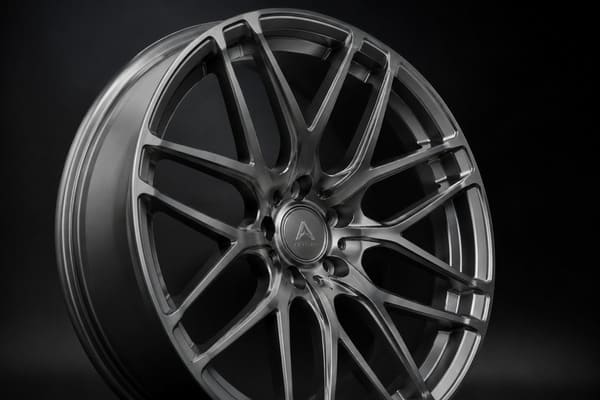
That shift in the data tells me something clear. The customers choosing forged wheels today know what they want. They are not looking for the most popular color. They are looking for a color that belongs to their car and no one else’s. The rise of custom reference submissions is a direct sign of that.
How Finish Preferences Have Shifted Over Time
| Period | Dominant Finish Request | Customer Behavior |
|---|---|---|
| 3 years ago | Gloss black, chrome | Choosing from supplier options |
| 2 years ago | Brushed silver, matte black | Mixing standard options |
| Past 12 months | Custom matte tones, dual-finish | Bringing reference images |
Matte gun metal and matte space grey lead the current demand. But I do not think one finish will dominate the market for long. The trend is moving toward fragmentation, not consolidation. More customers want something specific to them, and the tools to deliver that, from 3D rendering previews to flexible production runs, make it possible to meet that demand at a smaller scale than before. Our minimum order of 4 wheels exists precisely for this reason. A customer should not need to order 50 sets to get the finish they actually want.
Conclusion
Forged wheel finishes are engineering decisions, not just style choices. Match the finish to the environment, the use case, and the maintenance routine. Get it right from the start.
At Tree Wheels, we help clients choose the right finish for their specific conditions, with full customization support from design sketch to final delivery.
-
"Industrial processes – Wikipedia", https://en.wikipedia.org/wiki/Industrial_processes. A general surface-engineering reference identifies polishing, anodizing, organic coatings such as paint and powder coating, electroplating, and physical vapor deposition as established finishing processes for aluminum and metal components. Evidence role: definition; source type: encyclopedia. Supports: Forged wheels can receive mechanical, chemical, coating, electroplated, and PVD surface finishes.. Scope note: The source may describe metal finishing generally rather than forged wheels specifically. ↩
-
"[PDF] REACTION KINETICS OF CORROSION OF MILD STEEL IN …", https://journal.uctm.edu/node/j2010-4/13_Yaro_447-452.pdf. Chemical-kinetics references describe the Arrhenius relationship, under which reaction rates commonly increase with temperature; this supports the mechanism by which hot conditions can accelerate alkaline chemical attack on plated surfaces. Evidence role: mechanism; source type: education. Supports: High temperature can accelerate chemical attack by alkaline cleaners on chrome-plated wheel finishes.. Scope note: This is contextual support for temperature-dependent acceleration and may not directly verify the exact 3–5× rate for chrome-plated wheels. ↩
-
"The Ultimate Golf Cart Cleaner Guide: Maintenance, Detailing, and …", https://pressbooks.cuny.edu/nurture/chapter/golf-cart-cleaner-guide/. Automotive coating-care guidance from institutional or technical sources generally recommends mild, pH-neutral cleaning and protective sealants to reduce chemical and environmental degradation of clear-coated surfaces. Evidence role: expert_consensus; source type: institution. Supports: pH-neutral cleaners and protective wax or sealant help preserve shiny clear-coated forged wheel finishes.. Scope note: Evidence may address automotive clear coats generally rather than forged wheel clear coats specifically. ↩
-
"Effects of Alkaline Cleaning Agents on the Long-Term Performance …", https://pmc.ncbi.nlm.nih.gov/articles/PMC11206023/. Coatings and corrosion references note that strongly acidic or alkaline environments can degrade polymers and accelerate corrosion of exposed metals, supporting the recommendation to avoid extreme-pH cleaners on coated aluminum wheels. Evidence role: mechanism; source type: research. Supports: Acidic and alkaline cleaners can damage wheel coatings or exposed metal surfaces and should be avoided for routine maintenance.. Scope note: The source may not evaluate every commercial wheel cleaner formulation or every wheel finish. ↩
-
"How Does Compounding on Car Enhance Its Value and …", https://webapp-new.itlab.stanford.edu/compounding-on-car. Automotive-coating references report clear-coat film builds in the tens of micrometres, providing contextual support that protective clear layers are thin relative to the underlying metal component. Evidence role: statistic; source type: institution. Supports: The clear coat on a polished wheel is a thin protective layer, commonly on the order of tens of micrometres.. Scope note: The cited range may come from automotive paint systems generally and may not directly establish the 60–80 µm average for all polished forged wheels. ↩
-
"Investigating Different Local Polyurethane Coatings Degradation …", https://pmc.ncbi.nlm.nih.gov/articles/PMC9964212/. Studies of polymeric automotive coatings show that chemical exposure and environmental weathering can degrade coating gloss, adhesion, and barrier properties over time, supporting the plausibility of accelerated clear-coat failure under harsh cleaning conditions. Evidence role: general_support; source type: paper. Supports: Harsh chemical exposure can degrade a wheel clear coat within a relatively short service period.. Scope note: This supports the degradation mechanism but may not directly prove a universal 6–12 month failure period for forged wheels. ↩
-
"Physical Damage Formation on Automotive Finishes Due to Acidic …", https://nepis.epa.gov/Exe/ZyPURL.cgi?Dockey=P100W4DS.TXT. Materials and coatings literature identifies high-pH alkaline solutions as capable of attacking ester, urethane, or other polymer linkages and reducing coating integrity, supporting the concern about cleaners above pH 10. Evidence role: mechanism; source type: paper. Supports: Cleaners with pH above 10 can chemically degrade some clear-coat resin systems over time.. Scope note: The exact susceptibility depends on the resin chemistry and exposure conditions of the specific wheel coating. ↩
-
"[PDF] MODELING OF THERMO-MECHANICAL DEGRADATION OF …", https://repository.arizona.edu/bitstream/handle/10150/668426/azu_etd_20257_sip1_m.pdf?sequence=1. The Arrhenius equation and corrosion-engineering literature explain that elevated temperature increases many chemical reaction and corrosion rates, supporting the claim that hot environments accelerate coating degradation. Evidence role: mechanism; source type: education. Supports: High ambient temperature accelerates chemical processes that degrade wheel clear coats.. Scope note: The source supports the direction of the effect and typical kinetic reasoning, not necessarily the exact multiplier for every wheel finish. ↩
-
"Brake wear particle emissions: a review – PMC – NIH", https://pmc.ncbi.nlm.nih.gov/articles/PMC4315878/. Transportation and corrosion references identify de-icing salts as corrosive to metals, while brake-wear particles contain abrasive and reactive compounds that can accumulate on wheel surfaces. Evidence role: mechanism; source type: government. Supports: Road salt and brake dust can contribute to corrosion, contamination, or abrasion of wheel finishes.. Scope note: This provides general support for salt and brake-dust hazards, not a direct measurement of micro-abrasion on the specific wheels discussed. ↩
-
"[PDF] Evaluation of the Effects of Powder Coating Cure Temperatures on …", https://digitalcommons.lmu.edu/cgi/viewcontent.cgi?referer=&httpsredir=1&article=1009&context=mech_fac. Materials references for 6061-T6 aluminum describe the T6 temper as precipitation-hardened and show that elevated-temperature exposure can alter aging state and mechanical properties, giving contextual support for controlling powder-coating cure temperatures. Evidence role: mechanism; source type: research. Supports: 6061-T6 aluminum can lose temper-related strength if exposed to excessive powder-coating cure temperatures.. Scope note: The source may support sensitivity to elevated temperature without defining 205°C as a universal critical limit for every exposure duration. ↩
-
"6061 aluminium alloy – Wikipedia", https://en.wikipedia.org/wiki/6061_aluminium_alloy. Published material datasheets and engineering references list 6061-T6 aluminum with a typical yield strength around 276 MPa, supporting the baseline property value used in the discussion of strength loss. Evidence role: statistic; source type: institution. Supports: 6061-T6 aluminum has a standard or typical yield strength of about 276 MPa before strength loss from over-aging.. Scope note: Datasheet values are nominal and can vary by product form, specification, and testing condition. ↩
-
"Powder coating", https://en.wikipedia.org/wiki/Powder_coating. Technical references on powder coatings describe them as polymer coating systems valued for corrosion protection and broad color or finish flexibility when properly pretreated and cured. Evidence role: general_support; source type: institution. Supports: Properly applied powder coating can provide corrosion resistance and varied color options for metal wheels.. Scope note: Actual corrosion resistance depends on substrate preparation, coating chemistry, film thickness, and curing quality. ↩