
Most people asking this question have already seen a photo somewhere and felt something. But they can’t explain why it works. I can.
Bronze wheels on a white Audi S4 look aggressive, layered, and intentional. The warm tone of bronze sits against the neutral white without clashing, creating a contrast that feels high-end rather than loud. It is one of the most visually balanced wheel-and-paint combinations in the modification world.
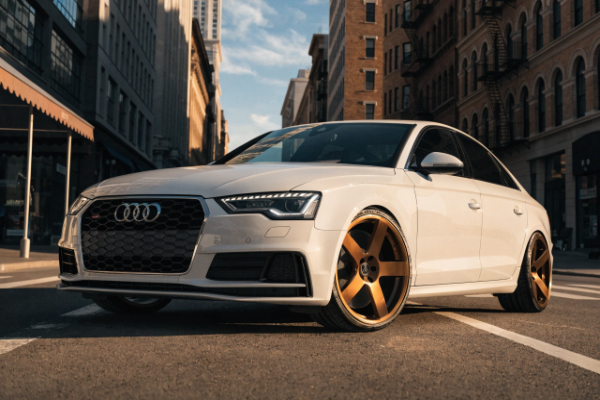
Here is the thing most people miss: this combination works not because of color matching, but because of something deeper. White paint does not compete with bronze. It steps back and lets bronze do all the work. And bronze, as a finish, has more to show than almost any other wheel color. The sections below break down exactly why this pairing works, what can go wrong, and how to get it right if you are ordering a set.
Do Bronze Wheels Look Good on a White Car?
You already know the answer feels like yes. But you want to understand why before you spend money on a set of wheels.
Yes, bronze wheels look good on a white car. White is a neutral base that does not fight with warm tones. Bronze sits in the warm color range, so the two create a temperature contrast rather than a color clash. This contrast adds visual depth without being aggressive or overdone.
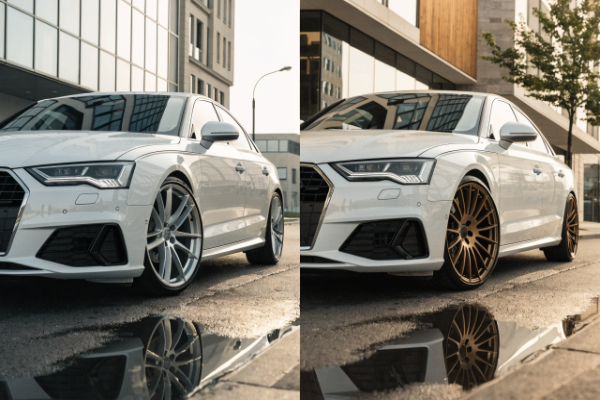
A lot of people think this pairing is a bold color choice. It is not. Bold would be neon yellow or candy red. Bronze on white is more like a controlled, warm tension. White has no saturation. It is just light reflected back at you. Bronze, on the other hand, carries warmth, texture, and depth. When you put the two together, you are not creating a clash. You are creating a contrast between temperature, not color.
Why Temperature Contrast Works Better Than Color Matching
Most modification guides tell you to match your wheel color to your car’s accent colors — brake calipers, badges, or trim. That logic works for some combinations. But it is not why bronze on white looks good.
| Color Type | Property | Effect on White Car |
|---|---|---|
| Gold (high saturation) | Warm + loud | Can look cheap or overdone |
| Bronze (low-mid saturation) | Warm + restrained | Looks layered and intentional |
| Silver | Neutral | Blends in, low visual impact |
| Black | Cool/neutral | High contrast, aggressive |
| Bronze (satin/dark) | Warm + muted | Creates quiet luxury effect |
Bronze works because its warmth is restrained. Gold is too saturated. It shouts. Bronze speaks at a lower volume, but it says more. On a white car, that restraint reads as confidence. The result is a car that looks like it was designed that way from the factory, not modified by someone who could not decide between two colors.
Does Bronze Actually Work with White Paint?
Plenty of colors look good in photos and fall flat in real life. Bronze is different, and the reason has nothing to do with the photo.
Bronze works with white paint because it behaves differently across lighting conditions. In direct sunlight it reads as warm gold. In overcast light it shifts toward deep brown. Under artificial light at night it becomes close to a matte antique copper. White paint acts as a neutral backdrop that amplifies all of these shifts.
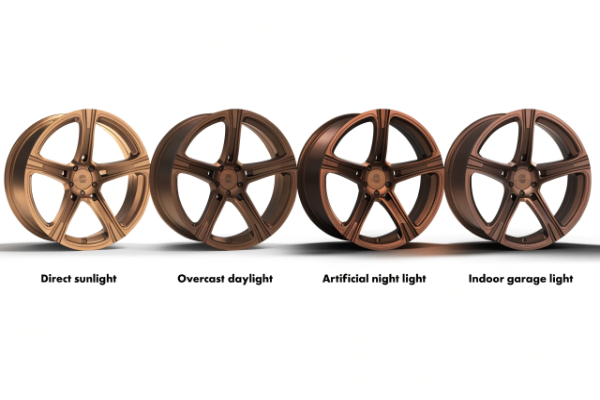
This is the insight almost no one talks about. People judge this combination from a single Instagram photo taken in perfect afternoon light. But bronze is not a static color. It is a color that moves with the light around it. White paint does not move. It stays neutral. That means every shift in the bronze finish gets amplified by the flat white background.
Bronze Is a Light Game, Not Just a Color Choice
When I work with customers who want bronze wheels, I always ask them where they drive most. That question matters more than they expect.
| Lighting Condition | How Bronze Reads | Visual Effect on White Car |
|---|---|---|
| Direct sunlight | Warm gold-bronze | High contrast, striking |
| Overcast daylight | Deep brown-bronze | Moody, premium |
| Artificial/night light | Matte antique copper | Dark and aggressive |
| Garage/indoor light | True bronze tone | Shows the most finish detail |
A silver or black wheel looks basically the same in all of these conditions. Bronze does not. It gives you a different car depending on the time of day. On a white Audi S4, this effect is maximized because the body gives the wheel no competition. The white paint just holds space and lets the wheel perform. That is why this combination works in real life, not just in photos.
What Makes Bronze Wheels Stand Out on a White Car?
The finish gets credit. But the spoke design is doing just as much work. Most people do not realize this.
Bronze wheels stand out on a white car because white paint creates a visual "full" surface with no negative space. The wheel is the only break in that surface. A bronze wheel with a strong spoke design and enough open space between spokes adds contrast in both color and form, making the wheel the visual center of the car.
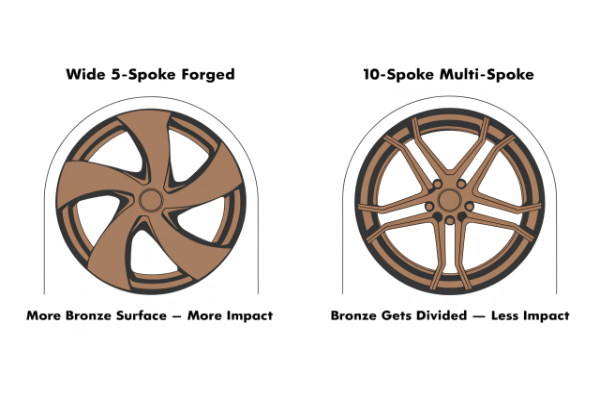
White car bodies are visually dense. There are no shadows, no panel color variation, no dark zones to rest your eyes. When you look at a white car, your eyes move fast across the surface and land on the wheels almost by default. This means the wheel has to carry more visual responsibility on a white car than on almost any other paint color.
Why Spoke Count and Design Matter More Than You Think
Choosing bronze as a finish is only half the decision. The spoke design determines whether that bronze finish actually gets seen.
| Spoke Style | Visual Effect on White Car | Recommended? |
|---|---|---|
| 5-spoke wide blade | Large bronze surface area, strong contrast | Yes — best option |
| Y-spoke / 3-spoke | Open, airy, maximum negative space | Yes — very effective |
| 10+ spoke (multi-spoke) | Bronze gets broken up, looks busy | No — reduces impact |
| Mesh style | Very low negative space, finish gets lost | Not ideal for bronze |
| Split 5-spoke | Balanced — good bronze exposure with detail | Yes — works well |
A wide 5-spoke or Y-spoke forged wheel gives bronze the most surface area to show. The open space between spokes also lightens the visual weight of the wheel against the white body. More spokes means the bronze color gets cut into smaller sections, and each section competes with the white background instead of working with it. The fewer the spokes, the more impact each one carries. That is how spoke design amplifies the bronze finish rather than fighting it.
Which Bronze Finish Works Best on a White Audi S4?
Bronze is not one color. This is where most buyers make the wrong call.
For a white Audi S4, satin dark bronze is the best-performing finish. It is warm enough to contrast with white paint, dark enough to avoid looking flashy, and the matte texture adds a layer of depth that gloss finishes cannot match. Gloss bronze looks cheap on white. Dark satin bronze looks expensive.
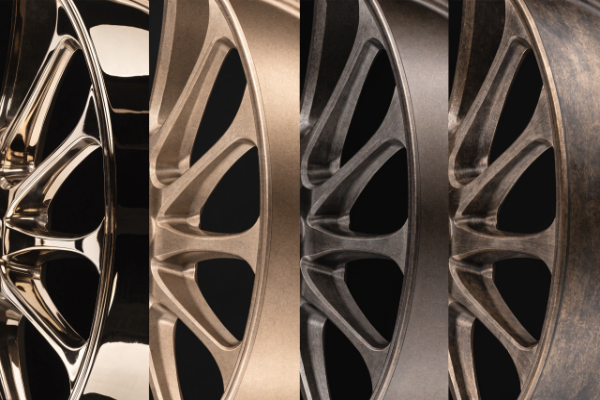
When customers come to me asking for bronze wheels, the first thing I explain is that bronze is a family of finishes, not a single color. The difference between choosing the right and wrong bronze on a white car is the difference between a wheel that looks factory-premium and one that looks like an afterthought.
The Bronze Finish Spectrum — And What Each One Does on White
| Bronze Finish | Tone | Texture | Effect on White S4 |
|---|---|---|---|
| Gloss Bronze | Light warm gold-bronze | Shiny | Looks flashy, can read as cheap |
| Satin Bronze | Mid warm bronze | Semi-matte | Clean, balanced, safe choice |
| Satin Dark Bronze | Deep warm brown-bronze | Semi-matte | Best option — premium and restrained |
| Antique Bronze | Very dark, aged look | Matte | Aggressive, works for slammed builds |
| PVD Bronze | True bronze tone | Mirror-like | Very striking but high maintenance |
Satin Dark Bronze hits the right point on every axis. It is warm but not loud. It is dark enough to stay grounded against the bright white body. The semi-matte surface catches light without reflecting everything around it, which keeps the finish looking intentional rather than decorative. On a white S4 specifically, this finish gives the car a European premium look — the kind of thing you expect from a factory AMG or RS model, not an aftermarket modification.
There is one more thing worth knowing. The quality of your forged wheel affects how the bronze finish actually looks, independent of which shade you choose. Forged wheels have a higher surface density than cast wheels. When powder coat or PVD bronze is applied to a forged surface, the adhesion is stronger and the finish layers sit more evenly. The result is a bronze color that has more depth, more consistency, and better longevity than the same finish on a cast wheel. I have seen the same bronze shade look completely different on a forged wheel versus a cast wheel. The forged version looks like a premium finish. The cast version looks like paint. That difference matters more than most buyers realize when they are comparing prices.
Conclusion
Bronze on a white Audi S4 works because of light, temperature contrast, spoke design, and the right finish — not luck. Choose satin dark bronze on a wide 5-spoke forged wheel and the result speaks for itself. At Tree Wheels, we build fully custom forged wheels in any bronze finish you need, with a minimum order of just 4 wheels.