
Hi, I’m Blake. Finding a reliable forged wheel supplier in China can be challenging. With hundreds of manufacturers claiming superior quality, how do you separate marketing hype from reality? Many buyers face costly mistakes and quality issues due to insufficient industry knowledge.
Before partnering with a Chinese wheel supplier, you should understand their production capabilities, quality control processes, and communication style. The best Chinese suppliers excel at 3-axis aluminum forged wheels but may struggle with advanced 5-axis designs or magnesium alloy wheels, and typically focus on manufacturing rather than original designs.
Reading this article will take about 10 minutes, but could save you thousands of dollars in potential mistakes. I’ll share my insider perspective on China’s forged wheel industry based on years of experience, helping you make informed sourcing decisions. While these are my personal observations, they reflect real industry conditions I’ve witnessed firsthand.
What Are the Strengths and Limitations of Chinese Forged Wheel Manufacturers?
The Chinese wheel manufacturing landscape is filled with contradictions. While some factories produce exceptional quality, others cut corners that compromise safety and performance. How can you tell the difference?
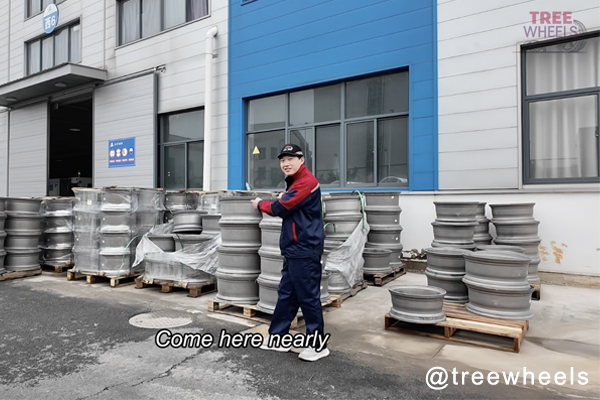
Chinese manufacturers excel at producing 3-axis aluminum forged wheels with hundreds of factories specializing in this technology. You can find factories offering excellent quality at competitive prices, especially when they source blanks from top-tier suppliers like Shandong Juncheng, Zhejiang Hongxin, or Jiangsu Poran.
| Product Type | Manufacturing Capability | Quality Assessment | Recommendation |
|---|---|---|---|
| 3-axis Aluminum Forged Wheels | Excellent – Hundreds of factories with expertise | Consistently high when using quality blanks | Highly recommended for sourcing |
| 5-axis Aluminum Forged Wheels | Very Limited – Only a few factories | Inconsistent, many processes outsourced | Exercise caution, verify capabilities |
| Magnesium Alloy Forged Wheels | Limited – Only single-piece designs | Variable, limited market validation | Limited sourcing recommended |
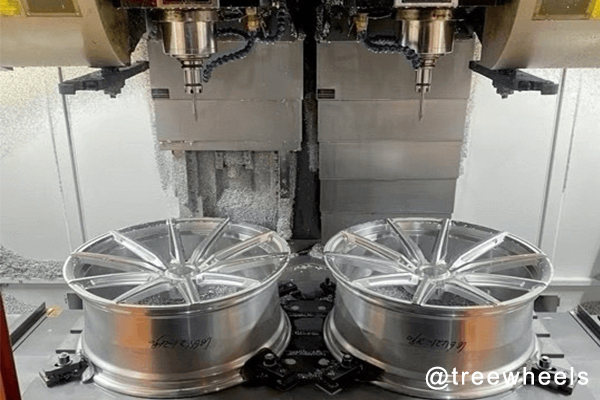
When evaluating Chinese wheel suppliers, I strongly recommend visiting factories in person whenever possible. However, it’s not merely about assessing the factory size—it’s about verifying they have a complete production line. This is crucial because only factories with comprehensive in-house capabilities can ensure quality at each production stage. Many smaller operations in China have just a few CNC machines and painting equipment, outsourcing critical processes like first and second machining operations and water polishing. The only exception is electroplating, which most factories outsource due to environmental regulations.
I’ve seen this issue firsthand—factories that claim full capabilities but are actually just assembly operations. When you tour a facility, ask to see each production stage and verify what happens in-house versus what’s outsourced. Request documentation of their quality control processes at each step. A reputable manufacturer will be transparent about their operations and proud to showcase their equipment. They should also have proper testing facilities to verify the structural integrity of their wheels before shipping.
Why Do Quality Control and Communication Issues Arise with Chinese Wheel Suppliers?
When dealing with overseas manufacturing, miscommunications can lead to costly mistakes. But why do these problems persist even with seemingly professional suppliers?
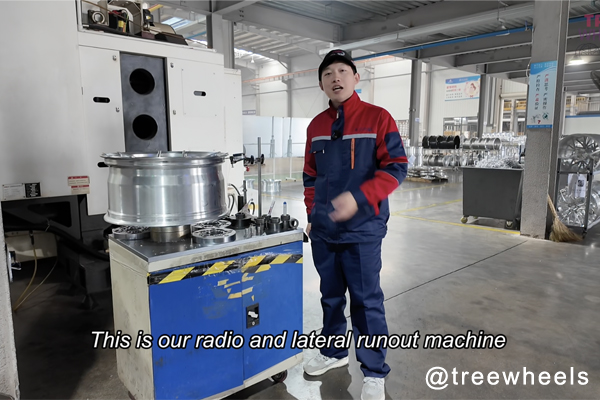
Quality control challenges often stem from different interpretations of specifications and standards. Chinese wheel manufacturers may have different default quality standards than what you expect, especially regarding precision measurements like runout tolerance, balance requirements, and surface finishing quality.
| Common Quality Parameters | Typical Chinese Standard | International Expectation | Recommendation |
|---|---|---|---|
| Runout Tolerance | <0.5mm | <0.3mm | Specify clearly before production |
| Surface Finish | Varies by factory | High precision, consistent | Request samples, define standards |
| Balance Requirements | Basic standards | Precise requirements | Provide detailed specifications |
| Material Certification | Limited documentation | Complete traceability | Request all certifications upfront |
I experienced this communication gap firsthand when we delivered semi-blank wheels to a customer who later discovered our runout exceeded their 0.3mm requirement. Our standard specification was under 0.5mm, which all wheels passed before shipping. The root cause? Unclear communication about quality standards before production began. Fortunately, the wheels could be reworked to meet specifications, and we covered the rework costs.
This situation highlights a crucial lesson: always clearly communicate your specific requirements before production begins. Don’t assume Chinese suppliers follow the same standards you’re accustomed to. Create a detailed specification sheet covering all critical dimensions, tolerances, and quality parameters. Request confirmation that your supplier understands and can meet these requirements.
Chinese business culture also influences how problems are addressed. Many suppliers will say "yes" to capabilities they don’t fully possess, not necessarily to deceive you, but because they believe they can find workarounds. This optimism can lead to misunderstandings about what’s actually possible. For example, I once had our factory assure me they could handle 5-axis wheel designs. I confidently told customers we could produce these sophisticated wheels, only to learn later that we were actually using 3-axis machines to approximate 5-axis designs. The results were noticeably different—with visible tool paths and less smooth surfaces that a trained eye could immediately identify as inferior.
When the customer pointed out this discrepancy, we had to admit our mistake, provide compensation, and cancel pending orders for similar products. This experience taught me to verify capabilities more thoroughly and be more transparent with customers about our actual production methods. Always ask for samples of previous work that specifically demonstrates the capabilities you need for your project.
How Prevalent Are Design Originality Issues in the Chinese Wheel Market?
The global wheel industry thrives on innovative designs, but what’s the reality behind Chinese wheel offerings? Are you getting something original or just another replica?
The Chinese forged wheel industry lacks original designs, with most production focused on contract manufacturing for established brands or creating replicas of popular styles. Few factories invest in design innovation, instead following market trends and copying successful products from international brands.
| Design Approach | Prevalence in China | Advantages | Disadvantages |
|---|---|---|---|
| Original Designs | Very Rare | Unique market positioning, IP ownership | Higher development costs, market uncertainty |
| Brand Contract Manufacturing | Common | Guaranteed quality standards, established designs | Dependent on brand relationships |
| Replicas/Inspired Designs | Very Common | Lower costs, familiar market appeal | Legal risks, commoditization, price competition |
| Emerging AI-assisted Design | New trend | Unique designs with lower development costs | Requires engineering validation |
The lack of original design in China’s forged wheel industry reflects a broader mindset issue rather than a capability limitation. Most factories focus on manufacturing efficiency rather than creative development. When you examine the offerings from most Chinese wheel suppliers, you’ll find striking similarities to established international designs, with minor modifications to avoid direct copyright issues.
This replication-focused approach stems from several factors. First, there’s significant market demand for affordable versions of popular designs. Second, developing truly original designs requires investment in design talent and research that many factories aren’t willing to make. Third, the industry has developed around production expertise rather than design innovation.
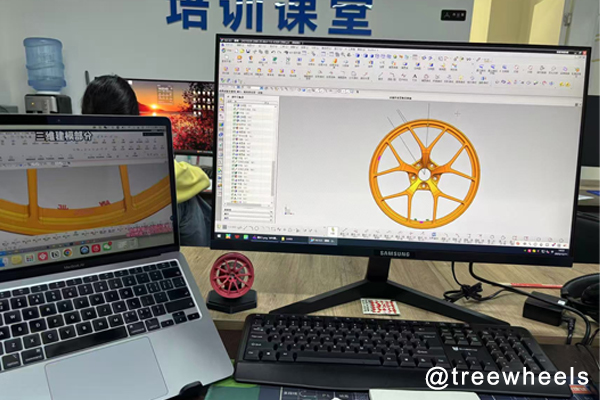
However, this doesn’t mean original design is impossible or prohibitively expensive. In fact, we’re seeing an interesting shift where some customers are bringing designs created through AI tools like ChatGPT. These conceptual designs can be refined, evaluated for structural integrity through FEA (Finite Element Analysis), and manufactured with relatively minimal adjustments. This approach represents an exciting new pathway to originality without massive investment.
If you’re seeking truly original designs from a Chinese supplier, look for those who can demonstrate a design portfolio, in-house design staff, and proper engineering validation processes. Ask about their design development process and how they protect intellectual property. The few manufacturers investing in these capabilities typically highlight them prominently, as they represent a significant competitive advantage in an industry dominated by replication.
As a Chinese manufacturer myself, I recognize both our industry’s strengths and weaknesses. While we excel at production efficiency and quality manufacturing of established designs, we must continue developing our creative capabilities to remain competitive in the global market.
Conclusion
Understanding the strengths and limitations of Chinese wheel suppliers is essential before committing to any partnership. Focus on suppliers with complete in-house production capabilities, clear communication, and transparent quality control processes. At Tree Wheels, we combine manufacturing excellence with honest communication to deliver custom forged wheels that truly exceed expectations.