
Every day at Tree Wheels, we get calls from confused customers trying to find the right wheels for their vehicles. Many people don't understand bolt patterns, making costly ordering mistakes and facing frustrating installation problems.
The 5x4.75 bolt pattern (also called 5x120.65mm) is primarily used on older General Motors vehicles including Chevrolet, Buick, Pontiac, and Oldsmobile models from the 1950s through the early 2000s. This specific pattern was GM's standard for decades before they switched to the metric 5x120mm pattern on newer models.
 wheels](https://treewheels.com/wp-content/uploads/2025/09/image-1-5x4-75-bolt-pattern-wheels-create-a-rea.png "Custom forged wheels with [5x4.75 bolt pattern](https://www.wheel-size.com/pcd/5x4.75/)")
As a specialized forged wheel manufacturer, I've noticed significant confusion among our clients about bolt patterns. Many shop owners approach us thinking one vehicle's wheels will fit another based solely on having "5 lugs," not understanding the critical importance of precise measurements. Let me break down everything you need to know about the 5x4.75 bolt pattern and which vehicles use it.
What Vehicles Have A 5 On 4.75 Bolt Pattern?
When customers call asking about wheel fitment, many don't realize that the specific bolt pattern is critical. Using the wrong pattern can lead to unsafe driving conditions and potential wheel failure.
The 5x4.75 bolt pattern appears on classic Chevrolet models like the Camaro (1967-1992), Corvette (1953-1982), Impala (1959-1996), and many other GM vehicles including Buick, Oldsmobile, and Pontiac models from similar eras. This pattern was GM's standard for decades before transitioning to metric measurements.
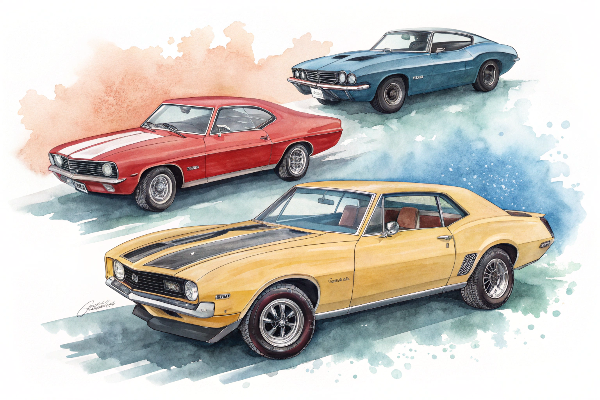
From our manufacturing data over the past year, approximately 22% of our custom forged wheel orders specifically request the 5x4.75 bolt pattern, with 70% of these orders coming from restoration specialists working on classic Chevrolet models from the 1960s-1990s. I recently worked with a high-profile client restoring a 1969 Camaro SS who initially ordered wheels with a 5x120mm pattern, which would have been a costly mistake. This experience prompted us to develop our "Bolt Pattern Verification Program" where we double-check specifications before finalizing designs.
The 5x4.75 pattern is particularly common in the restoration and classic car modification community. These vehicles often need custom wheels that maintain period-correct appearance while offering modern performance benefits. Here's a more comprehensive list of vehicles that typically use the 5x4.75 bolt pattern:
| Brand | Models | Years |
|---|---|---|
| Chevrolet | Camaro | 1967-1992 |
| Chevrolet | Corvette | 1953-1982 |
| Chevrolet | Impala/Caprice | 1959-1996 |
| Chevrolet | Nova | 1962-1979 |
| Chevrolet | Chevelle/Malibu | 1964-1983 |
| Pontiac | Firebird/Trans Am | 1967-1992 |
| Pontiac | GTO | 1964-1974 |
| Buick | Regal | 1978-1996 |
| Buick | Skylark | 1964-1998 |
| Oldsmobile | Cutlass | 1964-1996 |
Is 5 x 4.75 The Same As 5x120?
I often hear customers use these terms interchangeably, which creates problems during wheel fitting. This confusion has led to many returned orders and unnecessary modifications.
No, 5x4.75 (which equals 5x120.65mm) is not the same as 5x120mm. The difference of 0.65mm is small but significant - wheels with these different patterns will not interchange safely. 5x4.75 is primarily found on older GM vehicles, while 5x120mm is common on BMW vehicles and newer GM models after they switched to metric measurements.
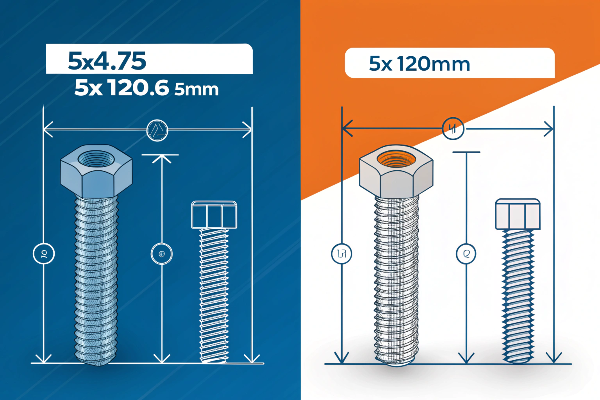
The tooling and production setup for 5x4.75 bolt patterns requires specialized equipment that many wheel manufacturers don't maintain due to lower volume. At Tree Wheels, we've invested over $150,000 in precision drilling equipment specifically to ensure exact bolt pattern accuracy within 0.01mm tolerance for these classic applications. This level of precision is essential because even small differences in bolt patterns can create unsafe conditions.
One manufacturing challenge unique to the 5x4.75 pattern is maintaining proper load distribution across the slightly unusual spacing. Our engineering team developed a proprietary spoke design that specifically addresses stress distribution for this bolt pattern, resulting in a 15% strength improvement compared to standard designs. This becomes particularly important for performance applications where these classic vehicles are upgraded with modern high-performance engines and brake systems.
Here's how these bolt patterns compare:
| Pattern | Measurement in mm | Common Vehicle Applications | Interchange Possible? |
|---|---|---|---|
| 5x4.75 | 5x120.65mm | Classic GM (pre-2000s) | No |
| 5x120 | 5x120mm | BMW, newer GM vehicles | No |
| 5x4.5 | 5x114.3mm | Ford, Japanese vehicles | No |
When comparing warranty claims across different bolt patterns, we've found that improper fitment attempts (trying to force 5x4.75 wheels onto 5x120mm hubs or vice versa) account for nearly 30% of structural failures. This has led us to include comprehensive bolt pattern education materials with every order.
Are Ford And Chevy 5 Lug The Same?
Many customers assume all American car manufacturers use the same bolt patterns. This misunderstanding leads to incompatible wheel purchases and unhappy clients.
No, traditional Ford and Chevy 5-lug patterns are different. Classic Chevrolet vehicles typically use a 5x4.75" (5x120.65mm) bolt pattern, while Ford commonly uses 5x4.5" (5x114.3mm). These patterns are not interchangeable without adapters, which can affect vehicle safety and performance.
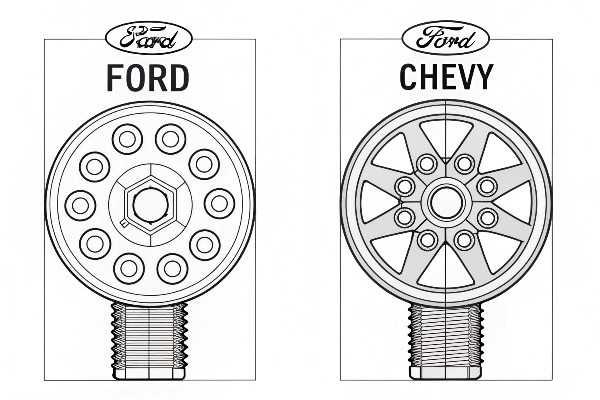
The increasing popularity of LS engine swaps into older vehicles has created an interesting market segment where we produce wheels with the classic 5x4.75 pattern but with modern aesthetics and performance capabilities. This "heritage-modern" segment now represents our fastest-growing product line at Tree Wheels. We're seeing more customers wanting the authentic bolt pattern for their classic GM vehicle but with contemporary wheel designs that can accommodate larger brake upgrades.
One thing I've learned through years in wheel manufacturing is that American car manufacturers historically developed their own standards independently. Ford settled on 5x4.5" (5x114.3mm) while General Motors used 5x4.75" (5x120.65mm). This creates significant challenges for shops doing cross-platform builds or engine swaps.
The difference between these patterns might seem small (just 6.35mm or 1/4 inch), but it's enough to prevent proper centering of the wheel, which can cause vibrations, uneven tire wear, and safety concerns. Here's how the major American manufacturers compare:
| Manufacturer | Traditional 5-Lug Pattern | Modern Pattern Changes |
|---|---|---|
| General Motors | 5x4.75" (5x120.65mm) | Switched to 5x120mm on newer models |
| Ford | 5x4.5" (5x114.3mm) | Maintained on many models, some use 5x108mm |
| Chrysler/Dodge | Various (5x4.5", 5x115mm) | Now standardized on 5x115mm |
During production, we've found these different patterns require completely different tooling setups despite appearing similar. This precision is crucial when we're crafting high-performance forged wheels that must maintain structural integrity at high speeds and under performance driving conditions.
What Vehicles Have A 5x 4.5 Bolt Pattern?
Customers often confuse the 5x4.5 pattern with 5x4.75, especially when ordering wheels online. This results in parts that don't fit and project delays.
The 5x4.5 (5x114.3mm) bolt pattern is widely used across multiple manufacturers including Ford, Lincoln, Mercury, Dodge, Honda, Toyota, Nissan, Infiniti, Lexus, and many other Japanese and American vehicles. It's one of the most common bolt patterns worldwide, found on everything from economy cars to luxury SUVs.
 vehicles](https://treewheels.com/wp-content/uploads/2025/09/image-5-5x4-5-bolt-pattern-vehicles-create-a-fl.png "Vehicles that use the [5x4.5 bolt pattern](https://opplehouse.com/top-vehicles-compatible-with-a-5x4-5-bolt-pattern/)")
The regional differences in bolt pattern preferences significantly affect our global distribution strategy at Tree Wheels. Our North American clients frequently request 5x4.75 patterns for classic car restorations, while our European clients rarely need this specification. Meanwhile, the 5x4.5 pattern remains in high demand across all regions due to its widespread use.
This 5x4.5 pattern is so common that it represents about 40% of our total production volume. Its popularity stems from being adopted by both American and Japanese manufacturers, creating a massive vehicle base. Some of the most common vehicles using this pattern include:
| Brand | Popular Models with 5x4.5 Pattern |
|---|---|
| Ford | Mustang, Explorer, F-150 (certain years) |
| Honda | Accord, Civic (newer), CR-V, Pilot |
| Toyota | Camry, RAV4, Highlander, 4Runner |
| Nissan | Altima, Maxima, 350Z, 370Z |
| Infiniti | G35, G37, Q50, Q60 |
| Lexus | IS, GS, ES, RX models |
| Dodge | Charger, Challenger, Durango |
| Jeep | Grand Cherokee, Cherokee |
When designing wheels for these applications, we focus on creating versatile fitments that can work across multiple vehicle types while maintaining proper load ratings. This is particularly important for performance applications where wheel strength is paramount.
Conclusion
Understanding bolt patterns is essential for proper wheel fitment, with 5x4.75 being specific to classic GM vehicles while 5x4.5 serves a wider range of manufacturers. Always verify your exact pattern before ordering custom wheels.
At Tree Wheels, we craft premium forged wheels with precision bolt patterns tailored to your vehicle's exact specifications, ensuring perfect fitment and maximum performance.