Struggling to decide between different types of wheels for your car? Cast wheels dominate the market, but are they really the right choice for your needs? Many car owners face this dilemma when upgrading.
Cast wheels are wheels manufactured by pouring molten metal into a mold. They offer affordability and design flexibility but have disadvantages in strength, weight, and durability compared to forged wheels. They're suitable for everyday driving but may not perform well in high-stress situations.
 comparison](https://treewheels.com/wp-content/uploads/2025/09/1-a-side-by-side-comparison-of-ca.png "Cast wheels vs other manufacturing methods")
As a professional wheel manufacturer, I've seen countless customers confused about wheel types. The decision between cast, flow-formed, or forged wheels impacts not just your car's appearance but also performance and safety. Let's explore the complete picture of cast wheels to help you make an informed decision.
What are the cons of cast wheels?
Do you worry about your wheels failing when you need them most? Cast wheels have inherent weaknesses that could affect your driving experience, especially in demanding situations.
The main disadvantages of cast wheels include lower strength-to-weight ratio, increased risk of cracking under impact, higher weight that impacts performance, and potential uneven density due to the manufacturing process.
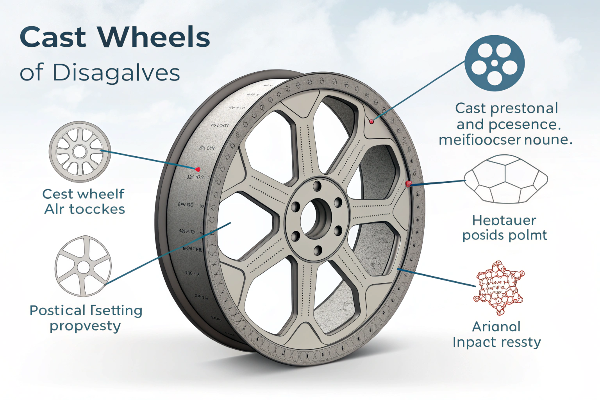
The biggest limitation of cast wheels lies in their molecular structure. During the casting process, molten metal is poured into a mold where it cools and crystallizes. This results in a random arrangement of metal molecules, creating a weaker overall structure. Our testing consistently shows that this molecular arrangement makes cast wheels more susceptible to cracking or breaking when subjected to impact.
Another critical issue is uneven density. The casting process often creates tiny air bubbles within the metal, which become potential fracture points. These structural weaknesses mean manufacturers must use more material to meet safety standards, resulting in heavier wheels. For performance-oriented drivers, this extra weight directly impacts acceleration, braking, and handling. The heat dissipation capabilities of cast wheels also tend to be inferior, which can affect brake performance during intensive driving.
It's worth noting that not all cast wheels are created equal. The quality varies significantly between manufacturers, with some budget options using inferior alloys or cutting corners on quality control. This is why we always stress the importance of purchasing wheels from reputable manufacturers, regardless of the manufacturing method chosen.
What are the advantages of cast wheels?
Are you working with a limited budget but still want to upgrade your vehicle's appearance? Cast wheels might be the perfect solution for specific situations and requirements.
Cast wheels offer significant cost savings compared to other types, greater design flexibility for complex styles, wide availability across styles and fitments, and sufficient performance for everyday driving conditions.
Cost-effectiveness stands as the most significant advantage of cast wheels. Our production lines for forged wheels require much higher investment and operating costs compared to casting facilities. Cast wheels can be mass-produced efficiently, substantially reducing the unit cost and making them the ideal choice for entry-level and mid-range vehicles. This affordability has democratized wheel customization, allowing more drivers to personalize their vehicles.
Design flexibility represents another major advantage. Liquid metal can fill intricate mold shapes, enabling designers to create complex geometric patterns and textures that would be difficult or impossible to achieve with forging techniques. This gives cast wheels a visual edge in certain styles, particularly those with elaborate spoke patterns or surface details.
Cast wheels also excel in manufacturing speed and consistency. Once the mold is created, casting facilities can produce large volumes of identical wheels quickly. This makes them the standard choice for OEM (Original Equipment Manufacturer) applications, where consistency and cost control are paramount. Indeed, approximately 80% of factory wheels on vehicles today are manufactured using casting techniques.
For the average driver who uses their vehicle primarily for commuting and everyday activities, the performance limitations of cast wheels rarely become noticeable. High-quality cast wheels from reputable manufacturers will provide years of reliable service under normal driving conditions, offering an excellent balance of cost, aesthetics, and practicality.
Which is better, cast or forged wheels?
Wondering whether the premium price of forged wheels is justified for your needs? The cast versus forged debate depends entirely on your specific requirements and driving habits.
Forged wheels are technically superior with better strength-to-weight ratios, improved durability, and enhanced performance. However, cast wheels offer better value for everyday drivers, while flow-formed wheels provide a middle-ground option with some performance benefits at moderate pricing.
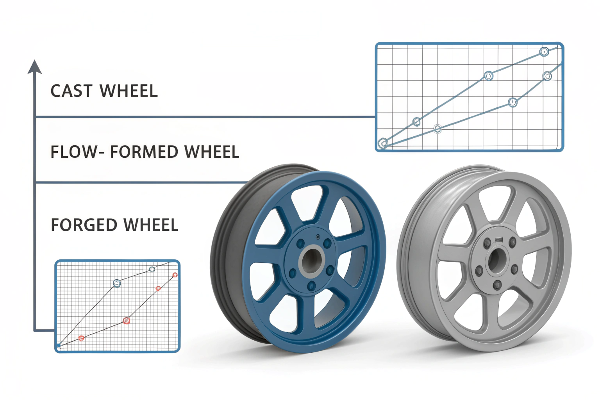
Through years of product testing, we've confirmed that forged wheels consistently outperform cast wheels in strength, weight reduction, and durability. The forging process applies immense pressure to metal, aligning the molecular structure linearly to create a denser, more resilient structure. This superiority becomes particularly evident in high-performance applications where every gram of unsprung weight affects vehicle dynamics.
| Feature | Cast Wheels | Flow-Formed Wheels | Forged Wheels |
|---|---|---|---|
| Manufacturing Process | Molten metal poured into molds | Cast center with mechanically stretched barrel | Solid metal billet compressed under pressure |
| Strength | Good | Better | Best |
| Weight | Heaviest | 15-20% lighter than cast | 25-40% lighter than cast |
| Impact Resistance | Adequate | Good | Excellent |
| Design Flexibility | Excellent | Good | Limited by forging process |
| Price Range | $$ | $$$ | $$$$ |
| Ideal For | Daily driving, budget-conscious buyers | Enthusiasts seeking performance value | Performance vehicles, track use |
| Molecular Structure | Random arrangement | Partially aligned in barrel | Completely aligned |
| Production Speed | Fast | Moderate | Slower |
However, not all drivers need the extreme performance capabilities of forged wheels. For daily commuting and general purposes, high-quality cast wheels fully satisfy requirements. The performance difference becomes meaningful primarily during aggressive driving, track use, or off-road adventures where wheels face extraordinary stresses. The question isn't simply which is "better" in absolute terms, but rather which is more appropriate for your specific needs and budget.
Flow forming (or flow forging) represents an interesting middle-ground technology we often recommend. This hybrid process starts with a cast wheel center, then mechanically stretches and forms the barrel under pressure and rotation. The result is a wheel with much of the weight benefit and some of the strength advantages of forging, but at a more accessible price point. For customers seeking a balance between performance and affordability, flow-formed wheels offer an excellent compromise.
When making your decision, consider your typical driving conditions, performance expectations, and budget constraints. Pure forged wheels make sense for performance enthusiasts, track drivers, and owners of high-end vehicles where the additional cost is justified by the performance gains. Cast wheels serve everyday drivers who prioritize appearance and value. Flow-formed options cater to those seeking moderate performance benefits without the premium price of fully forged wheels.
How strong are cast wheels?
Have you ever worried about your wheels failing during a drive? Understanding the true strength capabilities of cast wheels can help you determine if they're sufficient for your driving needs.
High-quality cast wheels possess adequate strength for normal driving conditions and pass all required safety certifications. However, they have lower impact resistance compared to forged wheels and may fail under extreme conditions like track use, off-roading, or frequent impacts.
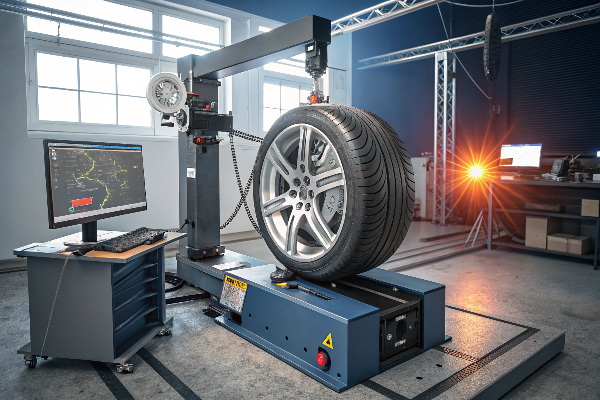
In our testing center, we've extensively evaluated different wheel manufacturing methods under controlled conditions. High-quality cast wheels demonstrate strength sufficient for daily driving scenarios and easily meet standard safety requirements. Reputable manufacturers subject their cast wheels to rigorous testing protocols including impact resistance, load ratings, and fatigue strength to ensure they perform reliably under normal driving conditions.
| Strength Aspect | Cast Wheel Performance | Practical Implications |
|---|---|---|
| Impact Resistance | 60-75% of forged equivalent | May crack under severe impacts |
| Weight Efficiency | 20-30% heavier than forged equivalent | Reduced acceleration, braking performance |
| Fatigue Resistance | Good for normal use, limited for extreme conditions | Potential failure under repeated stress |
| Heat Dissipation | Lower thermal conductivity | Potential brake heat issues during high-performance driving |
| Structural Consistency | Varies based on casting quality | Quality control crucial for reliability |
| Safety Margin | Meets minimum standards | Less reserve strength for unexpected conditions |
However, the limitations of cast wheels become apparent under extreme circumstances. The molecular structure inherent to the casting process creates potential weak points that may fail when subjected to severe impacts or sustained heavy loads. When testing identical designs produced through different manufacturing methods, our data consistently shows that cast wheels have approximately 60-75% of the strength of comparable forged wheels while weighing 20-30% more.
The quality spectrum within cast wheels is remarkably wide. Premium cast wheels utilize superior aluminum alloys, advanced casting techniques like low-pressure casting, and comprehensive quality control to minimize defects. These high-end cast products approach the performance of flow-formed wheels in certain aspects. Conversely, budget cast wheels may use inferior materials and skip critical quality control steps, resulting in products that barely meet minimum safety standards.
Temperature management represents another strength consideration. Cast wheels generally conduct heat less efficiently than forged counterparts, which matters during sustained high-performance driving where brake heat transfers to wheels. This thermal characteristic can potentially affect both the wheel's structural integrity and your vehicle's braking performance during intensive use scenarios.
For most drivers who encounter typical road conditions and do not push their vehicles to extreme limits, quality cast wheels provide completely adequate strength. They represent a sensible choice balancing cost, appearance, and performance for everyday applications. However, if your driving regularly includes track days, aggressive mountain roads, off-road adventures, or heavily potholed streets, investing in flow-formed or fully forged wheels could provide valuable additional strength and safety margin.
Conclusion
Cast wheels offer excellent value for everyday drivers with their affordability and design variety, while forged and flow-formed options provide superior performance for enthusiasts willing to invest more. Choose based on your driving habits and budget needs.
At Tree Wheels, we provide high-performance forged wheels custom-made to your exact specifications, delivering the perfect balance of strength, weight, and style for your vehicle.