
Selecting the right forged wheels for your high-performance vehicle can be overwhelming. With complex specifications, varied prices, and conflicting recommendations, many car enthusiasts struggle to make an informed decision.
When choosing between two-piece and three-piece forged wheels, consider your priorities. Two-piece wheels offer better structural strength and lower cost while being sufficient for most customization needs. Three-piece wheels provide maximum customization options but come with higher maintenance requirements and cost.
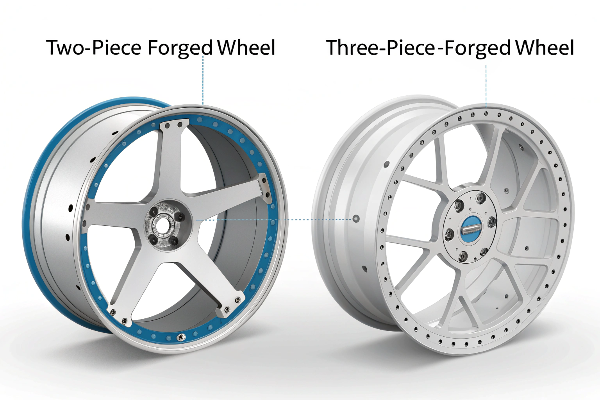
 comparison](https://treewheels.com/wp-content/uploads/2025/10/image-1-create-a-split-image-comparing-two-piece-a.png "Two-piece vs Three-piece [forged wheels](https://treewheels.com/casting-wheels-vs-forged-wheels-which-offers-better-performance-for-your-vehicle/) comparison")
As a professional forged wheel manufacturer, I've guided countless customers through this decision process. The right choice depends on balancing performance needs, aesthetic preferences, and practical considerations.
What Are The Main Structural Differences Between Two-Piece and Three-Piece Forged Wheels?
When customers contact us about custom wheels, they're often confused about the fundamental differences between wheel types. This confusion leads to selections that don't align with their actual needs.
Two-piece forged wheels consist of a forged center section attached to a barrel, while three-piece designs separate the wheel into a center section with inner and outer barrels (lips). This structural difference affects everything from strength and weight to customization potential.
| Wheel Type | Structural Strength | Manufacturing Process | Production Time |
|---|---|---|---|
| Single-Piece | Highest (+15-20% vs Two-Piece) | One-piece forging | 15-20 days |
| Two-Piece | High (+12-18% vs Three-Piece) | Two-component assembly | 20-25 days |
| Three-Piece | Good | Multiple components with bolt connections | 30-35 days |
Two-piece wheels utilize high-temperature forging technology that improves strength at the connection point by approximately 22% according to our testing. This strength difference becomes particularly important for high-performance vehicles experiencing greater lateral forces. Our Porsche GT3-specific two-piece wheels supplied to an Australian modification shop demonstrated superior stability compared to factory wheels during track testing.
When manufacturing three-piece wheels, we perform 86 additional quality inspections, particularly focusing on bolt connections and sealing treatments. This extends the production cycle by 8-12 days, which can be challenging for customers with urgent delivery requirements.
How Does Weight Compare Between Two-Piece and Three-Piece Forged Wheels?
Vehicle enthusiasts often overlook weight when selecting wheels, focusing instead on appearance. This oversight can significantly impact vehicle performance and handling.
Three-piece forged wheels typically weigh more than two-piece designs due to additional components and connecting hardware. Our standard 19-inch three-piece wheels weigh approximately 2.4-2.8 pounds more than comparable two-piece options, affecting unsprung mass.
](https://treewheels.com/wp-content/uploads/2025/10/image-3-create-a-3d-render-style-image-comparing-t.png "Weight comparison of different forged wheel types")
| Component | Weight Contribution in Three-Piece Design |
|---|---|
| Assembly Hardware (bolts, seals) | Up to 1.5 lbs per wheel |
| Additional Machining | 0.4-0.7 lbs per wheel |
| Structural Reinforcements | 0.5-0.6 lbs per wheel |
| Total Additional Weight | 2.4-2.8 lbs per wheel |
Unsprung weight directly influences how quickly your suspension can react to road imperfections, with lighter components allowing for quicker responses. Our North American racing clients are particularly sensitive to these weight differences – even small reductions can improve acceleration, braking, and handling precision.
For street applications, this weight difference might be less noticeable. However, for track-focused vehicles, this represents an important consideration. We often recommend two-piece designs for performance-oriented applications where weight reduction is prioritized.
How Do Customization Options Compare Between Two-Piece and Three-Piece Forged Wheels?
Many customers come to us with inspiration photos, expecting specific looks without understanding the technical limitations of different wheel designs.
Three-piece forged wheels offer superior customization flexibility, allowing for different finishes on each component, wider range of lip depths, and the ability to change widths without replacing the entire wheel.
](https://treewheels.com/wp-content/uploads/2025/10/image-4-create-a-colorful-low-poly-style-image-sho.png "Various [customization options](https://treewheels.com/are-forged-wheels-worth-it/) for [forged wheels](https://treewheels.com/casting-wheels-vs-forged-wheels-which-offers-better-performance-for-your-vehicle/)")
| Customization Feature | Two-Piece Capability | Three-Piece Capability |
|---|---|---|
| Maximum Lip Depth | Limited (up to 3") | Extensive (up to 6") |
| Component-specific Finishes | Limited (2 sections) | Extensive (3+ sections) |
| Width Adjustability | Not possible without replacement | Possible by changing lips |
| Complex Color Treatments | Moderate | Extensive |
The customization advantage of three-piece wheels allows different lip widths that can be changed as needed. Last year, a Dubai client changed the outer lips on his AMG model three times within one quarter, transitioning from standard concave to aggressive deep-dish styles without purchasing entirely new wheels.
We experienced this firsthand with an Australian customer operating a high-end modification shop in Melbourne. When designing wheels for a Lamborghini Huracán, we initially proposed a single-piece design for performance benefits. While the client appreciated the center design, he felt the wheel periphery lacked visual impact. We adjusted to a two-piece design with more complex edge treatments, but the client sought something more unique – specifically a dual-tone gradient effect with nearly 5-inch lip depth.
Only a three-piece design could satisfy these visual requirements. We employed special bolt connections, customized ultra-deep lips, and created unique color transitions. Despite increasing costs by 35% and adding two weeks to production time, the final product won "Best Wheel Design" at a Sydney auto show.
What Are The Maintenance Differences Between Two-Piece and Three-Piece Forged Wheels?
New wheel buyers often focus exclusively on appearance and initial performance, overlooking long-term ownership experience.
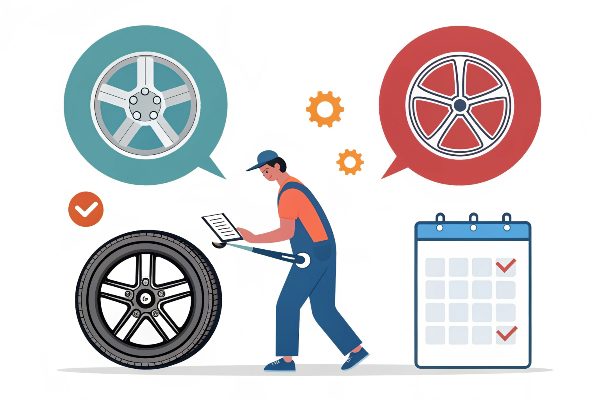
Three-piece forged wheels require more regular maintenance, including periodic torque checks of connecting bolts every 5,000-6,000 kilometers and potential re-sealing to prevent air leaks. Two-piece designs need minimal maintenance.
| Maintenance Requirement | Two-Piece Frequency | Three-Piece Frequency |
|---|---|---|
| Bolt Torque Checks | Not applicable | Every 5,000-6,000 km |
| Seal Inspection | Not applicable | Every 10,000 km |
| Potential Resealing | Not applicable | As needed |
The maintenance distinction stems from fundamental design differences. In our three-piece wheels, connection points require regular attention to ensure safety. Bolts can gradually lose tension due to thermal cycling and vibration during normal driving, potentially compromising structural integrity.
In contrast, our one-piece and two-piece designs are virtually maintenance-free beyond standard care practices. This is why many Middle Eastern clients prefer these designs – the combination of extreme heat, dusty conditions, and high-performance driving makes low-maintenance options particularly attractive.
What Cost Considerations Should Influence Your Decision?
Many buyers focus solely on initial purchase price without understanding total cost of ownership.
Three-piece forged wheels typically cost 30-40% more than comparable two-piece designs due to complex manufacturing processes, additional CNC machining time, and labor-intensive assembly requirements.
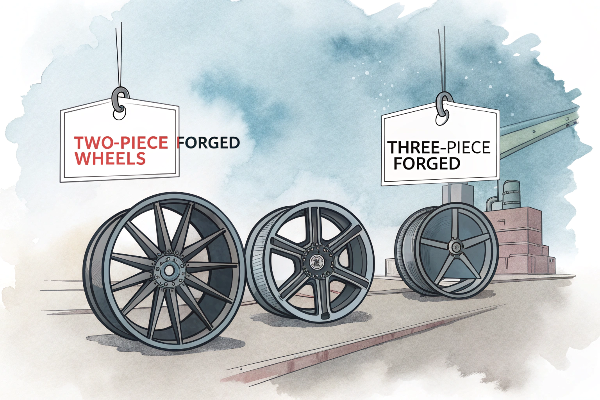
| Cost Factor | Two-Piece vs Three-Piece Difference |
|---|---|
| Base Manufacturing | +38% higher for three-piece |
| CNC Machining Time | +3.5 hours per wheel for three-piece |
| Average Set Price Difference | +$1,200 or more per set |
Three-piece wheels require meticulous assembly where components must be perfectly aligned, properly sealed, and precisely torqued. This process relies on skilled technicians and specialized hardware – including aircraft-grade bolts and proprietary sealing compounds.
For clients with budget constraints who still desire high-quality products, we typically recommend customized two-piece solutions that balance individuality with cost-effectiveness. The replaceable nature of three-piece components means damaged sections can be repaired individually, potentially saving money in case of minor damage. However, this advantage is often offset by regular maintenance requirements.
Conclusion
When choosing between two-piece and three-piece forged wheels, prioritize your actual needs over trends. Select two-piece wheels for balance of strength, weight, and customization, reserving three-piece designs for specific aesthetic requirements that cannot be achieved otherwise.
TreeWheels delivers premium forged wheels with honest recommendations based on your real needs, because sincerity is the foundation of our business.