
If you are asking whether you can weld forged aluminum wheels, the real problem is usually a damaged wheel, the worry is safety, and the tempting solution is a cheaper repair. I hear this question often from customers comparing repair cost against replacement, and the honest answer is more careful than a simple yes or no.
You can weld forged aluminum wheels in limited cases, but welding is only legitimate when a qualified wheel repair specialist confirms the damage is repairable and not in a critical load-bearing area. Cracks, severe bends, spoke damage, bead-seat damage, or track-use wheels often make replacement the safer decision.
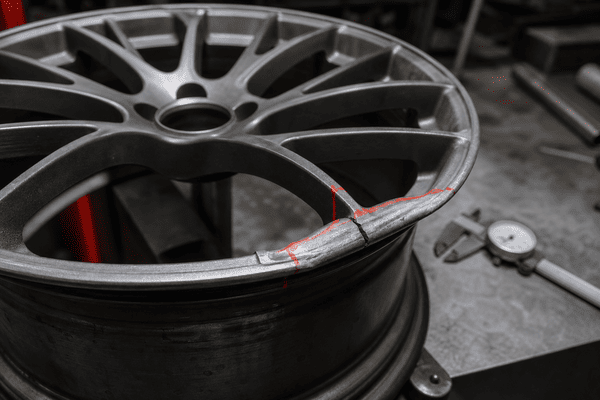
A clean weld can look reassuring, but wheel safety is not judged by appearance alone. The better question is not “Can it be welded?” The better question is: Should this specific wheel return to service after welding?
When can you weld forged aluminum wheels safely?
A cracked wheel creates pressure fast. The car may be sitting in a shop, the customer wants a quick answer, and replacement may feel expensive. That pressure can push people toward welding before they understand whether the wheel is a safe repair candidate.
In general, you can weld forged aluminum wheels only when the damage is minor, non-critical, and evaluated by a qualified specialist. Cosmetic damage or small cracks in less critical areas may be repairable, but the final decision should come from a certified wheel repair professional who can inspect the wheel properly.
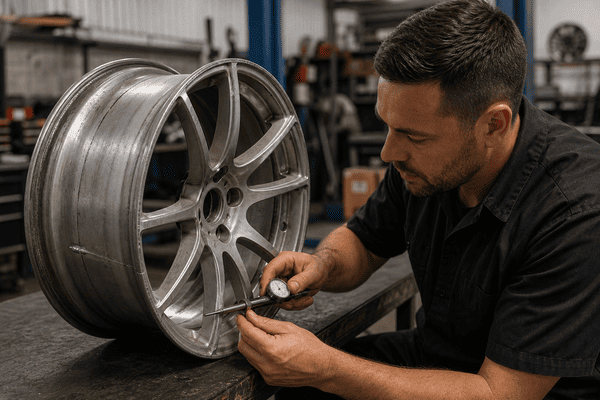
The practical answer is conditional
From my experience handling customer inquiries at Tree Wheels, buyers often want a binary answer. They ask, “Can I weld it?” because they want to know whether they can avoid buying a replacement wheel.
I understand that question. A high-end customized forged wheel is not a cheap part. However, the wheel is also not a decorative accessory. It carries vehicle weight, cornering load, braking load, tire pressure, and road impact. That is why welding should be treated as a risk decision, not a shortcut.
A repair may be considered when all of these conditions are favorable:
- The damage is small and localized.
- The crack is not on a spoke or major load path.
- The bead seat and mounting face are not compromised.
- The wheel has no severe deformation.
- The repair shop specializes in aluminum wheel repair.
- The technician can evaluate runout, balance, and structural risk.
- The wheel will be used for normal street driving, not aggressive track use.
My usual customer-side advice is simple: if the technician hesitates, the buyer should hesitate too.
Common repairable vs. non-repairable discussion points
| Damage type | Welding consideration | Buyer-side risk level |
|---|---|---|
| Small cosmetic curb rash | Usually not a structural weld issue | Low |
| Minor outer lip crack | Sometimes repairable after inspection | Medium |
| Inner barrel crack | Case-by-case; depends on severity | Medium to high |
| Spoke crack | Usually serious | High |
| Hub/mounting pad damage | Usually serious | High |
| Severe bend plus crack | Often replacement candidate | High |
| Track or racing use wheel | Repair tolerance should be very strict | High |
This table is not a repair approval guide. It is a conversation map. The final judgment should come from a qualified professional who can inspect the wheel in person.
Why visual inspection is not enough
Many customers send me photos and ask whether the wheel can be welded. Photos help identify obvious issues, but they do not confirm safety. A wheel can have hidden stress, distortion, or heat-affected material around a previous repair1.
A weld bead may look clean. The paint may cover the repair. The wheel may even balance. However, none of those signs prove that the wheel has recovered its original structural behavior.
That is why I avoid telling customers, “Yes, weld it,” based only on images. I can explain product logic. I can explain what questions to ask. I can help compare replacement options. But I do not pretend to diagnose a safety-critical repair remotely.
When should forged aluminum wheels not be welded?
The dangerous part of wheel repair is not the obvious broken wheel. The dangerous part is the wheel that looks “almost okay.” A buyer may think one weld can solve the problem, while the real damage may already have disqualified the wheel from safe use.
Forged aluminum wheels should usually not be welded when the crack is on a spoke, near the hub, around the mounting face, across a major load path, or paired with severe deformation. They should also be avoided for welding when the vehicle is used for track driving, heavy abuse, or high-speed performance conditions.
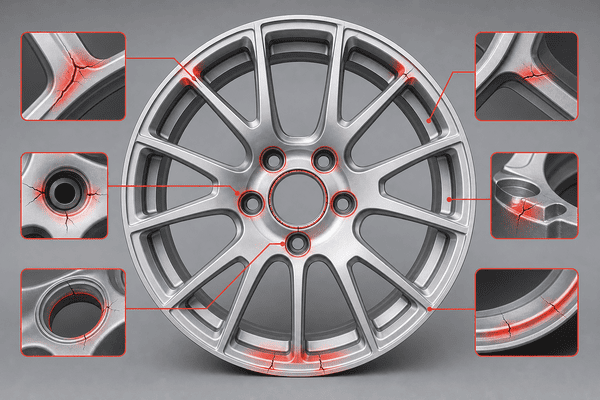
Red flags that should stop the repair conversation
In customer conversations, I pay close attention to where the damage sits. Location matters as much as crack size. A small crack in a critical area can be more concerning than a longer cosmetic issue in a less loaded area.
Buyers should be very cautious when damage appears in these areas:
-
Spokes
Spokes transfer load between the hub and outer rim2. A welded spoke crack is not something I would treat casually. -
Hub bore and mounting pad
These areas control how the wheel sits on the vehicle. Damage here can affect fitment, clamping, and load transfer. -
Lug holes or bolt seats
Cracks near lug holes are serious because wheel fastening depends on these areas3. -
Bead seat
The tire must seal properly. Damage near the bead area can create air loss or tire seating problems4. -
Multiple cracks
More than one crack may indicate a wider impact or fatigue problem. -
Previous weld repair
A second repair on the same wheel should raise concern. The wheel may already have a weakened repair history5.
Heat-affected zones matter
The weld itself is only one part of the repair. The area beside the weld also changes because of heat. Technicians often call this the heat-affected zone, or HAZ.
I am not a welding engineer, so I will not claim lab-level numbers here. However, our understanding from production and repair conversations is that heat can change the local properties of aluminum around the weld6. This matters because the surrounding area may no longer behave like the original forged material.
That is why the phrase “the weld is strong” can be misleading. The key question is wider:
Is the wheel, including the weld and the surrounding heat-affected area, safe for its intended use?
Intended use changes the answer
A wheel used on a weekend cruiser faces a different risk profile than a wheel used for track days, drifting, heavy cornering, or high-speed highway use7. A repair that one shop might accept for low-speed street use may be rejected for motorsport.
Here is a simple buyer-side framework:
| Vehicle use | Repair tolerance | My buyer-side view |
|---|---|---|
| Display car | Moderate, if not driven hard | Still inspect carefully |
| Daily street driving | Conservative | Safety should outweigh savings |
| Luxury performance car | Very conservative | Replacement often makes more sense |
| Track or racing | Extremely conservative | Avoid repaired structural wheels |
| Heavy SUV or load use | Very conservative | Consider replacement strongly |
When the consequences are high, the acceptable uncertainty should be low.
Why are forged aluminum wheels different from cast wheels?
Many people compare forged and cast wheels as if they repair the same way. That assumption creates confusion. The manufacturing process is different, the material behavior can be different, and the repair decision should not copy advice meant for another wheel type.
Forged aluminum wheels are different from cast wheels because forging compresses aluminum under high pressure and creates a more refined, directional structure8. Welding can disturb that local structure, so repair decisions should consider how the forged wheel was designed, loaded, and damaged instead of treating it like a generic aluminum rim.
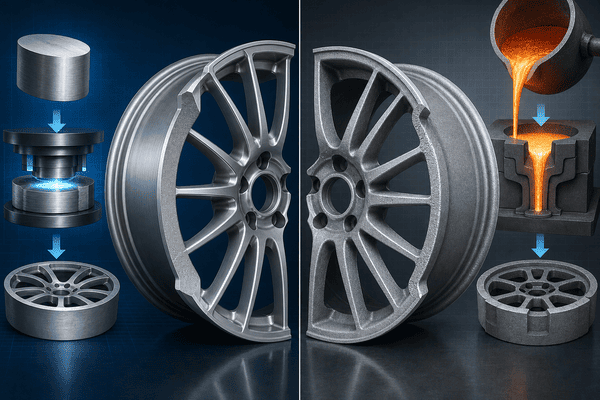
Forged wheels are built differently
A forged wheel usually starts from a solid aluminum billet that is pressed under high force, then machined into its final form9. This process is used because buyers want strength, lower weight, and customization options.
At Tree Wheels, our core product is high-end customized forged wheels. We offer:
- One-piece monoblock forged wheels
- Two-piece forged wheels
- Three-piece forged wheels
- Custom sizing
- Custom design
- Custom color
- Custom surface treatment
Because forged wheels are often chosen for performance, luxury, or customized fitment, buyers should be careful about repair decisions. A damaged forged wheel may still look premium. However, the safety question remains practical and strict.
Forged grain structure and welding
Product people often explain forged wheels by talking about grain flow or directional structure. That explanation is useful, but it should be used carefully.
My practical understanding is this: forging improves the material structure compared with many basic casting processes. Welding introduces concentrated heat into a small area. That heat can interrupt the original local material condition. So, even if the repair fills the crack, the repaired area is not simply “back to factory.”
This is one reason I avoid saying, “Yes, just weld it.” A forged wheel is engineered as a complete part. Once it is cracked, welded, heated, and refinished, the buyer should ask whether the part still fits the original purpose.
Cast wheel advice can mislead forged wheel buyers
Cast wheels are made by pouring molten aluminum into a mold10. Forged wheels are shaped under pressure and machined. Both may be aluminum alloy wheels, but they are not identical products.
Here is a simple comparison:
| Factor | Forged aluminum wheels | Cast aluminum wheels |
|---|---|---|
| Manufacturing method | Pressed/forged billet, then machined | Molten aluminum poured into mold |
| Common buyer reason | Strength, weight, customization, premium fitment | Cost efficiency, mass production |
| Repair mindset | Conservative due to performance expectations | Also cautious, but product logic differs |
| Welding concern | Heat may disturb local forged characteristics | Heat and casting defects may both matter |
| Best decision maker | Qualified wheel repair specialist | Qualified wheel repair specialist |
The key point is not that forged wheels can never be repaired. The key point is that forged wheel repair should not be judged by generic internet advice.
One-piece, two-piece, and three-piece wheels also differ
Wheel construction matters too.
A one-piece monoblock forged wheel has the face and barrel as one structure. A crack in a critical area can be very serious because the wheel acts as one integrated component.
Two-piece and three-piece forged wheels have assembled sections. Depending on the damage, a specialist may discuss replacing a barrel section instead of welding the damaged area. However, that depends on the wheel design, hardware, sealing method, and part availability.
Buyers should ask:
- Is the damaged part replaceable?
- Is the wheel a one-piece, two-piece, or three-piece construction?
- Is the crack in the face, barrel, lip, or mounting area?
- Can the wheel be measured for runout after repair?
- Will the repair affect sealing or balance?
These questions usually lead to a better decision than asking only, “Can you weld it?”
How should buyers choose between repairing and replacing forged aluminum wheels?
Repair feels attractive because it usually looks faster and cheaper. Replacement feels painful because it costs more upfront. However, the cheapest option is not always the best value when the part is safety-critical and the hidden risk is difficult to verify.
Buyers should choose between repairing and replacing forged aluminum wheels by comparing damage location, crack severity, wheel construction, driving use, repair-shop qualification, and replacement availability. If the wheel supports performance driving or has critical structural damage, replacement is often the more responsible choice.
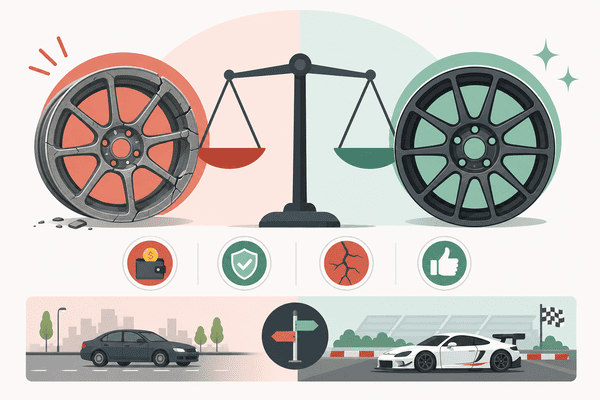
A buyer-side decision framework
When a customer asks me whether to weld forged aluminum wheels or buy new ones, I usually try to slow the conversation down. A fast answer can create a bad decision. A structured answer protects the buyer.
Here is the framework I recommend:
-
Identify the wheel construction
Is it one-piece, two-piece, or three-piece? A replaceable component may change the repair path. -
Identify the damage location
Lip damage, barrel cracks, spoke cracks, and hub-area cracks do not carry the same risk. -
Measure the severity
A tiny surface issue is different from a through-crack or impact bend. -
Consider the driving environment
Daily commuting, highway use, track use, drifting, and heavy-load use all change the risk tolerance. -
Check the repair provider
A general welding shop is not the same as a specialist wheel repair shop. -
Compare cost against consequence
A repair may save money now, but a failure can cost much more later.
Repair vs. replacement comparison
| Decision factor | Repair may make sense when… | Replacement is stronger when… |
|---|---|---|
| Crack location | Damage is minor and non-critical | Crack is near spoke, hub, lug hole, or bead seat |
| Wheel use | Normal street use only | Track, racing, drifting, or aggressive driving |
| Wheel type | Specialist confirms repairability | Monoblock has structural crack |
| Repair history | No previous welds | Wheel was welded before |
| Inspection | Shop can inspect and measure | Shop only offers visual repair |
| Buyer priority | Short-term cosmetic fix | Long-term safety and confidence |
Replacement is not only a sales answer
Because Tree Wheels sells forged wheels, I need to be careful here. It would be easy for a wheel supplier to say, “Replace everything.” That would not be fair or educational.
Some minor damage can be repaired by a qualified shop. Some cosmetic issues do not require a new wheel. I respect good repair specialists because they help customers avoid waste.
However, replacement becomes the more responsible option when uncertainty is too high. Wheels are not parts where I like gambling. If the wheel has a serious crack, visible deformation, or damage in a key load area, replacement often protects the driver, passengers, shop reputation, and vehicle.
What replacement buyers should verify
If you decide to replace a damaged forged wheel, supplier selection matters. For a B2B shop, one bad wheel order can create customer delays and trust problems.
At Tree Wheels, we focus on customized forged wheels with flexible order quantities. Our MOQ is 4 wheels, and our typical production lead times are:
| Wheel type | Typical production time |
|---|---|
| One-piece forged wheels | 15–20 days |
| Two-piece forged wheels | 20–25 days |
| Three-piece forged wheels | 30–35 days |
We also support design sketches, 3D models, sample production, and door-to-door shipping. For packaging, we use foam protection, strong corner guards, and seven-layer corrugated cartons.
For certifications such as ISO9001, DOT, TÜV, and IATF16949, buyers should always request current documents and verify suitability for their market. Certification claims should be checked, not assumed.
What should you ask a repair shop before welding forged aluminum wheels?
A repair shop may say, “We can weld it,” but that statement is not enough. The buyer needs to know how the shop evaluates risk, what inspection they perform, and whether they are willing to reject unsafe repairs.
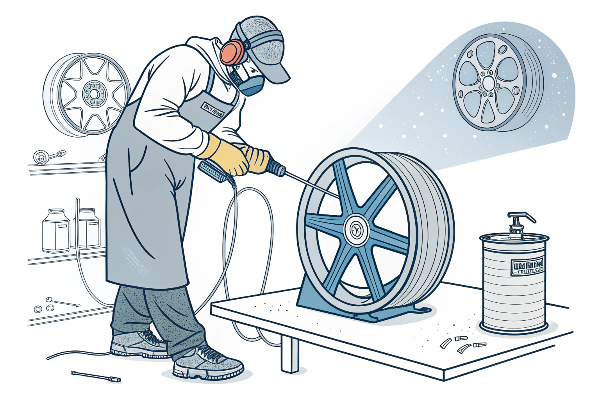
Before welding forged aluminum wheels, ask the repair shop about crack location, structural risk, heat-affected zones, runout measurement, pressure testing, previous repairs, and intended vehicle use. A qualified shop should explain limits clearly and should refuse repair when the wheel is not safe to return to service.
Questions that protect the buyer
I like practical questions because they reveal how serious the repair provider is. A good shop should not sound annoyed when you ask about safety. They should welcome clear information.
Ask these questions before approving a weld repair:
- Where exactly is the crack?
- Is the crack in a load-bearing area?
- Is the wheel bent or only cracked?
- Has this wheel been welded before?
- Will you check runout before and after repair?
- Will you check air sealing after repair?
- Can this wheel be balanced properly after repair?
- Do you recommend this repair for highway use?
- Would you approve this repair for track use?
- What type of warranty or limitation applies to the repair?
The most important question may be this one:
“Under what conditions would you refuse to weld this wheel?”
A careful technician should have a clear answer.
Beware of cosmetic-only confidence
Some repair businesses focus mainly on appearance. They may weld, grind, polish, paint, and refinish the damaged area so the wheel looks almost new. Cosmetic skill is valuable, but it is not the same as structural judgment.
Buyers should separate three outcomes:
- Looks repaired
- Holds air
- Is safe for intended use
A wheel can meet the first two and still create concern for the third.
This distinction matters for modification shops. If a shop returns a repaired wheel to a customer and the customer later has a failure, the reputational damage can be much larger than the original repair invoice. For B2B buyers, supplier and repair decisions are also brand decisions.
Information to bring to the technician
A technician can give better advice when the buyer provides complete information. Before visiting the repair shop, collect:
- Clear photos of the damage
- Wheel size and width
- Offset and bolt pattern
- Vehicle model
- Tire size
- Driving use
- Impact history
- Whether the tire lost air
- Whether the wheel vibrated
- Any previous repair history
If the wheel is from a custom set, also confirm whether a matching replacement can be produced. At Tree Wheels, custom matching may depend on design files, finish type, and production details. A simple brushed or painted finish may be easier to match than a complex multi-step custom surface treatment.
The right professional attitude
A trustworthy repair shop should be willing to say “no.” That matters. If every wheel is repairable in a shop’s opinion, I would be cautious.
A good technician should explain uncertainty in plain language. They should tell you what they can inspect, what they cannot guarantee, and how the repair changes future use. That honest conversation is much more valuable than a quick promise.
As a wheel supplier, I view this the same way. Sincerity matters. My brand philosophy at Tree Wheels is Sincerity Above All, and I think that principle applies strongly to wheel repair decisions. A customer may not like hearing that a wheel should be replaced, but a clear warning is better than false comfort.
Frequently Asked Questions
Is it safe to weld forged aluminum wheels?
It can be safe only in limited cases after inspection by a qualified wheel repair specialist. Safety depends on crack location, severity, wheel design, repair quality, and intended use. A clean-looking weld does not prove the wheel is structurally safe.
Can I weld a cracked forged wheel at home?
I would not recommend DIY welding on forged wheels. Wheels are safety-critical parts, and repair requires specialized judgment, equipment, and inspection. A home repair may look acceptable but still leave hidden weakness, sealing issues, or balance problems.
Is a welded forged wheel okay for track use?
A welded forged wheel is usually a poor choice for track use. Track driving creates higher cornering loads, heat, impacts, and speed risk11. Most buyers should use undamaged wheels for racing, drifting, or high-performance driving.
Is it better to repair or replace a cracked forged wheel?
Replacement is often better when the crack is near the spoke, hub, lug holes, bead seat, or any major load path. Repair may be considered for minor, non-critical damage if a qualified shop approves it. The safer decision depends on inspection.
Are forged wheels harder to repair than cast wheels?
Forged wheels are not simply “harder,” but the repair logic is different. Forging creates a different material structure and performance expectation than casting. Welding can disturb the local area, so forged wheel repair should be evaluated by a specialist, not judged from generic wheel advice.
Conclusion
So, can you weld forged aluminum wheels? Sometimes, but that is not the best question. The better question is whether the specific damaged wheel should return to service after welding. Damage location, wheel construction, intended use, and professional inspection all matter. If the risk is unclear, replacement is often the more responsible choice. If you need a custom forged wheel replacement or a new set for your shop or vehicle, contact Tree Wheels and I will help you review the safest buying path.
-
"NONDESTRUCTIVE MEASUREMENT OF RESIDUAL …", https://ntrs.nasa.gov/api/citations/19650024275/downloads/19650024275.pdf. Non-destructive testing literature documents that welded aluminum structures may harbor residual tensile stresses, porosity, and subsurface cracking that are undetectable by visual or photographic inspection, and that methods such as dye-penetrant testing, ultrasonic inspection, or X-ray radiography are required to assess weld integrity. Evidence role: mechanism; source type: research. Supports: That welded aluminum components can retain residual stresses and subsurface defects that are not detectable through visual inspection alone, necessitating non-destructive evaluation methods. Scope note: These inspection methods are discussed in general welding and NDT literature; specific protocols for automotive wheel repair may not be standardized across jurisdictions or repair shops ↩
-
"Shape optimisation of rim structure of aluminium alloy car …", https://pmc.ncbi.nlm.nih.gov/articles/PMC12241507/. Structural analyses of automotive wheels identify spokes as critical load-bearing members that transmit radial, lateral, and torsional forces between the hub mounting face and the rim, making spoke integrity central to overall wheel fatigue life and failure resistance. Evidence role: mechanism; source type: research. Supports: That wheel spokes serve as primary structural members transmitting loads—including radial, lateral, and torsional forces—between the wheel hub and the outer rim. Scope note: Load distribution among spokes varies with spoke count, geometry, and wheel design; the claim is directionally accurate but the severity of a specific spoke crack depends on location and loading conditions ↩
-
"Numerical simulation and experimental verification of fatigue …", https://pmc.ncbi.nlm.nih.gov/articles/PMC10704955/. Fatigue analyses of aluminum wheels identify the lug hole and bolt circle region as a stress concentration zone where cyclic loading from vehicle weight and cornering can initiate and propagate cracks, with failure in this area directly affecting the wheel’s ability to remain secured to the hub. Evidence role: mechanism; source type: research. Supports: That the lug hole region of a wheel is a high-stress area subject to stress concentration, and that cracks in this region can propagate under cyclic loading and compromise wheel attachment integrity. Scope note: Stress concentration severity depends on lug hole geometry, bolt preload, and wheel design; the general claim is supported by fatigue literature but specific failure thresholds are design-dependent ↩
-
"DEMOUNTING AND MOUNTING PROCEDURES FOR …", https://www.osha.gov/sites/default/files/publications/3402TUBE-TYPE-TRUCK-AND-BUS.pdf. Tire and wheel industry standards identify the bead seat as the critical sealing surface between the tire bead and the wheel rim; dimensional deviations or surface damage in this zone can prevent full bead seating, resulting in slow air loss, sudden deflation, or tire dismounting under load. Evidence role: mechanism; source type: institution. Supports: That the wheel bead seat is the sealing interface between the tire and rim, and that deformation or damage to this surface can prevent proper tire bead seating and cause air loss. Scope note: Specific sealing tolerances are defined in standards such as ETRTO and TRA; the article’s general claim is consistent with these standards but does not reference specific dimensional limits ↩
-
"SSC-410 FATIGUE OF ALUMINUM STRUCTURAL …", https://rosap.ntl.bts.gov/view/dot/42254/dot_42254_DS1.pdf. Fatigue and repair literature on aluminum structures notes that each weld repair cycle introduces additional heat-affected zone material, residual stresses, and potential defect sites, and that cumulative damage from multiple repairs can reduce the remaining fatigue life of the component below that of a single-repair scenario. Evidence role: mechanism; source type: research. Supports: That repeated welding of aluminum components can cumulatively reduce fatigue life through accumulated heat-affected zone degradation, residual stress buildup, and potential introduction of weld defects with each repair cycle. Scope note: Most cumulative weld repair research addresses aerospace or structural applications; direct data on automotive wheel repair cycles is limited in the open literature ↩
-
"A practical approach to modeling aluminum weld fracture …", https://groups.seas.harvard.edu/hutchinson/papers/2017-3-AL%20welds.pdf. Research on aluminum alloy welding consistently documents that the heat-affected zone (HAZ) adjacent to a weld experiences microstructural changes—including dissolution or coarsening of strengthening precipitates—that reduce local yield strength and fatigue resistance relative to the parent material. Evidence role: mechanism; source type: research. Supports: That welding introduces a heat-affected zone in aluminum alloys where local mechanical properties, including strength and ductility, differ from the base material. Scope note: Most HAZ studies focus on wrought or extruded alloys; data specific to forged wheel alloys (commonly 6061-T6 or 7075) may vary by alloy series and temper condition ↩
-
"Radial Fatigue Analysis of Automotive Wheel Rim(ISO 3006)", https://www.academia.edu/90209625/Radial_Fatigue_Analysis_of_Automotive_Wheel_Rim_ISO_3006_. Automotive wheel fatigue research employs variable-amplitude load spectra derived from customer usage measurements, and studies show that high-severity driving events—such as hard cornering, kerb strikes, and high-speed impacts—contribute disproportionately to cumulative fatigue damage, supporting the use of stricter repair criteria for performance applications. Evidence role: general_support; source type: research. Supports: That the load spectrum experienced by a wheel varies substantially with vehicle use case, and that higher-severity use—such as track driving or aggressive cornering—accelerates fatigue damage accumulation relative to normal road use. Scope note: Published load spectra are typically proprietary to vehicle manufacturers; publicly available research provides general support for use-case differentiation but may not quantify the specific risk difference between street and track use for a given wheel design ↩
-
"Results in Production of an Improved Grain Refinement …", https://www.academia.edu/165483678/Results_in_Production_of_an_Improved_Grain_Refinement_Practise_for_6XXX_Extrusion_Billets. Metallurgical references describe how hot or cold forging of aluminum billets aligns grain flow along the part geometry, producing directional mechanical properties—particularly improved fatigue strength and toughness—compared with cast aluminum, where grain orientation is random. Evidence role: mechanism; source type: encyclopedia. Supports: That the forging process produces a refined, directional grain structure in aluminum alloys, distinguishing forged components from cast ones in terms of mechanical anisotropy and fatigue performance. Scope note: The degree of grain directionality depends on forging temperature, reduction ratio, and alloy composition; the article’s general claim may not apply uniformly to all forged wheel alloys ↩
-
"How Long Does It Take to Manufacture Custom Forged …", https://treewheels.com/how-long-does-it-take-to-manufacture-custom-forged-wheels/. Industry and engineering sources describe forged aluminum wheel production as a multi-stage process in which an aluminum alloy billet is subjected to high compressive forging forces to shape the blank, followed by CNC machining to achieve final geometry, tolerances, and surface finish. Evidence role: definition; source type: institution. Supports: That forged aluminum wheels are produced by applying high compressive force to an aluminum billet and subsequently machining the forged blank to its final dimensions. Scope note: Specific process parameters—such as forging temperature, press tonnage, and alloy selection—vary by manufacturer and wheel design, so this description represents a general process rather than a universal standard ↩
-
"Custom Casting Wheels", https://treewheels.com/casting-wheels/. Engineering and manufacturing references describe aluminum wheel casting—most commonly low-pressure die casting—as a process in which molten aluminum alloy is introduced into a shaped mold and solidified, producing a random grain structure that differs from the aligned grain flow achieved through forging. Evidence role: definition; source type: encyclopedia. Supports: That cast aluminum wheels are produced by introducing molten aluminum alloy into a mold cavity, most commonly via low-pressure die casting, which results in a different microstructure than forging. Scope note: Multiple casting variants exist (gravity casting, low-pressure, counter-pressure); the article’s simplified description is broadly accurate but does not distinguish between casting methods that produce different microstructural outcomes ↩
-
"Automotive Wheels – An Approach for Structural Analysis …", https://www.academia.edu/76530497/Automotive_Wheels_An_Approach_for_Structural_Analysis_and_Fatigue_Life_Prediction. Vehicle dynamics and motorsport engineering literature indicates that track driving generates lateral cornering accelerations and braking forces that can exceed those of normal road use by a significant margin, increasing cyclic stress amplitudes on wheel structures and reducing fatigue life margins. Evidence role: general_support; source type: research. Supports: That motorsport and track driving conditions impose substantially higher dynamic loads on wheels—including lateral cornering forces, thermal cycling, and impact energy—compared with normal road use. Scope note: Quantitative load comparisons depend heavily on vehicle type, track layout, and driving style; the article’s general claim is directionally supported but specific load multiples are not cited ↩