The confusion between "rims" and "wheels" causes countless headaches in the automotive world. Car enthusiasts argue over terminology while repair shops face miscommunications that lead to wrong parts being ordered and expensive delays.
Rims and wheels are not the same thing. A wheel is the complete metal assembly that attaches to the vehicle's axle. A rim technically refers only to the outer edge of the wheel that holds the tire in place. However, in everyday language, many people use "rims" to refer to the entire wheel assembly.
In my years manufacturing high-end forged wheels at Tree Wheels, I've encountered this terminology confusion daily. It's not just casual car owners mixing up the terms - even experienced modification shop owners sometimes use "rims" when ordering complete wheel assemblies. Let me break down what these terms really mean and why the distinction matters in the automotive world.
What is the Difference Between Rims and Wheels?
The vocabulary confusion leads to expensive mistakes in automotive shops daily. Mechanics order "rims" but mean complete wheels, while suppliers might send only the outer edges, leaving everyone frustrated and projects delayed.
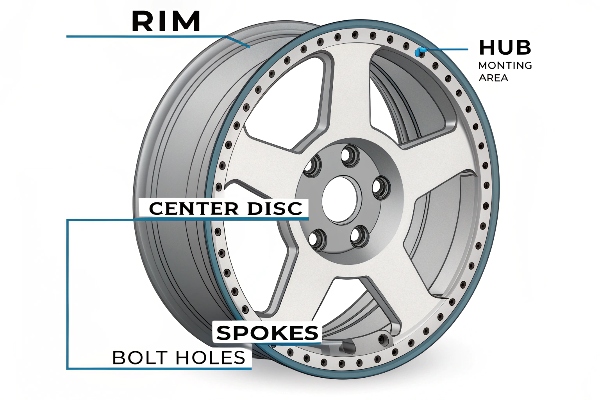
A wheel is the entire metal structure consisting of the center disc (or spider), spokes, and the outer circular edge (the rim). The rim is specifically just the outer portion of the wheel where the tire mounts. Think of the rim as one component of the complete wheel assembly.
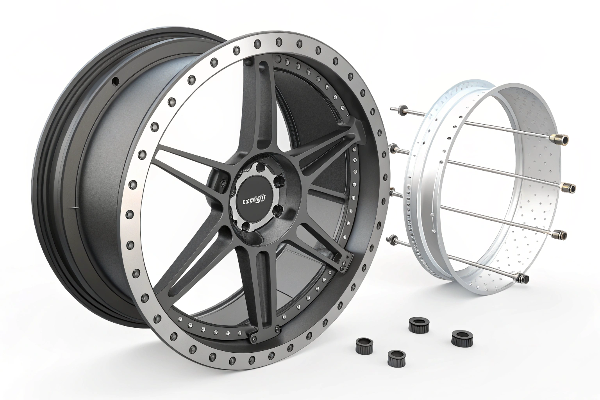
From my manufacturing perspective at Tree Wheels, we must be precise about these distinctions during production. When we forge a one-piece wheel, we're creating both the center area and the rim section simultaneously as a single unit. For multi-piece wheels, the rim section might be manufactured separately and then joined to the center disc through precise engineering processes.
This distinction becomes especially important when discussing wheel construction methods. In our factory, we produce different types of forged wheels:
Types of Wheel Construction
| Construction Type | Description | Separable Components |
|---|---|---|
| One-Piece Forged | Entire wheel machined from a single block of aluminum | None - rim and center integrated |
| Two-Piece Forged | Center section and rim barrel manufactured separately and bolted together | Center disc and outer rim |
| Three-Piece Forged | Center section with inner and outer rim halves | Center disc, inner rim half, outer rim half |
The confusion around terminology isn't merely academic - it has real business implications. From my experience with international clients, I've learned that when customers inquire about "rims" or "wheels," about 99% actually want the complete wheel assembly, not just the outer rim component. Only occasionally will a knowledgeable customer specifically request an "outer rim" because they understand they're working with multi-piece wheels and need just that component.
Can Rims Be Called Wheels?
The misuse of terminology creates real confusion in auto shops daily. Customers request "new rims" but get disappointed when shown only the metal components without tires, expecting the full package already mounted and ready to install.
Technically, rims should not be called wheels since they're only a component of the wheel. However, in common usage, particularly in North America, "rims" has evolved to become slang for the entire wheel assembly, especially when referring to aftermarket or custom wheels.
 display](https://treewheels.com/wp-content/uploads/2025/09/image-3-custom-wheels-display-create-an-image-s.jpg "Various [custom wheels](https://www.reddit.com/r/cars/comments/54rj0m/what_are_the_pros_and_cons_of_custom_wheels/) designs showing different styles")
In my daily interactions with clients at Tree Wheels, I encounter this terminology overlap constantly. Many customers from North America will contact us asking for "custom rims," but their requirements clearly indicate they're seeking complete wheels. European clients tend to use more technically accurate terminology, requesting "wheels" when they want the entire assembly.
The evolution of this terminology reflects cultural shifts in the automotive modification world. The term "rims" gained popularity through automotive culture, music, and media, particularly as custom wheels became status symbols. This cultural adoption has transformed the technical term into something broader in everyday usage.
Regional Terminology Variations
The terminology varies significantly across different markets, which creates challenges for us as an international manufacturer:
| Region | Common Term | What Customers Usually Mean |
|---|---|---|
| North America | "Rims" | Complete wheel assembly |
| Europe | "Wheels" | Complete wheel assembly |
| Australia | Mixed usage | Complete wheel assembly |
| Middle East | "Rims" or "Wheels" | Complete wheel assembly with premium finish |
As a professional wheel manufacturer, I've learned to clarify exactly what components the customer needs, regardless of the terminology they initially use. This verification process has saved countless production errors and ensured customer satisfaction across our global markets.
Why Do Some People Call Wheels Rims?
This terminology confusion creates a real barrier between automotive professionals and everyday car owners. Mechanics might scoff at customers using "incorrect" terms, while car enthusiasts feel talked down to when corrected about something everybody in their community says.
People call wheels "rims" primarily due to cultural influence and the evolution of automotive slang. The term "rims" became popularized through car culture, music, and media, especially in contexts where aftermarket wheels are status symbols. The word is shorter, more distinctive, and has been reinforced through decades of casual usage.
](https://treewheels.com/wp-content/uploads/2025/09/image-4-car-culture-event-showcasing-custom-whe.jpg "Car culture event showcasing [custom wheels](https://www.reddit.com/r/cars/comments/54rj0m/what_are_the_pros_and_cons_of_custom_wheels/)")
Working with clients across different regions has given me unique insight into how this terminology spread. The term "rims" gained significant traction in North American car culture during the 1990s and early 2000s, particularly through hip-hop culture and automotive customization trends. Music videos, car shows, and automotive magazines frequently used "rims" to describe eye-catching wheel designs.
This cultural adoption created a fascinating linguistic shift. While technically incorrect from an engineering standpoint, the term became so ubiquitous that it effectively changed meaning through popular usage. This presents an interesting challenge for us as manufacturers - we need to understand both the technical definitions and the cultural context of these terms.
Evolution of Wheel Terminology in Popular Culture
The transformation of wheel terminology reflects broader trends in how specialized vocabulary becomes mainstream:
| Era | Popular Term | Cultural Influencer | Impact on Industry |
|---|---|---|---|
| 1950s-1970s | "Wheels" | Hot rod culture | Focus on wheel diameter and style |
| 1980s | "Mags" | Racing influence | Emphasis on lightweight materials |
| 1990s-2000s | "Rims" | Hip-hop and urban car culture | Larger diameters, flashier finishes |
| 2010s-Present | "Wheels"/"Rims" used interchangeably | Social media | Focus on customization and fitment |
As a wheel manufacturer, we've adapted our marketing and customer communications to acknowledge both the technical accuracy and cultural usage. When clients inquire about "rims," we understand they're typically seeking complete wheel assemblies, though we might need to clarify exact specifications.
What is the Difference Between On Rims and Off Rims?
The "on rims" versus "off rims" terminology creates real logistical challenges. Repair shops charge differently, shipping companies apply different rates, and customers face confusion about what they're actually purchasing when these terms aren't clearly explained.
"On rims" refers to tires that are mounted on wheels, creating a complete assembly ready for installation on a vehicle. "Off rims" means the tires and wheels are separate components. This distinction is important for shipping, storage, and installation considerations.
](https://treewheels.com/wp-content/uploads/2025/09/image-5-tire-mounting-process-create-a-side-by-.jpg "Tire mounting process showing before and after")
From our manufacturing perspective at Tree Wheels, this distinction significantly impacts our logistics operations. When we ship "off rims" (just the wheel assemblies without tires), the packaging requirements are straightforward - we use foam protection and seven-layer corrugated cartons to protect the wheel finishes during transit.
However, the "on rims" scenario is quite different. While we primarily manufacture and ship wheels without tires, we understand how this distinction affects our clients' operations. When tires are mounted on wheels ("on rims"), the entire assembly becomes larger, heavier, and requires different handling considerations.
This terminology distinction has practical implications throughout the supply chain:
Practical Implications of On Rims vs. Off Rims
| Aspect | "On Rims" (Tires Mounted) | "Off Rims" (Wheels Only) |
|---|---|---|
| Shipping Weight | Significantly heavier | Lighter, more economical |
| Packaging Requirements | Larger, specialized packaging | Standard wheel packaging |
| Storage Space Needed | More volume required | More compact storage |
| Installation Readiness | Ready for immediate installation | Requires tire mounting service |
| International Shipping | More complex customs declarations | Simpler import process |
In our business operations, we've learned that most customers prefer receiving wheels "off rims" because it gives them flexibility to source tires locally and avoid the substantial additional shipping costs of sending mounted assemblies internationally. This is particularly relevant for our international clients in the USA, Canada, Australia, Dubai, and the UK.
The most significant confusion I encounter isn't actually between "rims" and "wheels," but between "wheels" and "tires." Some customers, particularly those new to vehicle customization, use these terms interchangeably or don't clearly understand that they're entirely different components. As a wheel manufacturer, I frequently need to clarify that we provide the metal wheels, but not the rubber tires that mount onto them.
Conclusion
Rims and wheels aren't technically the same - a rim is just one part of a wheel, though many people use these terms interchangeably in everyday conversation. Understanding the correct terminology helps ensure you get exactly what you need for your vehicle.
Tree Wheels crafts premium forged wheels with precision and sincerity, ensuring your custom wheel needs are met with exceptional quality every time.