
Choosing the wrong aluminum alloy for your wheels is a mistake you won’t notice until it’s too late. Many buyers pick 7075-T6 because the number sounds better. That logic can cost you.
For most wheel applications, 6061-T6 aluminum outperforms 7075-T6. It offers better fatigue resistance, superior corrosion resistance, and easier machinability. While 7075-T6 has higher tensile strength on paper, wheels fail from repeated stress cycles — not single overload events. On that scorecard, 6061-T6 wins.
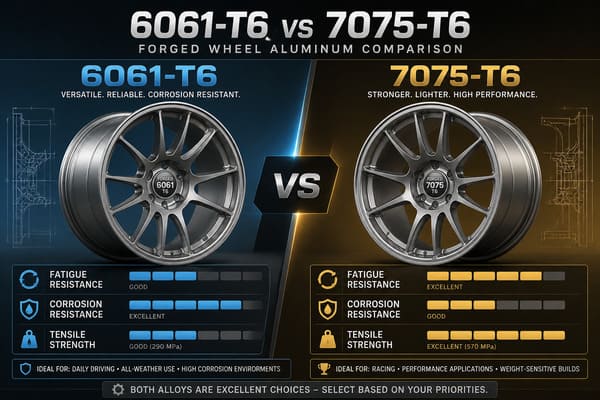
The "stronger is better" assumption leads a lot of buyers in the wrong direction. Strength is one metric. But a wheel is a rotating component that absorbs thousands of impacts every mile. The material that performs best under those conditions is not always the one with the highest tensile strength rating. This article breaks down exactly why — and where each alloy actually belongs.
Is 7075-T6 Stronger Than 6061-T6?
Yes, 7075-T6 is stronger on paper. But "stronger" does not mean "better for wheels." The distinction matters more than most buyers realize.
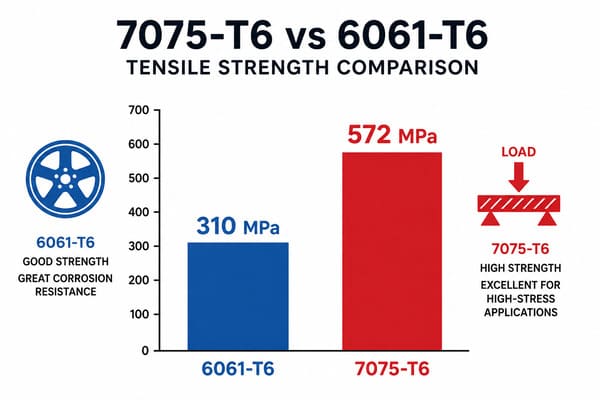
7075-T6 has a tensile strength of around 572 MPa, compared to 310 MPa for 6061-T6. On raw numbers alone, 7075-T6 wins. But tensile strength measures resistance to a single pull-to-failure event. Wheels do not fail that way. They fail from repeated stress cycles over time — a completely different failure mode.
Every time a wheel rolls over a bump, hits a pothole, or goes through a hard corner, it absorbs a stress cycle. This happens thousands of times per mile on a real road. The type of failure this causes is called fatigue failure — and it is the dominant failure mode for wheels in real-world use.
Fatigue resistance and tensile strength are not the same thing. A material can have very high tensile strength and still crack early under repeated loading. 6061-T6 handles cyclic stress better than 7075-T6. That means it has a longer functional life in the conditions a wheel actually faces.
Here is a direct comparison of the two alloys across the metrics that matter most for wheel performance:
| Property | 6061-T6 | 7075-T6 |
|---|---|---|
| Tensile Strength | ~310 MPa | ~572 MPa |
| Fatigue Resistance | Higher | Lower |
| Corrosion Resistance | Excellent | Poor (stress corrosion risk) |
| Machinability | Excellent | Difficult |
| Cost | Lower | Higher |
| Best Use Case | Street, track, daily driver | Extreme motorsport only |
Choosing 7075-T6 because the tensile number is higher is solving the wrong problem. For wheels, fatigue life is the number that actually keeps you safe.
What Makes 6061-T6 Aluminum the Most Popular Choice for Forged Wheels?
There is a reason almost every serious forged wheel manufacturer uses 6061-T6 as the default alloy. It is not a compromise. It is the right choice for the job.
6061-T6 is the most widely used alloy for forged wheels because it balances fatigue resistance, corrosion resistance, machinability, and cost in a way no other common alloy can match. It performs reliably across street driving, performance driving, and most track use — which covers the vast majority of real-world applications.
The popularity of 6061-T6 comes from its performance across multiple categories at once — not from being the best in any single one.
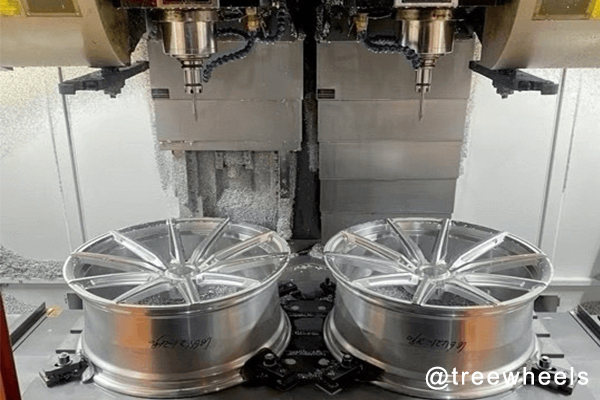
From a manufacturing standpoint, 6061-T6 machines cleanly and predictably. This matters because machining quality directly affects structural integrity. When a material machines well, the finished surface is smooth and consistent. When it does not, micro-surface defects can form at the cutting interface. On a rotating component under cyclic load, those micro-defects become stress concentration points — the exact spots where fatigue cracks begin.
7075-T6 is significantly harder to machine. It causes faster tool wear, requires tighter process control, and demands more precise cutting parameters. A shop that does not have a fully optimized 7075-T6 machining process is quietly introducing risk into every wheel they produce. That risk is invisible at the time of sale and only becomes apparent after miles of use.
6061-T6 reduces that manufacturing risk. It also weighs less per unit of functional performance in real road conditions, which is why it remains the industry standard for high-end [forged wheels] (https://treewheels.com/monoblock-forged-wheels/) across the global market.
Is 6061-T6 Aluminum Strong Enough for Wheels?
This is the question that drives most buyers toward 7075-T6. The answer is yes — and the data supports it clearly.
6061-T6 aluminum meets or exceeds the strength requirements for all major wheel certifications, including DOT, TÜV, and IATF16949 standards. Its yield strength, fatigue life, and impact resistance are sufficient for both street and performance applications. For the overwhelming majority of drivers, 6061-T6 is more than strong enough.
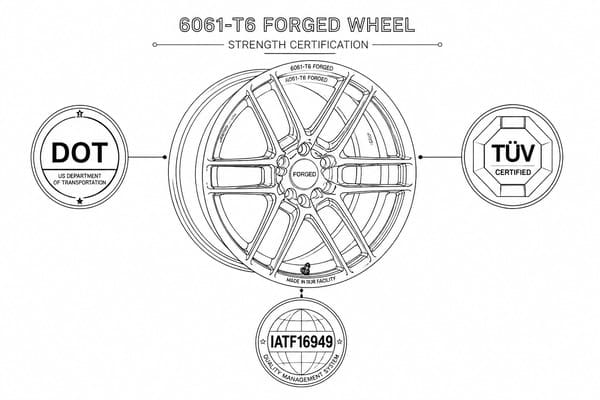
The concern about 6061-T6 not being "strong enough" usually comes from comparing raw tensile numbers without context. Certification standards exist to remove that guesswork. A wheel that passes DOT, TÜV, and IATF16949 testing has been validated against real-world impact loads, rotational fatigue, and structural stress requirements.
At Tree Wheels, all our forged wheels are manufactured from 6061-T6 and carry these certifications. We do not treat certification as a formality. It is the baseline.
To understand why 6061-T6 is sufficient, it helps to look at what "strong enough" actually means in wheel engineering:
What "Strong Enough" Means for a Wheel
| Strength Type | What It Measures | 6061-T6 Performance |
|---|---|---|
| Tensile Strength | Resistance to a single pull-to-break event | Adequate for all road conditions |
| Yield Strength | Point at which permanent deformation begins | ~276 MPa— sufficient for street and track |
| Fatigue Strength | Resistance to repeated stress cycles | Superior to 7075-T6 in cyclic conditions |
| Impact Resistance | Resistance to sudden shock loads | Well-suited for road surface variation |
The Aerospace Comparison Problem
Some buyers cite aerospace use of 7075-T6 as a reason to prefer it for wheels. This comparison does not hold up under scrutiny.
Aerospace applications use 7075-T6 for its static load strength in highly controlled environments. An aircraft wing spar carries a sustained load in a clean, dry, temperature-stable environment. It does not absorb thousands of road impacts per hour. It does not operate in rain, road salt, or temperature swings from -20°C to 60°C.
A wheel on a street car or track car faces all of those conditions. The use case is fundamentally different. Applying aerospace material logic to automotive wheel design leads buyers to the wrong conclusion.
What Are the Disadvantages of 7075 Aluminum?
7075-T6 is a legitimate engineering alloy. But it has real disadvantages that matter specifically in wheel applications — and these are often left out of the sales conversation.
The main disadvantages of 7075 aluminum for wheels are poor corrosion resistance (especially stress corrosion cracking), difficult machinability, higher cost, and lower fatigue life compared to 6061-T6. In most driving environments, these disadvantages outweigh its higher tensile strength.
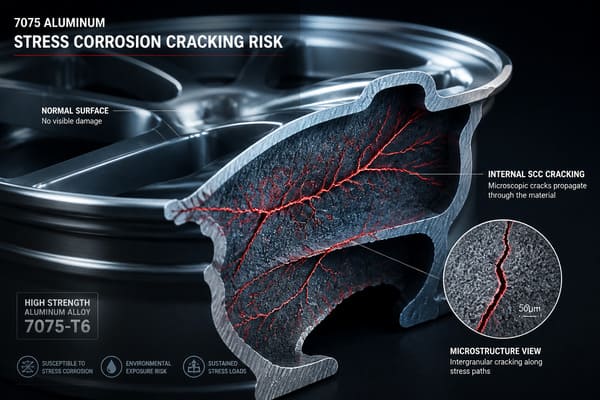
Each of these disadvantages deserves a clear explanation — not because we want to dismiss 7075-T6, but because buyers deserve accurate information before they decide.
Corrosion: The Hidden Long-Term Risk
7075-T6 is highly susceptible to stress corrosion cracking. This is a form of corrosion that occurs when tensile stress and a corrosive environment act on the material at the same time. It progresses internally and is often invisible on the surface until the damage is severe.
For buyers in coastal regions, high-humidity climates, or areas where roads are treated with salt in winter — including major markets like the USA, Canada, and the UK — this is not a theoretical risk. It is a practical one. A wheel that looks fine from the outside can have stress corrosion progressing through its internal structure after a single winter season.
6061-T6 has excellent natural corrosion resistance. It does not carry this risk at the same level. For daily-driven or seasonally exposed vehicles, this difference alone is a strong argument for 6061-T6.
Machinability and Manufacturing Risk
| Factor | 6061-T6 | 7075-T6 |
|---|---|---|
| Tool Wear Rate | Low | High |
| Surface Finish Quality | Consistent | Variable without precise control |
| Micro-defect Risk | Low | Higher without optimized process |
| Machining Cost | Standard | Higher |
When 7075-T6 Is Actually the Right Choice
There is one legitimate use case for 7075-T6 in wheels: extreme motorsport where weight reduction is the top priority, the wheel will be replaced after a set number of events, the environment is controlled (no road salt, no daily driving), and the team has engineering support to manage the material’s limitations.
In that narrow context, the higher strength-to-weight ratio of 7075-T6 justifies its trade-offs. But this describes a very small percentage of actual customers. For street performance builds, modified daily drivers, luxury car owners, and most track use, 6061-T6 is the correct material.
As a supplier, recommending 7075-T6 as a "premium upgrade" when 6061-T6 genuinely serves the customer better is not a service — it is a sales tactic. At Tree Wheels, our core philosophy is sincerity above all. That means we recommend the right material for the actual use case, even when the "stronger-sounding" option would be easier to sell. That honesty is what separates a serious wheel manufacturer from a marketing-driven vendor.
Conclusion
6061-T6 wins for most wheel applications because it balances fatigue life, corrosion resistance, and machinability where it counts. Strength alone is not the right metric. At Tree Wheels, we build every forged wheel with the right material for your real-world use case — because sincerity is our standard.