
Vibrations at highway speed. Steering wobble you can’t explain. A wheel that looks right but never feels right. These problems often trace back to one small measurement most people overlook.
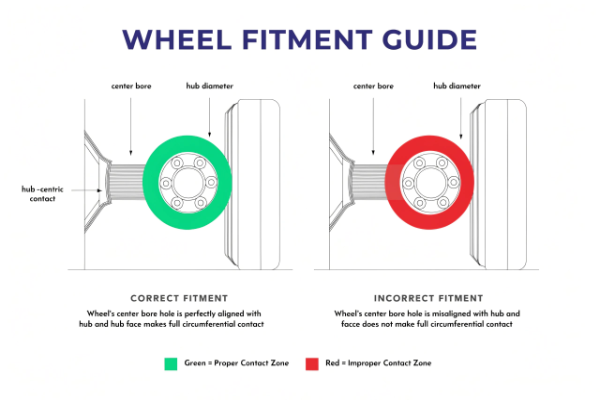
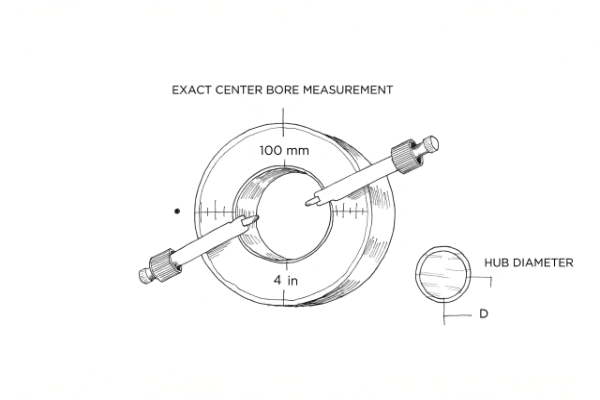
The center bore is the hole in the middle of a wheel that fits over the hub of your car. When this measurement is wrong, the wheel sits off-center. This causes vibration, uneven stress on wheel bolts, and in serious cases, wheel failure. Getting this size right is not optional.
I have worked in forged wheel manufacturing for years, and center bore questions come up constantly. Most guides online give you the basic answer and stop there. But the real picture is more interesting, and more important, than most people realize. Let me walk you through what actually matters.
Does Center Bore Have to Be Exact?
You measured your hub. You checked the wheel spec sheet. The numbers are close, but not identical. Now you are wondering if that small gap is a real problem or just something people worry about too much.
Center bore does not have to be a perfect match in one direction. The wheel’s center bore can be slightly larger than your hub diameter. A hub-centric ring fills that gap. But the center bore must never be smaller than your hub. If it is smaller, the wheel will not seat fully on the hub at all.
This is something I want to be very clear about, because the industry does not explain it well. The difference between "too big" and "too small" is not just a matter of degree. These are two completely different problems.
Too Big vs. Too Small: Two Different Problems
| Scenario | What Happens | Can It Be Fixed? |
|---|---|---|
| Center bore slightly larger than hub | Wheel sits loosely on hub | Yes — hub-centric ring solves this |
| Center bore matches hub exactly | Perfect hub-centric fit | No fix needed |
| Center bore smaller than hub | Wheel cannot fully seat on hub | No — wheel cannot be installed |
When a center bore is too large, the wheel rests on the wheel bolts instead of the hub. This is called lug-centric fitment. It works in the short term, but it puts stress on the bolts and often causes vibration at speed. A hub-centric ring corrects this by filling the gap between the wheel bore and the hub, so the hub carries the load again.
When a center bore is too small, you have no options. The wheel simply will not go on. No ring, no modification, no workaround exists on a finished wheel. This is why wheel manufacturers always machine the center bore slightly on the larger side. That direction of tolerance gives the installer a path forward. The other direction does not.
This is a deliberate design choice, not a manufacturing mistake. A difference of 0.1mm between 66.5mm and 66.6mm is within normal production tolerance for good reason. The question is never "how much difference is there?" The question is "which direction does the difference go?"
How Important Is Center Bore on Rims?
Some people treat center bore as a minor spec, something to check off a list and forget. After all, the lug bolts hold the wheel on. How much can the center bore really matter?
Center bore is critical because it determines how the wheel is positioned on the axle. A wheel centered by its hub runs true. A wheel centered only by its bolts carries uneven load and almost always produces vibration. On performance vehicles, this difference is felt immediately.
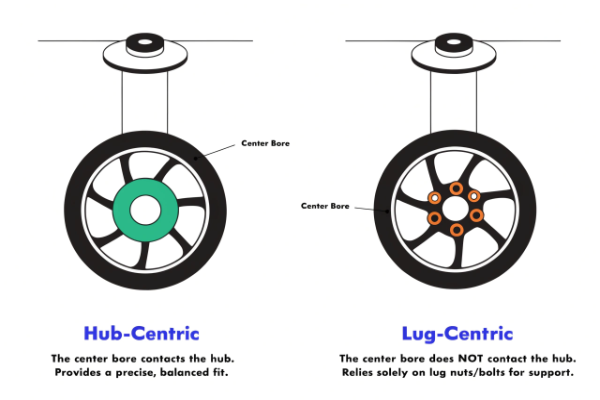
This matters more as vehicle speed increases. At low speeds, a lug-centric fit may feel acceptable. On a highway, even a small amount of off-center positioning creates a repeating wobble through the steering wheel. Many drivers chase this vibration through tire balancing and suspension checks, never finding the real cause because no one looked at the center bore first.
What Center Bore Affects at Each Speed Range
| Speed Range | Effect of Incorrect Center Bore |
|---|---|
| 0–40 km/h | Usually no noticeable vibration |
| 40–80 km/h | Mild vibration may begin |
| 80–120 km/h | Clear steering wheel vibration |
| 120+ km/h | Strong vibration, stress on bolts and bearings |
There is also a safety dimension here. When a wheel is not properly centered, the load from the vehicle is not distributed evenly across the hub and bolts. Over time, this creates fatigue. Fatigue leads to cracks. This is why we take center bore seriously in every wheel we produce. It is not a number on a datasheet. It is the foundation of how the wheel and the vehicle work together.
Does Centre Bore Matter on Wheels?
Let me approach this from a different angle. You are shopping for aftermarket wheels. The seller tells you the wheels fit your car. The bolt pattern matches. The offset is correct. Is the centre bore still something you need to verify separately?
Yes, centre bore always matters. Matching bolt pattern and offset does not guarantee the centre bore fits your hub. These are independent measurements. A wheel with the right bolt pattern but wrong centre bore will still cause problems. Always confirm all three measurements before purchasing.
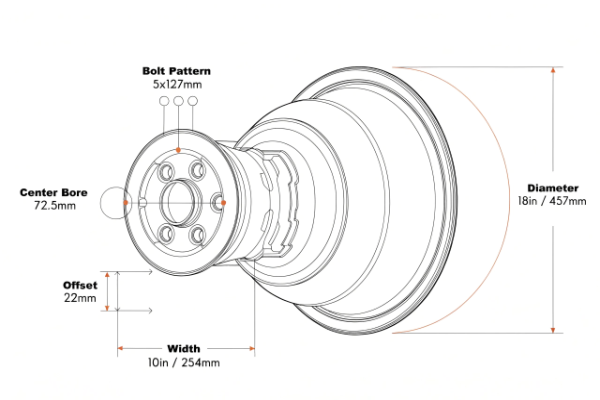
This comes up often in the aftermarket world. Customers assume that if a wheel is listed as compatible with their vehicle, every measurement has been checked. That is not always the case. Some compatibility listings only verify bolt pattern.
The Three Core Fitment Measurements
| Measurement | What It Controls | Common Mistake |
|---|---|---|
| Bolt Pattern | How the wheel attaches to the hub | Assuming this is the only check needed |
| Offset (ET) | Wheel position relative to suspension | Ignoring this causes rubbing or handling issues |
| Centre Bore | How the wheel centers on the axle | Often listed but not always verified against actual hub size |
For customers ordering custom forged wheels, we always ask for the exact hub diameter from the vehicle. We machine the centre bore in our CNC process to match that specification precisely. This is an advantage of forged wheel production that most guides do not mention. Forged wheels use CNC machining for the centre bore, which produces much tighter tolerances than cast wheels. When you order a forged wheel built to your hub size, you get a true hub-centric fit without relying on a ring at all. The precision is built into the wheel from the start.
Does It Matter If the Centre Bore Is Too Big?
You found a set of wheels you like. The centre bore on the wheel is a few millimetres larger than your hub diameter. The seller tells you this is normal and a hub-centric ring will handle it. Is that actually true?
A centre bore that is too big can be corrected with a hub-centric ring, provided the ring is the right material and machined to precise dimensions. A poorly made ring is almost as bad as no ring. The ring itself is not the problem. The quality of the ring is.
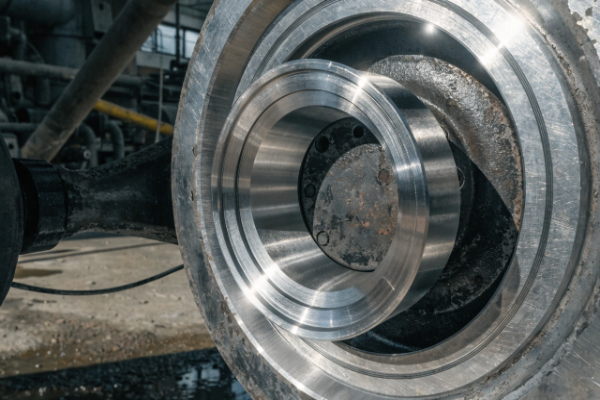
Hub-centric rings have a reputation problem. Many people in the car community treat them as a workaround, something you use when a wheel does not quite fit. I want to challenge that view directly, because it misrepresents how wheel design actually works.
Hub-Centric Ring: Design Solution vs. Poor Fix
| Ring Type | Material | Precision | Performance |
|---|---|---|---|
| Quality ring | Billet aluminum, machined | Tight tolerance, exact fit | Equivalent to direct hub-centric fit |
| Cheap ring | Low-grade plastic | Loose fit, can shift | Does not reliably center the wheel |
| No ring (lug-centric) | — | Wheel floats on bolts | Vibration, uneven bolt stress |
For universal-fit aftermarket wheels, the hub-centric ring is not a compromise. It is a part of the fitment system. These wheels are intentionally made with a larger centre bore so they can fit multiple vehicles. The ring is what makes the system work. The problem is not using a ring. The problem is using a bad ring.
A quality aluminum ring, machined to the correct inner and outer diameter, transfers load from the wheel to the hub the same way a direct-fit wheel does. I have seen vehicles run thousands of kilometers on ring-fitted wheels without any vibration or wear issue, because the ring itself was precise. A plastic ring from a discount supplier is a different story. It flexes, it moves, and it fails to do the one job it exists for.
When our customers need a wheel that fits multiple hub sizes, we recommend a high-quality aluminum ring and provide the correct specifications. When a customer gives us their exact hub diameter, we machine the centre bore to match. Both approaches work. The key is knowing which situation you are in and executing it correctly.
Conclusion
Center bore is a small number with a large impact. Get it right and your wheel runs true. Get it wrong and every kilometer reminds you. At Tree Wheels, we machine every forged wheel to your exact specifications — because precision is not optional.