
Ever wondered why some car wheels cost ten times more than others? The world of automotive wheels can be confusing with terms like "forged" and "cast" thrown around by enthusiasts and salespeople alike. This price difference isn’t just marketing—it reflects fundamental differences in how these wheels are made.
A forged wheel is manufactured by applying intense pressure to solid aluminum billets to create a dense, strong structure with a fibrous internal grain (like bamboo), while cast wheels are made by pouring molten aluminum into molds, resulting in a more granular internal structure (like stone). The manufacturing process gives forged wheels greater strength despite lighter weight.
As a wheel manufacturer specializing in forged wheels, I’ve seen countless customers struggle with this decision. The truth is, there’s no absolute "better" choice between forged and cast wheels—it always depends on your specific needs and budget. Let’s explore the differences so you can make an informed decision for your vehicle.
What is better, cast or forged rims?
When customers ask this question, I often see them expecting a simple answer. But the reality involves understanding what "better" means for your specific situation. Is a $2,000 hammer better than a $20 one for hanging a picture in your living room?
For most daily drivers, cast wheels are completely adequate and offer excellent value. They provide the essential benefits of aluminum alloys—good heat dissipation and lighter weight compared to steel wheels. Forged wheels offer superior strength-to-weight ratios, better durability, and customization options, but at significantly higher prices that make sense mainly for performance applications.
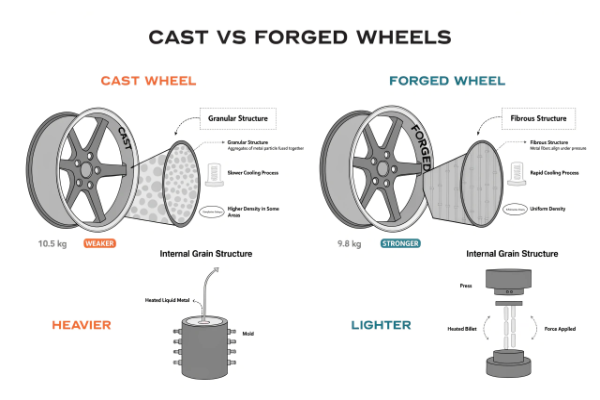
The price difference tells much of the story—forged wheels typically cost around ten times more than cast wheels. This substantial gap exists because the manufacturing process for forged wheels is more labor-intensive, uses more expensive equipment, and consumes more energy. We start with solid blocks of aircraft-grade aluminum and apply enormous pressure (up to 13,000 tons) to reshape the metal. This process aligns the internal grain structure and eliminates microscopic air pockets that often plague cast wheels.
| Feature | Cast Wheels | Forged Wheels |
|---|---|---|
| Price Range | $100-500 per wheel | $500-2,500+ per wheel |
| Manufacturing Process | Molten aluminum poured into molds | Solid aluminum compressed under pressure |
| Internal Structure | Granular (stone-like) | Fibrous (bamboo-like) |
| Relative Weight | Standard | 20-40% lighter than comparable cast |
| Ideal Usage | Daily driving, commuting | Performance driving, racing, customization |
| Production Time | Faster | Longer (15-35 days at Tree Wheels) |
Cast wheels are made by pouring molten aluminum into molds, allowing manufacturers to create complex designs at lower costs. For everyday driving—commuting, errands, and weekend trips—cast wheels perform perfectly well and will likely last the lifetime of your vehicle. Many OEM (original equipment manufacturer) wheels on standard production vehicles are cast for this reason.
However, if you’re a performance enthusiast, track day participant, or someone who demands the absolute best for your vehicle, forged wheels offer tangible benefits. The weight reduction can be significant—sometimes 20-40% lighter than a comparable cast wheel—improving acceleration, handling, braking, and even fuel economy. This weight reduction is particularly valuable because it’s "unsprung weight," which has an outsized impact on vehicle dynamics.
How do I tell if my wheels are forged or cast?
Identifying whether you have forged or cast wheels isn’t always straightforward, especially with today’s marketing terminology trying to blur the lines. Have you ever purchased something advertised as "premium" only to discover it’s anything but?
To identify forged wheels, check for machining marks, examine the weight (forged wheels are typically 20-40% lighter than cast wheels of the same size), look for manufacturer markings specifying "forged," and note the price point—genuine forged wheels almost always command premium prices due to their complex manufacturing process.
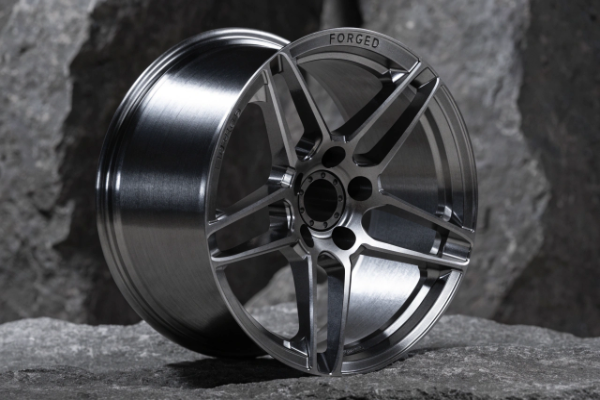
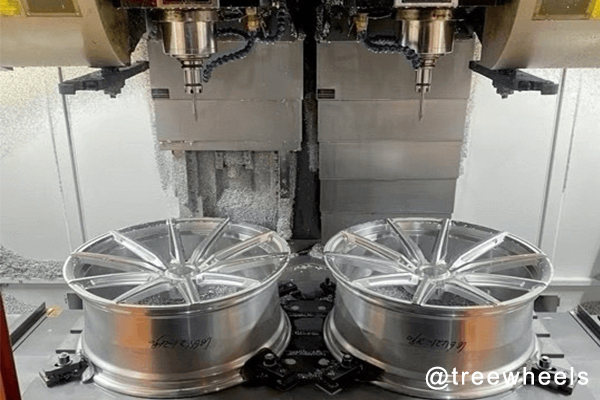
In my years of manufacturing wheels, I’ve found several reliable methods to distinguish between these wheel types. First, examine the finish closely. Forged wheels often have visible machining marks from the CNC processes used after forging. These can appear as subtle circular patterns or tool marks that give the wheel surface a distinct character.
| Identification Method | What to Look For |
|---|---|
| Weight | Forged wheels are noticeably lighter than cast equivalents of same size |
| Markings | Look for "Forged," "Forged Aluminum," or similar designations |
| Price Paid | Sets under $1,000 are unlikely to be forged (unless used/discounted) |
| Surface Finish | Forged wheels often show subtle machining marks from CNC work |
| Sound Test | When tapped, forged wheels often produce a clearer, higher-pitched sound |
Weight is another key indicator. If you have two seemingly identical wheels in terms of design and size, the forged version will be noticeably lighter while maintaining structural integrity. This is because the forging process creates a denser, stronger material that requires less mass to achieve the same strength.
Many reputable manufacturers proudly mark their forged wheels with terms like "forged aluminum" or similar designations. At Tree Wheels, we prominently feature "forged" in our product markings as a badge of quality. Additionally, the price point is a strong indicator—if you paid less than $1,000 for a set of four wheels, they’re almost certainly not forged (unless purchased used or at an exceptional discount).
Another telltale sign is in the structure itself. While this isn’t visible without cutting the wheel (which I don’t recommend!), forged wheels have that bamboo-like fibrous internal structure, while cast wheels have a more granular, stone-like internal composition. This fundamental difference in structure explains why forged wheels can withstand higher impacts and stress while weighing less.
What are the disadvantages of forged steel?
Many potential customers ask about disadvantages before investing in premium wheels. It’s a smart approach—understanding both pros and cons leads to better decisions. Is there a downside to this seemingly superior product?
The main disadvantages of forged wheels are their significantly higher cost (often 10 times more than cast wheels), limited design flexibility compared to casting processes, longer production times, and potential repair difficulties if damaged. Despite these drawbacks, the performance benefits justify the investment for enthusiasts and performance applications.
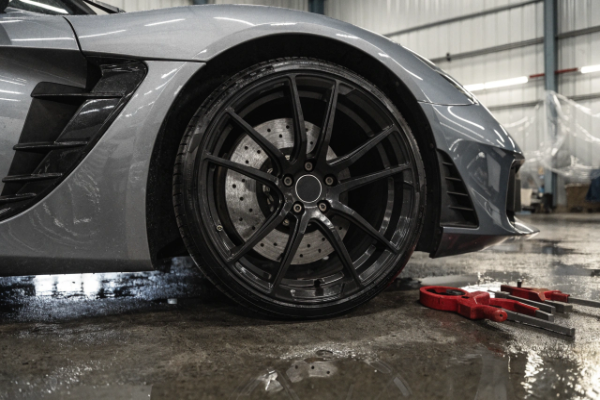
As someone who produces forged wheels daily, I believe in complete transparency about their limitations. The most obvious disadvantage is cost. The specialized equipment, intensive energy requirements, and skilled labor needed for forging drive up prices significantly. Our custom forged wheels start at prices that could buy several sets of quality cast wheels.
| Disadvantage | Description | Impact |
|---|---|---|
| Cost | 10x higher than comparable cast wheels | Significant financial investment |
| Production Time | 15-35 days for custom forged wheels | Longer wait times for customers |
| Design Limitations | Some extremely intricate designs may be challenging | Potential compromise on certain aesthetic elements |
| Repair Difficulty | Specialized repair techniques often required | Higher repair costs if damaged |
| Availability | Less widely available than cast options | May require special ordering |
Production time presents another challenge. While cast wheels can be produced quickly once the mold is created, forged wheels require multiple stages of production. At Tree Wheels, our one-piece forged wheels take 15-20 days to complete, while our three-piece designs require 30-35 days. For customers needing wheels immediately, this waiting period can be inconvenient.
Design flexibility also has certain limitations. While we can create beautiful custom designs, the forging process imposes some constraints on extremely complex or intricate patterns that might be achievable with casting. However, modern CNC machining has significantly reduced this gap in recent years.
Repair can be more challenging with forged wheels. Their denser structure and specialized materials may require more expertise to repair properly if damaged. Some types of damage that might be repairable on cast wheels could render a forged wheel unusable.
Despite these disadvantages, the performance benefits—lighter weight, greater strength, better handling, improved acceleration, and enhanced durability—make forged wheels worth the investment for enthusiasts and high-performance applications. As with many premium products, the question isn’t whether they’re better in absolute terms, but whether the improvements justify the cost for your specific needs.
Are OEM wheels forged or cast?
I’m often asked whether factory wheels are forged or cast. The answer reveals much about how automotive manufacturers balance performance, cost, and market positioning. Have you noticed differences between wheels on basic models versus high-performance variants of the same car?
Most OEM wheels on standard production vehicles are cast aluminum due to cost-effectiveness and manufacturing efficiency. However, high-performance models, luxury vehicles, and sports cars increasingly feature forged or flow-formed wheels (a hybrid technique) as factory equipment to reduce weight and improve performance.
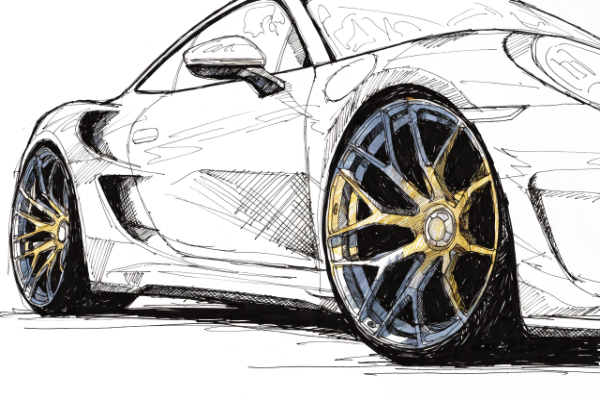
From my experience in the wheel manufacturing industry, I can confidently say that the vast majority of wheels on mainstream production vehicles are cast aluminum. This makes perfect economic sense—cast wheels offer a good balance of weight, strength, and cost for everyday driving conditions. For most daily drivers, cast aluminum wheels are completely adequate and provide all the benefits consumers expect.
| Vehicle Category | Typical OEM Wheel Type | Examples |
|---|---|---|
| Economy/Standard Cars | Cast Aluminum | Toyota Corolla, Honda Civic, Ford Focus |
| Mid-Range/Premium Cars | Cast Aluminum or Flow-Formed | Audi A4, BMW 3-Series, Mercedes C-Class |
| High-Performance Models | Flow-Formed or Forged | BMW M3, Mercedes AMG models, Audi RS models |
| Exotic/Supercars | Forged | Ferrari, Lamborghini, high-end Porsche models |
| Performance Options | Forged (as upgrade packages) | Available on many premium brand models |
Major automakers produce millions of vehicles annually, and the cost difference between equipping them with cast versus forged wheels would be enormous. For example, if forged wheels cost approximately $4,000 per set versus $400 for cast wheels, that $3,600 difference would significantly impact vehicle pricing or profit margins.
However, there’s a growing trend among premium and performance-oriented vehicles. Manufacturers like Porsche, Ferrari, BMW M division, and Mercedes-AMG frequently offer forged wheels either as standard equipment or optional upgrades on their high-performance models. These brands understand that the weight savings and performance advantages justify the additional cost for vehicles designed to deliver exceptional driving experiences.
Some manufacturers have adopted middle-ground technologies like flow-forming (also called roll-forming). This hybrid process starts with a cast wheel but applies additional pressure during manufacturing to create a stronger, lighter rim area that approaches some benefits of forging at lower costs. Companies like Audi, BMW, and Lexus often use this technology for their mid-tier performance models.
If you’re buying a standard production vehicle and weight isn’t listed as a key feature of the wheels, they’re almost certainly cast aluminum. This isn’t a negative—these wheels are engineered to meet or exceed all safety requirements and provide years of reliable service under normal driving conditions. However, if absolute performance is your priority, aftermarket forged wheels remain a compelling upgrade option.
Conclusion
The choice between forged and cast wheels ultimately comes down to your specific needs, usage, and budget. For daily driving, quality cast wheels often provide excellent value, while forged wheels deliver unmatched performance for enthusiasts willing to invest. Trust Tree Wheels to provide the perfect custom forged solution when only the best will do for your vehicle.