
Diamond-cut wheel finishes look stunning on luxury vehicles, but their maintenance can be a nightmare. Many owners face premature corrosion and costly repairs, often wondering if the aesthetic appeal is worth the trouble.
Diamond-cut wheel finishes require specialized maintenance due to their unique manufacturing process. These wheels undergo precision CNC machining followed by a protective transparent coating system. Regular cleaning with pH-neutral products and application of polymer sealants every three months helps maintain their appearance and durability.
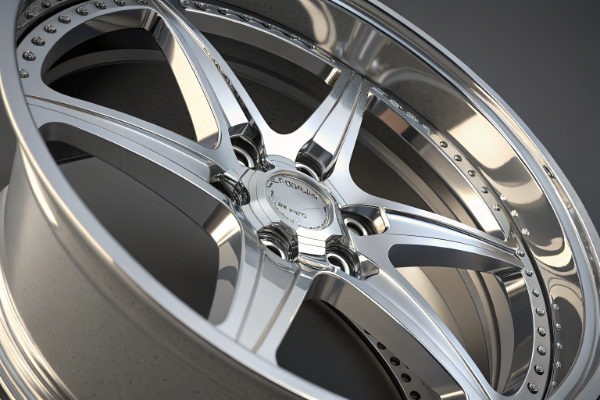
As a manufacturer specializing in forged wheels, I’ve seen countless customers struggle with maintaining diamond-cut finishes. Our production process includes precision CNC cutting accurate to 0.01mm, followed by a dual-layer protection system – a chemically adhesive base coat and a UV-resistant nano-coating, typically 60-80 microns thick. While this creates a stunning aesthetic that’s hard to match, it also requires proper care to maintain. Let’s examine the challenges and solutions for these premium wheel finishes.
How to Maintain Diamond Cut Alloys?
Diamond-cut wheels look spectacular when new, but without proper maintenance, they quickly deteriorate. Road salt, brake dust, and harsh cleaners can all compromise the protective coating, leading to expensive refurbishment costs.
To maintain diamond-cut alloy wheels, use pH-balanced cleaners (5.5-7.5) specifically designed for wheels, avoid acidic or strongly alkaline products, clean with microfiber cloths, apply a polymer sealant quarterly, and promptly address any damage to the protective coating.
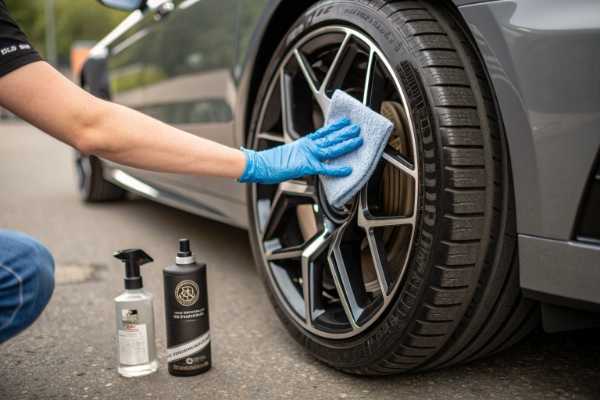
From our extensive testing at Tree Wheels, I can confidently recommend several maintenance practices that significantly extend the life of diamond-cut finishes. Weekly cleaning with microfiber cloths can prevent buildup of corrosive materials, while quarterly application of high-quality polymer sealants can extend protection by approximately 35%.
It’s crucial to avoid automatic car washes with brushes, as they can microscopically scratch the protective coating. When cleaning, work with cool wheels – never clean hot wheels as the rapid temperature change can compromise coating integrity. Also, make sure to thoroughly rinse all cleaning products, as residue can trap moisture against the wheel surface.
Recommended Cleaning Products
| Product Type | Recommended pH | Features to Look For | Products to Avoid |
|---|---|---|---|
| Wheel Cleaners | 5.5-7.5 | Non-acidic, non-alkaline | Acid-based cleaners, oven cleaners |
| Brushes | N/A | Soft-bristled, microfiber | Wire brushes, abrasive pads |
| Sealants | N/A | Polymer-based, UV protection | Petroleum-based products |
For winter protection, consider applying an extra layer of sealant before the cold season begins, as this provides additional defense against road salt and grime. Remember that prevention is always more cost-effective than refurbishment.
What Are the Cons of Diamond Cut Wheels?
Many buyers choose diamond-cut wheels for their distinctive look without understanding the maintenance commitment. The sleek appearance comes with significant downsides, including vulnerability to environmental damage and limited repair options.
The main disadvantages of diamond-cut wheels include higher susceptibility to corrosion, more expensive and limited refurbishment options, reduced coating thickness (about 40% of powder-coated wheels), and increased maintenance requirements compared to fully painted or powder-coated wheels.
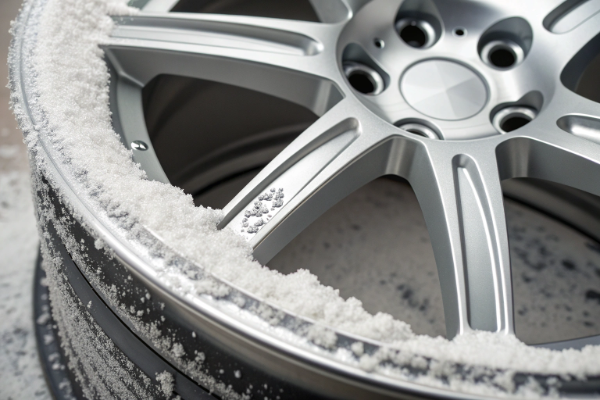
As a manufacturer, I’ve seen how diamond-cut wheels perform in various conditions, and there are several disadvantages worth considering. Our durability testing shows that exposure to salt, road grit, and extreme temperatures for just 96 hours increases corrosion risk by approximately 78% compared to fully painted wheels. This isn’t surprising considering the protective coating on diamond-cut wheels is typically only 40% as thick as standard powder coating.
The repair costs also tend to be 2.5-3 times higher than conventional wheels. This is because the entire wheel must be refinished to maintain a consistent appearance, unlike painted wheels where touch-ups are possible. During winter months, the wheel surface experiences temperature fluctuations from -20°C to +70°C, causing thermal expansion and contraction that can lead to microscopic cracks in the protective coating.
Comparison of Wheel Finish Types
| Finish Type | Corrosion Resistance | Maintenance Level | Repair Difficulty | Aesthetic Durability |
|---|---|---|---|---|
| Diamond Cut | Low to Moderate | High | Difficult | 1-3 years |
| Painted | High | Low | Easy | 3-5 years |
| Powder Coated | Very High | Very Low | Moderate | 5-7 years |
| Chrome | Moderate | Moderate | Very Difficult | 2-4 years |
Another consideration is that diamond-cut wheels often use specific aluminum alloys (typically 6061-T6 or A356.0) that provide the right balance of machinability and strength. However, these same properties can make them more reactive to environmental factors when the protective coating is compromised.
How Many Times Can You Refurb a Diamond Cut Wheel?
When diamond-cut wheels become corroded or damaged, many owners wonder about refurbishment limits. Unlike conventional painted wheels, diamond-cut finishes remove actual material from the wheel, creating a finite number of possible repairs.
Diamond-cut wheels can typically be refurbished 2-3 times. Each refurbishment removes approximately 0.2-0.3mm of aluminum material. The wheel’s original design usually includes a 0.8-0.9mm "sacrifice layer" to accommodate these refurbishments without compromising structural integrity.
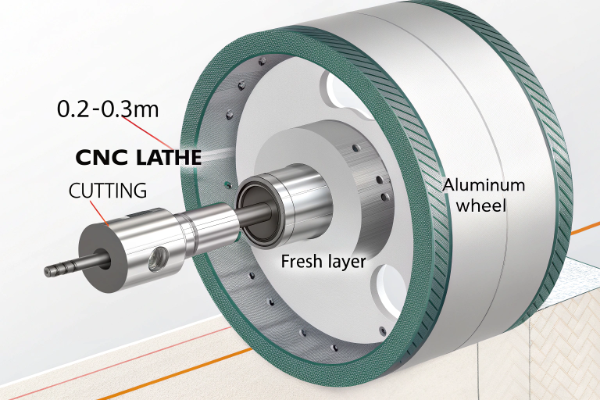
From our manufacturing perspective at Tree Wheels, the refurbishment potential depends on several factors. A standard 18-inch diamond-cut wheel typically has an edge thickness of about 8mm, with approximately 0.8-0.9mm designated as the "sacrifice layer" for future refurbishments. Each refurbishment process removes around 0.2-0.3mm of material to create a fresh surface.
Theoretically, this allows for 3 refurbishments, but we typically recommend limiting it to 2. Our testing shows that after the third refurbishment, the adhesion capability of the transparent coating decreases by approximately 40%, significantly reducing the protection it offers. The wheel’s structural integrity must also be considered – excessive material removal can compromise load capacity and safety.
Refurbishment Process Breakdown
| Refurbishment Stage | Process | Material Removed | Effect on Wheel |
|---|---|---|---|
| Initial | Stripping old finish | None | Prepares surface |
| Machining | CNC diamond cutting | 0.2-0.3mm | Creates fresh surface |
| Preparation | Cleaning, etching | Minimal | Ensures coating adhesion |
| Coating | Applying new protective layers | N/A | Restores appearance and protection |
| Quality Control | Inspection and testing | None | Ensures safety and appearance |
It’s worth noting that some wheels have complex designs with varying thickness across different areas. These may have even more limited refurbishment potential for certain sections of the wheel. Professional inspection is always recommended before attempting refurbishment to ensure the wheel remains safe for road use.
Why Do Diamond Cut Wheels Corrode?
Diamond-cut wheels often develop corrosion spots even with careful maintenance. This vulnerability stems from the manufacturing process itself, creating inherent weaknesses that painted wheels don’t share.
Diamond-cut wheels corrode easily because the cutting process exposes the raw aluminum alloy, which is protected only by a thin clear coat. Any damage to this coating allows moisture, salt, and contaminants to contact the aluminum directly, initiating electrochemical corrosion that spreads beneath the coating.
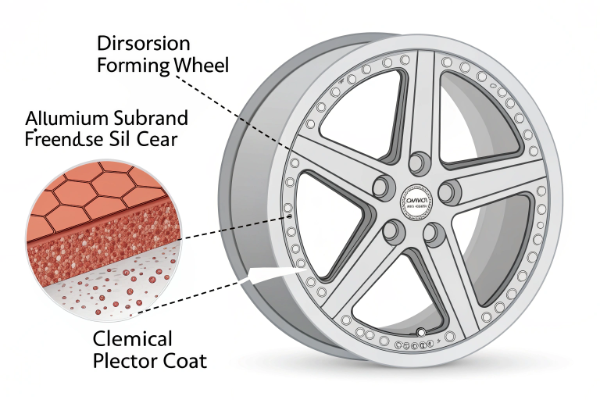
The corrosion mechanism in diamond-cut wheels is something we study extensively in our manufacturing process. The diamond cutting operation creates microscopic grooves (3-5 microns wide) in the aluminum surface. While invisible to the naked eye, these grooves can trap moisture and contaminants if the protective coating is compromised.
Any breach in the coating – from stone chips, curb damage, or even microscopic scratches from automatic car washes – becomes a potential entry point for corrosion. This is particularly problematic in environments with high chloride ion concentration (like road salt), which can increase corrosion rates by 5-7 times. The electrochemical reaction between the aluminum wheel and these contaminants creates aluminum oxide (the white powdery substance often seen on corroded wheels), which expands and further compromises the coating.
Corrosion Prevention Technologies
| Technology | How It Works | Effectiveness | Limitations |
|---|---|---|---|
| Electrophoretic Base Coat | Creates uniform electrically-deposited primer layer | Good | Adds cost, can’t prevent all corrosion |
| Silicon-enhanced Clear Coat | Adds silica particles to increase durability | Moderate | Still vulnerable to physical damage |
| Chrome-free Primer | Improves adhesion without environmental concerns | Good | Not as effective as chromate treatments |
| Multiple Thin Coatings | Builds up protection in layers for better coverage | Very Good | Increases production time and cost |
At Tree Wheels, we’ve developed an improved multi-layer coating system incorporating chrome-free primer and silica-enhanced clear coat that increases durability by approximately 25% compared to standard coatings. This system includes specialized pre-treatment processes that better prepare the aluminum surface for coating adhesion. Despite these advancements, we’re transparent with customers about the inherent limitations of diamond-cut finishes compared to fully painted alternatives.
Conclusion
Diamond-cut wheels offer unmatched aesthetic appeal but require diligent maintenance with proper cleaning products and regular protection. Understanding their limitations helps make informed decisions about this premium wheel finish. Tree Wheels delivers exceptional forged wheels with industry-leading finishes, balancing beauty and durability through advanced manufacturing techniques.