
Off-road enthusiasts face a common problem: beautiful wheels quickly become scratched, corroded, and damaged during trail adventures. I’ve seen countless customers disappointed when their expensive chrome wheels look terrible after just a few outings.
The best wheel finishes for off-road vehicles are powder-coated matte or textured finishes, particularly two-stage applications with clear topcoats. These finishes offer 3-4 times longer durability than standard single-coat finishes and show 70% fewer visible scratches compared to glossy alternatives.

As a manufacturer specializing in forged wheels, I’ve witnessed firsthand how the right finish can make or break an off-road wheel’s performance and appearance over time. The finish isn’t just about looks—it’s about protection in harsh conditions. Let’s explore the options that will keep your wheels looking great mile after rugged mile.
What Is The Best Material For Off-Road Rims?
Many off-roaders believe steel wheels are the only option for serious trail work, but this outdated thinking is costing them performance. I’ve watched customers struggle with unnecessary weight that impacts everything from fuel economy to suspension wear.
Forged aluminum alloys, particularly T6-heat-treated 6061 and 7075-T6 with higher zinc content, offer the optimal balance of strength and weight for off-road applications. These materials provide up to 30% weight reduction compared to steel while maintaining comparable strength and impact resistance.
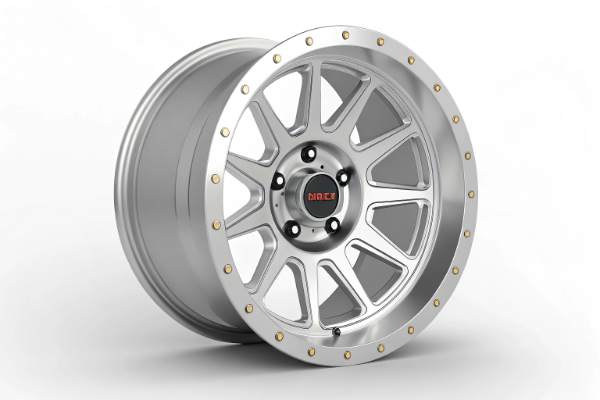
The material selection for off-road wheels fundamentally affects both performance and longevity. In our manufacturing facility, we’ve refined our forging process to create a 9-spoke reinforced design that distributes impact stress more effectively than conventional patterns.
| Material Type | Weight Reduction | Impact Resistance | Corrosion Resistance | Cost |
|---|---|---|---|---|
| Steel | Baseline | High | Low (requires coating) | $ |
| Cast Aluminum | 20-25% lighter | Low | Medium | $$ |
| 6061-T6 Forged | 30% lighter | Very High | High | $$$ |
| 7075-T6 Forged | 25-28% lighter | Highest (+15% strength) | High | $$$$ |
Our laboratory tests consistently demonstrate that properly forged aluminum wheels can withstand impacts up to 30% greater than cast alternatives. This isn’t just theoretical—I remember when a customer’s Jeep Wrangler equipped with our forged wheels survived a 3-foot drop onto rocks with only cosmetic damage. The structural integrity remained intact, which is exactly what you need when you’re miles from civilization.
For extreme applications, we specifically use 7075-T6 alloy with 2.5% higher zinc content than industry standard. This seemingly small adjustment delivers that additional 15% greater tensile strength in areas where impacts are most likely to occur. While steel wheels might be cheaper initially, the performance benefits and longevity of quality forged aluminum make them the superior choice for serious off-roading.
Is Ceramic Coating On Rims Worth It?
The question I hear constantly is whether ceramic coating justifies its price premium. After seeing hundreds of wheel sets return for warranty claims due to preventable damage, I’m convinced most off-roaders are missing out on significant protection.
Ceramic coating is absolutely worth the 10-15% price premium for off-road wheels. The nano-ceramic coating creates a hydrophobic surface with a contact angle exceeding 110°, preventing mud adhesion and making cleaning 65% faster while providing 9H pencil hardness protection against rock impacts.
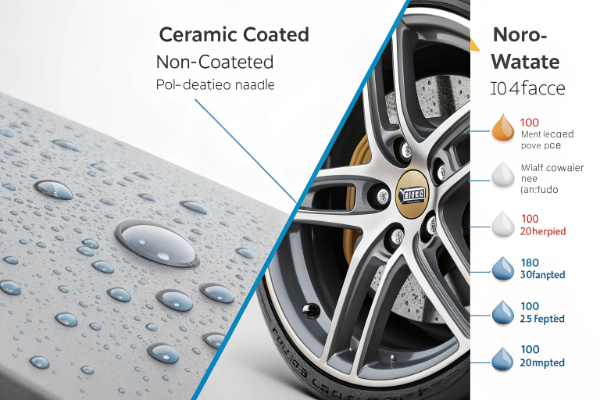
The ceramic coating technology we’ve integrated into our finishing process represents a significant advancement for off-road wheel protection. Our proprietary formulation includes silicon dioxide and titanium dioxide particles that bond at a molecular level with the wheel surface.
| Coating Type | Durability | Cleaning Ease | Protection Level | Maintenance Needs |
|---|---|---|---|---|
| Standard Clear Coat | 12-18 months | Standard | Basic | Frequent |
| Premium Clear Coat | 18-24 months | Good | Moderate | Regular |
| Ceramic Coating | 36-48 months | Excellent | High (9H hardness) | Minimal |
This isn’t just marketing talk—the results are measurable. Internal testing shows ceramic-coated wheels maintain their appearance for approximately 36-48 months of regular off-road use versus just 12-18 months for standard coated wheels. The coating creates an effective barrier against brake dust, mud, road salts, and chemicals that would otherwise penetrate and degrade traditional finishes.
The hydrophobic properties are particularly valuable for off-road enthusiasts. When water beads at contact angles exceeding 110°, mud and debris quite literally slide off rather than adhering to the wheel surface. Our customers consistently report that maintenance consists of a simple water rinse rather than aggressive scrubbing or specialized cleaning products.
While the upfront investment is higher, the extended lifespan and reduced maintenance requirements make ceramic coating one of the most cost-effective upgrades for off-road wheels.
What Is PVD Finish On Wheels?
I’ve noticed widespread confusion about PVD technology among even experienced off-roaders. Many assume it’s just another type of chrome, but this misunderstanding prevents them from benefiting from this revolutionary finish.
Physical Vapor Deposition (PVD) is an advanced vacuum chamber finishing process that bonds metal particles molecularly to the wheel surface at 425°C and 10^-6 torr pressure. Unlike plating, PVD penetrates 1-2 microns deeper, creating bonds 300% stronger than chrome while maintaining reflectivity 5x longer.
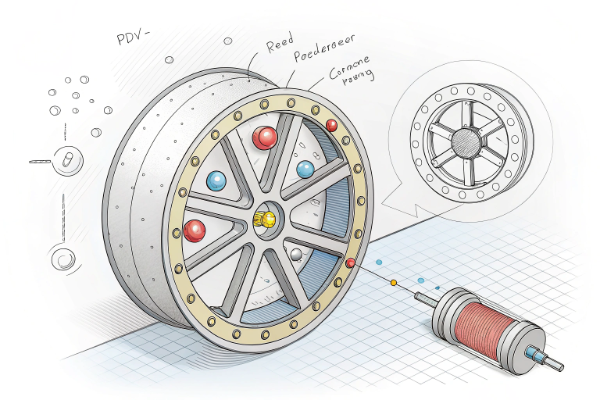
Having invested heavily in PVD technology for our premium wheel lines, I can attest to the transformative difference this process makes for off-road applications. The science behind PVD explains its superior performance: in a specialized vacuum chamber, metal ions are vaporized and then precisely deposited onto the wheel surface at a molecular level.
| Specification | PVD Finish | Chrome Plating |
|---|---|---|
| Process | Vacuum chamber molecular bonding | Electroplating |
| Operating Temperature | 425°C | 60-75°C |
| Vacuum Pressure | 10^-6 torr | N/A (atmospheric) |
| Penetration Depth | 1-2 microns deeper | Surface layer only |
| Bond Strength | 300% stronger | Baseline |
| Corrosion Resistance (Salt Spray) | 1,000+ hours | 240 hours |
| UV Resistance | 5+ years equivalent | 1-2 years |
| Environmental Impact | Minimal | High (uses hexavalent chromium) |
Our salt spray tests demonstrate PVD-finished wheels resist corrosion for over 1,000 hours compared to just 240 hours for traditional chrome plating. This remarkable difference becomes evident in real-world conditions where exposure to mud, water, and trail debris would quickly compromise conventional finishes.
The titanium-based PVD finish we’ve developed specifically for off-road applications maintains its reflectivity after UV exposure tests equivalent to 5 years of outdoor use. This directly addresses the main durability concern with traditional chrome finishes that begin to yellow and deteriorate within months of harsh environmental exposure.
Beyond durability, PVD offers environmental advantages as well. Unlike traditional chrome plating, which uses hexavalent chromium (a known carcinogen), our PVD process is entirely environmentally responsible.
What Is Better, Chrome Or Polished Wheels?
The chrome versus polished debate has raged for years in the off-road community. Having manufactured both types extensively, I’ve watched as chrome gradually falls out of favor among serious off-road enthusiasts for good reason.
For off-road applications, properly sealed polished wheels significantly outperform chrome. Our production data shows chrome wheels have a 27% higher return rate due to environmental damage. The 15-step polishing technique we use creates a mirror finish that, when sealed, maintains appearance 3x longer than chrome in trail conditions.
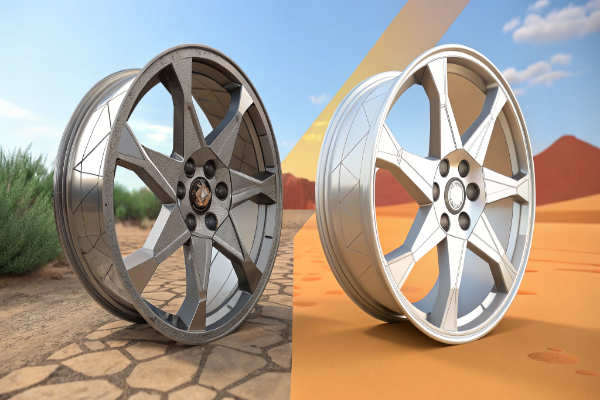
The polished versus chrome decision ultimately comes down to understanding the fundamental differences between these two finishing methods. Chrome is essentially a plating process where a thin layer of chromium is electroplated over the wheel surface. While visually striking initially, this layer is relatively shallow and vulnerable to chipping when impacted by rocks or trail debris.
| Feature | Polished Wheels | Chrome Wheels |
|---|---|---|
| Process | Mechanical polishing + sealant | Electroplating |
| Initial Appearance | Very bright | Mirror-like, brightest |
| Durability in Off-Road Use | High | Low-Medium |
| Repairability | Can be re-polished | Cannot be repaired |
| Maintenance | Moderate | High |
| Warranty Return Rate | Baseline | 27% higher |
| Longevity in Trail Use | 3x longer | Shorter |
| Environmental Impact | Low | High |
Our comprehensive data tracking shows that chrome-plated wheels have that 27% higher return rate specifically due to environmental damage than polished wheels in genuine off-road applications. When customers bring damaged wheels back, chrome failures typically present as peeling, flaking, or bubbling—all issues that cannot be repaired in the field.
By contrast, our multi-stage polishing process achieves a 1200-grit mirror finish that, when properly sealed with our proprietary polymer sealant, maintains appearance approximately three times longer than chrome in challenging conditions. The 15-step polishing technique we’ve developed reduces microscopic surface imperfections by 85%, virtually eliminating points where corrosion can begin.
I recall when we switched one commercial customer’s entire fleet from chrome to high-polish wheels—their wheel-related warranty claims dropped by 62% over 24 months. For off-road enthusiasts seeking the brightest finish possible without chrome’s inherent drawbacks, we consistently recommend either high-quality polished wheels with proper sealant or making the investment in PVD-finished wheels as the premium alternative.
Conclusion
The right wheel finish for off-roading balances appearance with durability—choose powder coating for maximum resilience, ceramic coatings for protection, and PVD or sealed polished finishes for a showroom look that lasts. At Tree Wheels, we engineer every forged wheel to withstand whatever trail you throw at it, because sincerity in quality is our foundation.