

Dealing with car modifications means constantly balancing performance with practicality. Many vehicle owners struggle with wheel weight questions, not realizing how significantly it impacts fuel efficiency, handling, and acceleration.
A standard 16-inch wheel typically weighs between 15-22 pounds (7-10kg) for aluminum alloy versions, while steel wheels of the same size weigh approximately 20-25 pounds (9-11kg). Weight varies based on material composition, manufacturing process, and design complexity.
 comparison](https://treewheels.com/wp-content/uploads/2025/09/image-1-drawing-style-a-comparison-chart-showing-.png "Different 16-inch wheels based on materials")
Beyond just numbers, wheel weight affects your entire driving experience. I’ve seen countless customers focus solely on getting the lightest wheels possible without understanding the complete picture. Let me break down everything you need to know about wheel weights across various specifications and applications.
How Much Does a 16-inch Rim Weigh?
When customers ask about rim weight, they’re often surprised by how widely the numbers can vary. A lightweight racing rim might feel like a toy compared to a heavy-duty truck wheel of the same diameter.
A typical 16-inch aluminum rim weighs approximately 15-22 pounds (7-10kg), while forged aluminum versions are about 20-30% lighter at 12-17 pounds (5.5-7.5kg). Steel rims of the same size are heavier, averaging 20-25 pounds (9-11kg).
 comparison by material](https://treewheels.com/wp-content/uploads/2025/09/image-2-flat-design-a-clean-modern-infographic-s.png "Weight comparison between aluminum and steel 16-inch rims")
| Rim Type | Weight Range (pounds) | Weight Range (kg) |
|---|---|---|
| Cast Aluminum | 15-22 lbs | 7-10 kg |
| Forged Aluminum | 12-17 lbs | 5.5-7.5 kg |
| Steel | 20-25 lbs | 9-11 kg |
I want to emphasize something critical that many overlook: wheel weight isn’t everything. In our wheel manufacturing experience, we’ve seen customers become obsessed with getting the lightest possible wheels without considering safety factors. This is particularly concerning with wheels featuring spoke cutouts or hollow designs.
The most vulnerable points on any wheel are typically the edges of spoke cutouts. Under significant impact, these areas experience the highest stress concentration and are often the first to develop fractures. At TreeWheels, we’ve conducted numerous tests that demonstrate this vulnerability.
This is why we insist on comprehensive Finite Element Analysis (FEA) testing for all our designs. Through computer simulation, we can identify potential weak points and reinforce them before production begins. I strongly advise everyone to request FEA test reports from any wheel supplier. Without this data, you’re essentially gambling with safety for the sake of aesthetics or minor weight savings.
We’ve occasionally had to decline customer requests for extreme designs that prioritized looks or weight reduction over structural integrity. Finding the right balance between weight, strength, and design is the true art of wheel manufacturing.
What is an Aluminum Rim Worth in Scrap?
Car enthusiasts often wonder about the residual value of their wheels when upgrading. This question becomes especially relevant when deciding whether to sell old wheels or scrap them.
Currently, scrap aluminum wheels fetch approximately $0.50-0.90 per pound depending on market conditions and metal purity. A typical 16-inch aluminum rim weighing about 15-22 pounds might bring $10-18 in scrap value, though prices fluctuate with global aluminum markets.
| Wheel Type | Average Weight | Current Rate | Potential Scrap Value |
|---|---|---|---|
| 16" Cast Aluminum | 15-22 lbs | $0.50-0.90/lb | $10-18 |
| 16" Forged Aluminum | 12-17 lbs | $0.60-0.95/lb | $9-16 |
| 16" Steel | 20-25 lbs | $0.10-0.20/lb | $3-5 |
The scrap value of aluminum wheels has been steadily increasing over the years, reflecting broader trends in metal recycling and sustainability efforts. From our perspective as manufacturers, this represents both challenges and opportunities.
Recycled aluminum is becoming increasingly important in our supply chain. In fact, using recycled aluminum reduces energy consumption by up to 95% compared to producing primary aluminum. This not only makes economic sense but aligns with our environmental responsibilities as well.
When wheels are scrapped, they go through a fascinating process. First, they’re sorted by alloy type using spectrometers, as different aluminum alloys have varying compositions and values. Next, they’re shredded and melted down, with contaminants removed through various processes.
One important consideration that affects scrap value is the inclusion of other materials. Many wheels contain steel weights, valve stems, or other non-aluminum components that must be removed before processing. Higher-end wheels with specialized coatings or finishes might require additional processing steps, potentially reducing their net scrap value.
For wheels like ours with premium forged construction, the scrap value doesn’t reflect their true worth. The advanced alloys and manufacturing processes create material properties that would ideally be recycled into high-grade applications rather than generic aluminum stock.
How Much Does a Tire Wheel Weigh?
Vehicle owners planning modifications need to consider the total wheel assembly weight, not just the rim itself. This complete weight directly impacts vehicle performance, fuel efficiency, and handling.
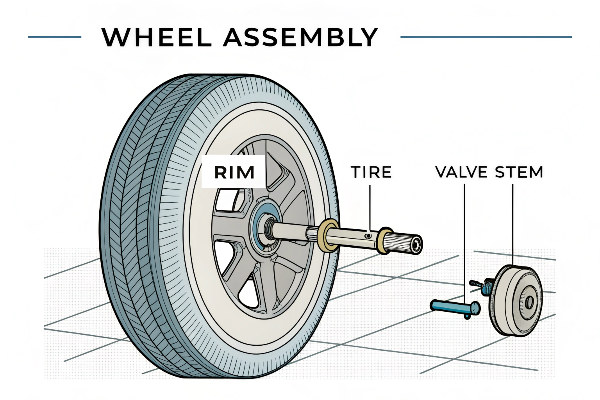
A complete 16-inch wheel assembly (rim plus tire) typically weighs between 35-50 pounds (16-23kg). The tire alone contributes roughly 20-28 pounds (9-13kg), while the rim accounts for 15-22 pounds (7-10kg), depending on width, design, and construction materials.
| Component | Weight Range (Passenger Vehicle) | Weight Range (Truck) |
|---|---|---|
| Rim Only | 15-22 lbs (7-10 kg) | 25-30 lbs (11-14 kg) |
| Tire Only | 20-28 lbs (9-13 kg) | 35-45 lbs (16-20 kg) |
| Complete Assembly | 35-50 lbs (16-23 kg) | 60-75 lbs (27-34 kg) |
The combined weight of the wheel assembly significantly affects various aspects of vehicle performance. Through our work with performance-oriented customers, we’ve observed that reducing unsprung weight (weight not supported by the suspension) delivers benefits that far exceed what simple numbers might suggest.
Each pound saved in wheel assembly weight improves acceleration, braking distance, and fuel economy. This is because the rotational mass requires more energy to accelerate and decelerate than static weight elsewhere on the vehicle.
However, I must again emphasize that pursuing the lightest possible wheel assembly isn’t always the right approach. Certain performance characteristics require appropriate weight distribution. For instance, some track applications benefit from slightly heavier wheels with specific weight distribution properties to maintain stability at high speeds.
The safety considerations I mentioned earlier become even more critical when considering the complete wheel assembly. When a wheel and tire encounter road hazards, the forces involved are substantial. At TreeWheels, our FEA testing simulates these real-world scenarios, accounting for the weight and leverage effect of the tire mounted on the rim.
Modern wheel designs must incorporate these complex factors. The spoke structure must not only look appealing but also distribute forces effectively throughout the wheel. We’ve developed specialized structural reinforcements in critical areas of our wheels to maintain integrity even when the assembly is subjected to extreme lateral forces during cornering or impact events.
How Much Does a 16-inch Truck Tire Weigh?
Truck owners face different considerations when selecting wheels and tires compared to passenger vehicle owners. The weight implications are more significant due to the larger loads and demanding conditions.
A typical 16-inch truck tire weighs approximately 35-45 pounds (16-20kg), significantly heavier than passenger vehicle tires at 20-28 pounds (9-13kg). Combined with a truck-rated wheel, the complete assembly can weigh 60-65 pounds (27-29kg) or more.
 comparison](https://treewheels.com/wp-content/uploads/2025/09/image-5-realistic-industrial-style-a-comparative-.png "Weight comparison between truck and passenger vehicle tires")
| Tire Type | Weight Range | Complete Assembly Weight |
|---|---|---|
| Passenger Vehicle | 20-28 lbs (9-13 kg) | 35-50 lbs (16-23 kg) |
| Light Truck (LT) | 35-45 lbs (16-20 kg) | 60-75 lbs (27-34 kg) |
| Commercial Truck | 45-70 lbs (20-32 kg) | 70-100 lbs (32-45 kg) |
Through our experience supplying wheels for commercial and recreational trucks, I’ve gained significant insights into the unique challenges truck owners face. The substantial weight difference between truck and passenger vehicle components stems from fundamental differences in construction and intended use.
Truck tires typically feature reinforced sidewalls, deeper treads, and more robust internal structures to handle heavier loads and more demanding conditions. Similarly, truck wheels must be engineered with higher load ratings and durability in mind. This naturally results in heavier components.
The weight penalty becomes particularly relevant for off-road applications. Each additional pound affects the vehicle’s ability to navigate difficult terrain, with rotational mass having an outsized impact on driving dynamics. This explains why many of our truck customers specifically request our lighter forged wheel options despite the higher initial investment.
The safety considerations for truck wheels are even more stringent than for passenger vehicles. At TreeWheels, our truck wheel designs undergo additional testing beyond standard protocols, simulating extreme conditions like heavy impacts on uneven surfaces while under maximum load. Our FEA testing for truck wheels incorporates higher safety margins, recognizing that these components often face unpredictable conditions.
For truck owners looking to reduce wheel assembly weight, I always recommend focusing on quality rather than extreme weight reduction. The structural integrity needed for truck applications means there’s a practical lower limit to safe wheel weight. Instead, selecting properly engineered forged wheels can provide moderate weight savings while maintaining or even improving strength characteristics.
Conclusion
Wheel weight varies significantly based on size, material, and application, with 16-inch wheels generally weighing between 15-45 pounds depending on these factors. Understanding these variations helps make informed decisions for your vehicle. For premium forged wheels that balance weight, strength, and safety, TreeWheels delivers customized solutions built on sincerity and quality.